
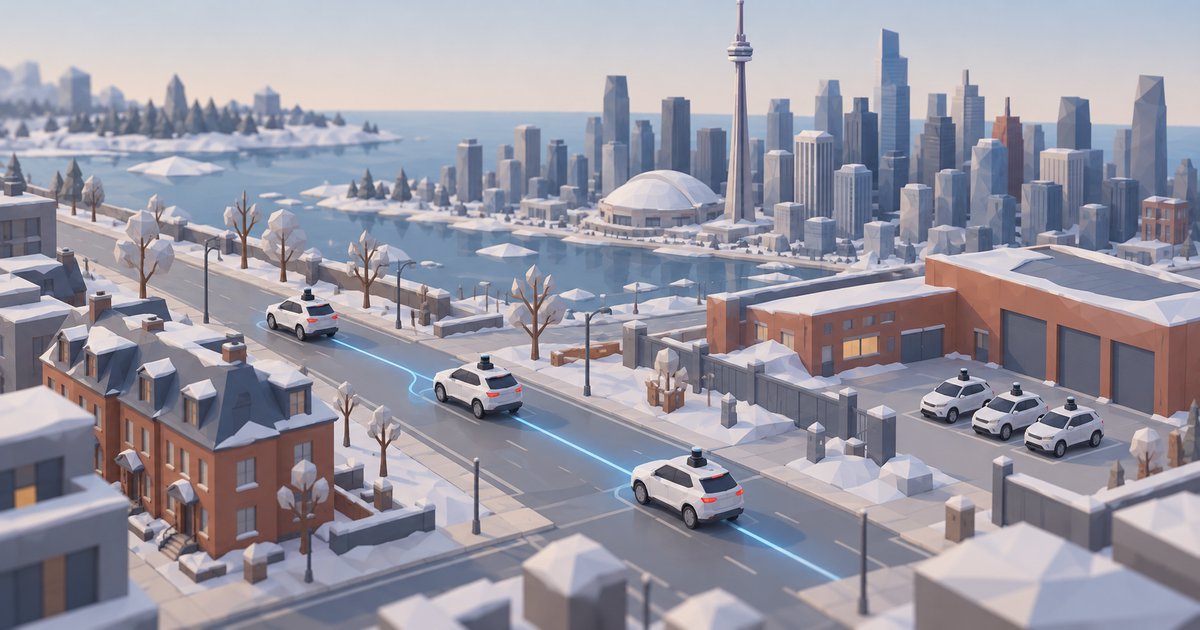
Waymo is taking its robotaxi to Canada. On 16 October 2026 the Alphabet company named Toronto as its first Canadian city, said its cars would start driving the city's streets "in the coming days", and set a goal of carrying its first public riders there in 2028.
Nothing will drive itself yet. The first phase follows the pattern Waymo set out for Munich in August: staff drive the cars manually to build high-definition maps of the street network, then trained specialists sit behind the wheel while the Waymo Driver is tested and validated against local conditions.
Who is involved
Waymo has picked Element Fleet Management, a fleet company headquartered in Toronto, to provide end-to-end fleet management, and says the partners will create "hundreds of roles over time" in maintenance, validation driving and customer service. It also points to its existing Canadian ties: the Canada Pension Plan Investment Board is a long-term investor, and Magna International is its manufacturing partner.
Co-CEO Tekedra Mawakana called the move "an important milestone in Waymo's global journey". The announcement repeats Waymo's safety claim that, across more than 400 million fully autonomous kilometres, its Driver was involved in 95% fewer crashes causing serious injury or worse than human drivers in the cities where it operates. That comparison is Waymo's own analysis.
The catch: the rules do not exist yet
The 2028 goal depends on regulation that has not been written. As Electrek points out, Ontario has no framework for a commercial driverless ride-hailing service. Companies can test under the province's automated vehicle pilot programme, but a paid service with nobody at the wheel has no legal basis yet.
Toronto's winters will also test a claim Waymo makes in the announcement: that its Driver is built for all weather.
The European parallel
Toronto is the same kind of bet as Waymo's European plans. In Munich it has promised driverless commercial rides by the end of 2027, in a country where no driverless fleet has yet been licensed. London, where Waymo is already testing, was originally aimed at 2026 and is reported to be slipping.
Where Tesla stands
Tesla sells FSD (Supervised) in Canada as a driver-assistance system, with the driver responsible at all times. Its Robotaxi app has been on the Canadian Google Play Store since September, but the service carries passengers only in the United States, and Tesla has not announced Canadian plans.
The two companies already compete directly in the US. In Tampa, both have been selling autonomous rides to the public since September. Outside the United States, Waymo now has target years attached to a Canadian city and a German one. Tesla's European owners, meanwhile, are still waiting country by country for approval of a system that keeps a driver in charge.