
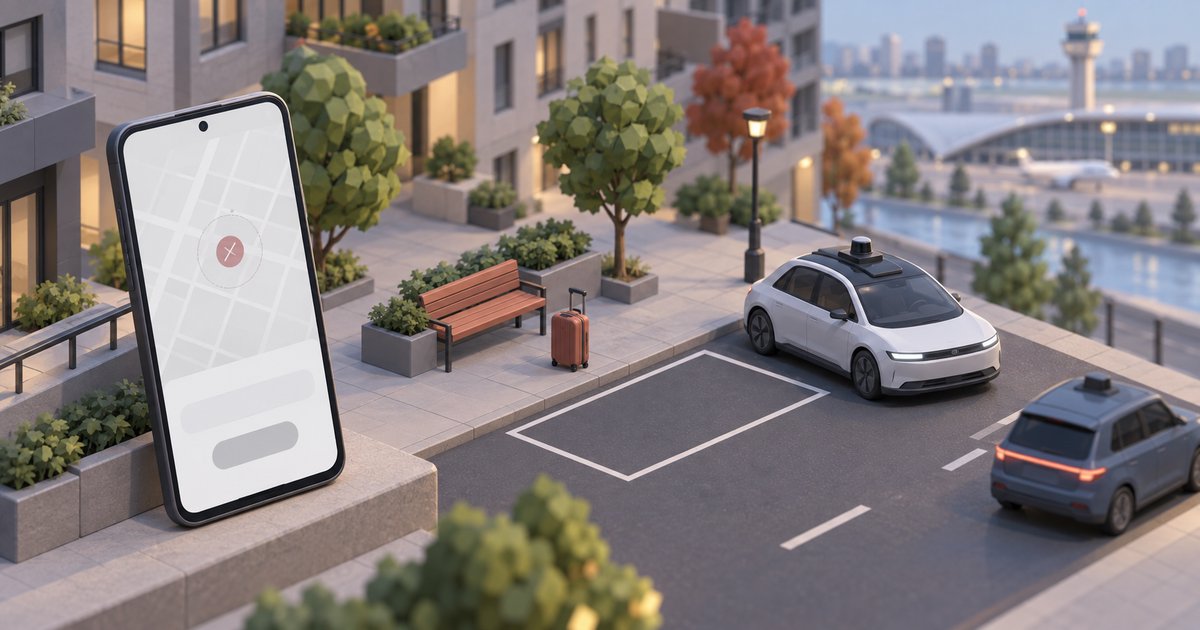
Tesla put its Robotaxi app on the Canadian Google Play Store on 16 September 2026. Canadians can now download it, sign in with a Tesla account, and open it to find that there is nothing to hail.
That is not a defect. Tesla is not operating a robotaxi service in Canada, has not announced one, and said nothing at all about this release — the listing simply changed.
A slow walk across two platforms and one border
| Step | When |
|---|---|
| Robotaxi app on iOS, including Canada | around September 2025 |
| Robotaxi app on Android, United States only | April 2026 |
| Android listing opened to Canada | 16 September 2026 |
The delay was a distribution restriction rather than a development one. The Android build has existed since April; its Play Store listing was limited to the United States, which left Canadian Android owners unable to install it through official channels for five months while Canadian iOS users had it for a year. The listing has already passed fifty thousand downloads.
What it is for, today
One thing: travelling. A Canadian who flies to a US city where the service runs can now order a ride from an Android phone rather than only on iOS. That is the whole of the change.
It is worth stating plainly because app availability is routinely read as a launch signal, and it is a bad one. An app store listing is a commercial decision inside Tesla and Google. Permission to run a car with nobody in the driver's seat is a decision by a national regulator, and the two are not connected — the first can happen in an afternoon, and the second has not happened in Canada at all.
The pattern Europe should expect
Europeans have watched a version of this twice already. The Robotaxi app is a more capable remote control than the Tesla app most owners have, and it already asks riders whether they want a Cybercab or a Model Y — software maturity that runs well ahead of where the service is legally allowed to operate.
Meanwhile the car itself is touring. Tesla's Cybercab display schedule runs to 2027 and every stop on it is in Asia-Pacific, with no European venue at any date. What is actually moving in Europe is the supervised product, not the driverless one: FSD (Supervised) is recognised in six member states and faces a Technical Committee vote in October.
So the practical reading of a Canadian Play Store listing is narrow, and it is the same reading a European should apply when the app inevitably appears here. Tesla ships software into markets long before it ships the service, because software costs it almost nothing to distribute and the service costs it an approval. When the app arrives, nothing has been approved. When a regulator publishes something, something has.