
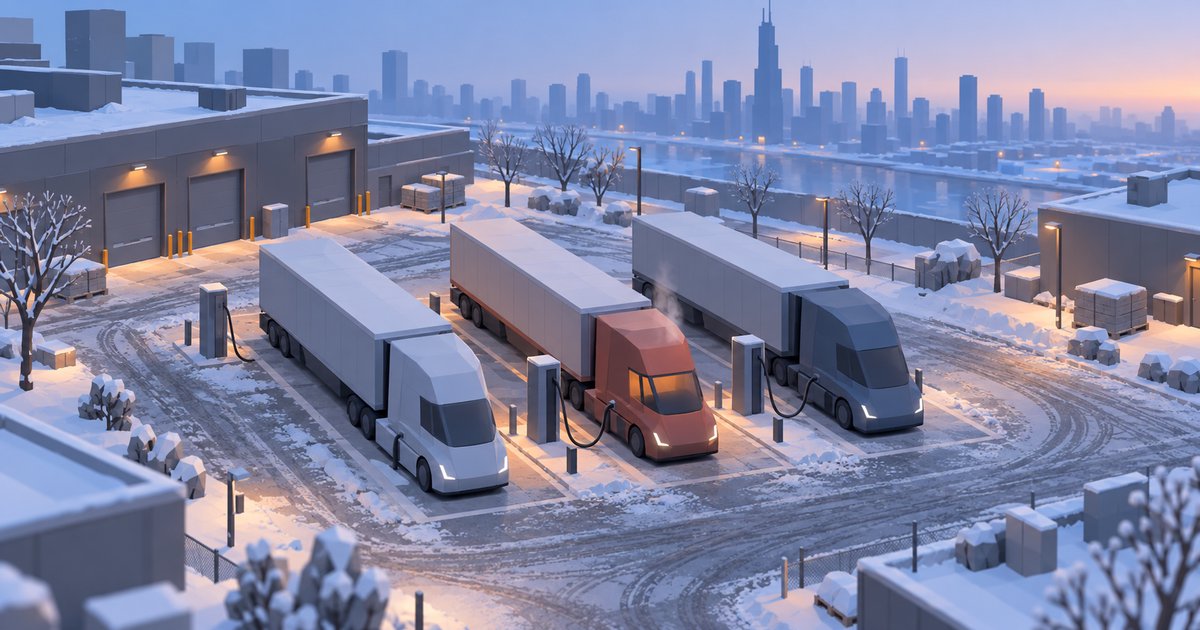
The Tesla Semi orders that have landed since production started have mostly come from companies with a reason to be early: port drayage operators on short fixed routes, shipper alliances buying on behalf of their members. HMD Trucking is neither. It runs close to 700 diesel trucks on general freight around Chicago, and it has ordered 50 Tesla Semis.
Who is buying
Co-founder Henry Malukas built HMD from a single truck. He spoke to MotorTrend at Tesla's Semi rollout event in Sparks, Nevada, in remarks published on 29 September 2026, and his reasoning was unsentimental: "It's an amazing product. It's efficient, low maintenance, also the fuel cost. It's unbelievable. And for the driver, I think it's a dream come true."
Asked whether electric trucks would take over his fleet, he did not hedge: "100 percent. It works for long haul, any kind of trucking, for any kind of use, it's going to be electric."
Tesla has not published a Semi price, and HMD has not disclosed what it is paying. Figures circulating for the deal come from secondary reporting rather than from either party, so treat them accordingly.
The cold-weather argument is the new one
Fuel and maintenance savings are the standard pitch, and every Semi order story repeats them. Malukas added one that fleet operators in northern Europe will recognise immediately.
A diesel tractor in an Illinois winter either idles all night or needs someone to get it started in the morning. Idling burns fuel to produce nothing and wears the engine; the alternative is paying people to coax trucks awake at dawn. A Semi sitting plugged in overnight pre-heats its cabin and its battery from grid power and is ready when the driver is.
That is the argument that travels. Cold-weather range loss is the standard objection to electric trucks in Scandinavia and the Alps, and it is real. What Malukas is pointing at is the other side of the ledger, which rarely gets counted: the cost the diesel fleet is already paying every winter night and has stopped noticing.
Charging is being built, not assumed
HMD is installing its own charging in Chicago rather than waiting for a network, and plans to use Tesla's Megacharger sites as they appear. That pairing — depot charging for the predictable overnight cycle, public megawatt sites for the rest — is the model emerging around the Semi, and it is the same one behind Tesla's public Megacharger work with Forum Mobility in California and the first Canadian Megachargers in British Columbia.
The long-range Semi is quoted at 500 miles fully loaded, with more on lighter loads.
Where this sits in the order book
| Customer | Trucks | Type of operation |
|---|---|---|
| ZET SCALE alliance | 2,500 | Shipper-carrier alliance |
| IMC Logistics | 50 | California port drayage |
| HMD Trucking | 50 | General long-haul freight |
| Käppeli Logistik | first European order | Swiss haulage |
Fifty trucks is not a large number against 2,500. What it signals is different: a conventional diesel incumbent, on general freight, putting about 7% of its fleet on a product with one year of deliveries behind it.
What it means in Europe
Not deliveries. Tesla has indicated European Semi deliveries in the second half of 2027, and European operators face a charging build-out and a type-approval path the US does not. What arrives sooner is the operating data — and a fleet of 50 trucks running a Chicago winter will produce exactly the numbers European hauliers have been asking for.