
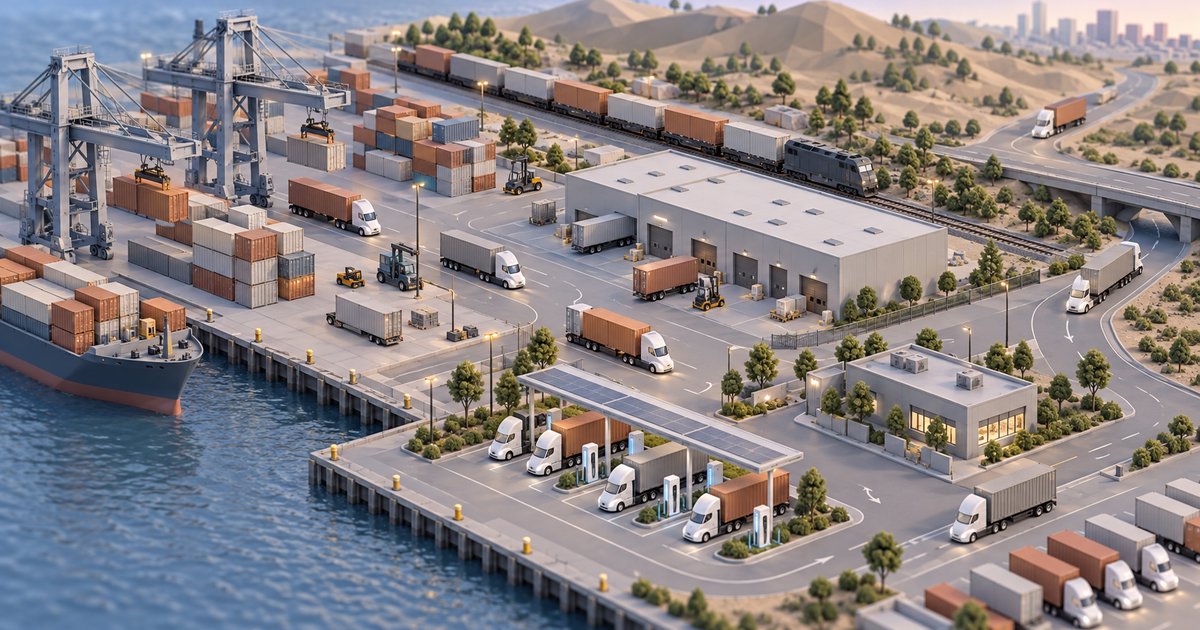
Tesla has landed another fleet order for the Semi, and this one comes from the part of the freight industry the truck was built for. IMC Logistics confirmed at the 2026 Intermodal EXPO in Long Beach that it will add 50 Tesla Semis to its California operation, with one of the trucks already on the show floor.
IMC describes itself as the largest asset-based marine drayage operator in North America. It runs a fleet of more than 2,700 trucks from over 50 locations across the continent, which puts an order of 50 in proportion: this is a deployment, not a pilot, and it is also well under two percent of the fleet.
Two ranges, two jobs
| Version | Rated range | Where it runs |
|---|---|---|
| Standard Range | about 325 miles (roughly 525 km) | Drayage inside California |
| Long Range | up to 500 miles (roughly 800 km) | Southern California to inland destinations |
The split is the interesting part. Drayage — hauling containers between ports, rail yards and nearby warehouses — is short, repetitive and ends where it began. A truck on that duty cycle returns to the same yard every night and never needs the range it would need on a trunk route, which is why the cheaper battery goes there. The Long Range trucks take the longer inland legs where a mid-journey charge would otherwise be required.
Why drayage keeps coming first
Electric haulage is hardest when a truck sleeps somewhere different every night. Drayage is the opposite: fixed routes, predictable distances, depot charging, and a yard the operator controls. It is the easiest case for a battery-electric Class 8 tractor, and it is where almost every early Semi deployment has gone.
There is a regulatory pull as well. Californian ports have been under sustained pressure to cut emissions from the truck traffic they generate, and drayage fleets serving them have had reason to electrify ahead of the rest of the industry.
IMC was not starting from zero. It already runs battery-electric and hydrogen fuel-cell trucks, plus vehicles on renewable diesel — a fleet that has been testing alternatives for years rather than committing to one.
What it says about the Semi's order book
The Semi's customer list has been filling with operators of exactly this profile — regional fleets with fixed routes and their own depots — rather than long-haul carriers. Bison Transport put the truck in its drivers' hands in Chicago in August, and Tesla has been adding public charging at depots it does not own to widen the range of routes the truck can serve.
For European readers the relevant comparison is scale and timing. Einride's 500-truck order remains the largest on the books, and European deliveries are not due until 2027 — so while Californian ports take 50 trucks this cycle, the European Semi remains a specification sheet and a charging catalogue.