
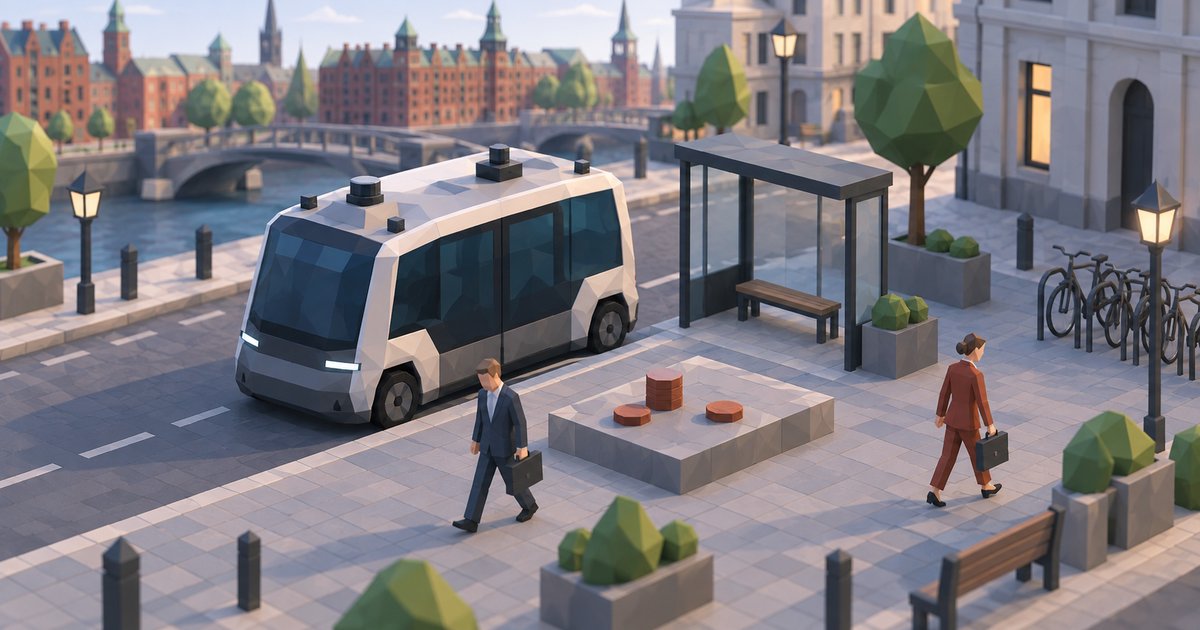
Volkswagen has spent this year looking for someone to help pay for its robotaxi division. According to Manager Magazin, reported by electrive on 17 September, the first round of that search has failed — and the two parties at the table, Uber and Lyft, have both walked away.
What MOIA costs
MOIA is Volkswagen's autonomous mobility arm, and the vehicle at the centre of it is the ID. Buzz AD, the self-driving version of the electric microbus. Volkswagen has put roughly 2 billion euros into it already.
Getting to commercial operation in the 2030s is said to need at least another billion on top, a sum the group "neither wants to, nor is it able to" carry by itself. That is the sentence that explains the investor hunt. An incoming partner was expected to put in several hundred million euros before an agreed milestone, with further payments after it.
Where the talks broke down
The report lists three disagreements, none of them about whether the technology works.
| Sticking point | The disagreement |
|---|---|
| Payment model | Per kilometre driven, or per vehicle supplied |
| The vehicle | Whether the ID. Buzz AD would be used at all |
| Contract length | How long the agreement would run |
Underneath all three sat a fourth question: whether Volkswagen would have to keep investing anyway. An investor who suspects the answer is yes has less reason to move quickly.
What is reportedly still open is a partnership with Nvidia or the British autonomy firm Wayve — or an outright sale of MOIA to Uber, which would end Volkswagen's ownership of the programme entirely.
The awkward part is that MOIA is running
This is not a project that failed in the lab. MOIA has been testing autonomous ridepooling in Hamburg under the ALIKE project since July, and it operates the ID. Buzz AD with Uber in the United States. Volkswagen is the only European carmaker to have put a self-driving passenger service on its home continent at all.
The money problem arrived while the service worked, which is the harder version of the problem to solve.
Why this matters to a Tesla driver in Europe
Europe is where Tesla's robotaxi plans are furthest from reality, and the shape of the competition here is being decided now. Tesla is expanding driverless operation across Texas. Waymo has picked Munich for its first European robotaxi city. Lucid and Bolt have announced a European robotaxi fleet. Against that, the continent's own entrant cannot fund the next stage.
There is a pattern here worth naming. Earlier this month XPeng found no takers for licensing its self-driving stack. Autonomy programmes are proving easier to demonstrate than to finance, and the companies with the deepest pockets are increasingly the only ones who get to keep going.
What is not confirmed
Volkswagen has not commented, and none of the above comes from the company. It rests on Manager Magazin's reporting of internal deliberations, relayed by electrive. Treat the failure of the first round as reported rather than established, and note that a first round failing is not the same as the programme ending.