
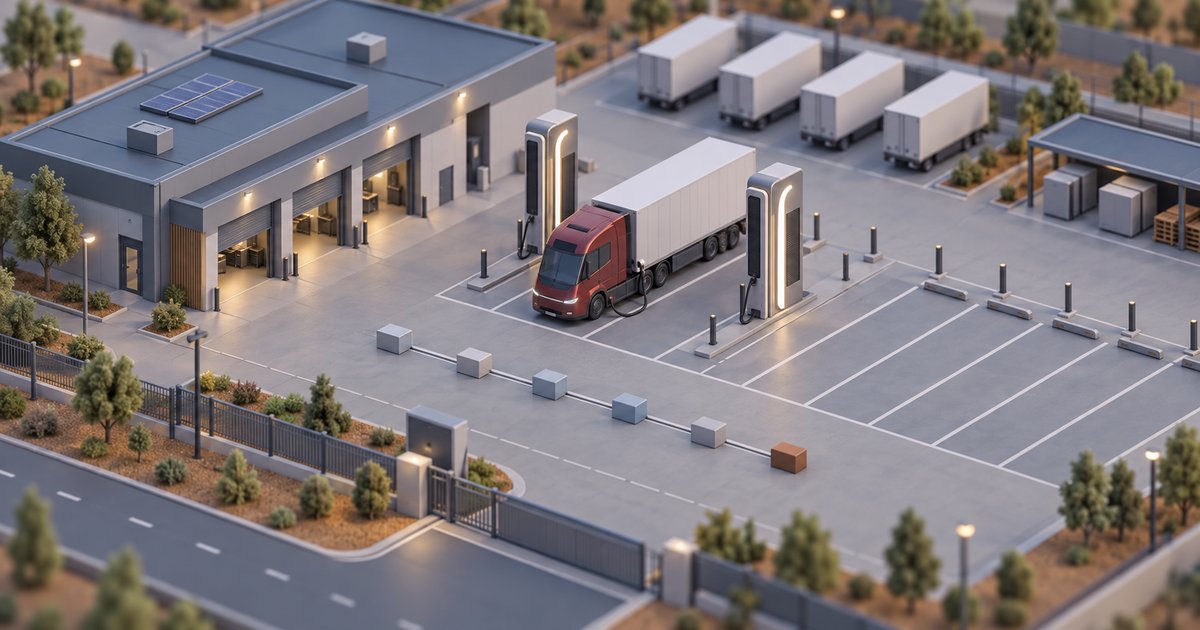
Tesla's Semi programme lead has put a firmer date on the truck's European arrival, and it is later than the one most coverage has been carrying. In an interview published by Automobile Propre on 28 September 2026, recorded around IAA Transportation in Hannover, Dan Priestley set out the sequence plainly: "Vous commencerez à voir des véhicules sur la route pour des tests et des démonstrations avec des clients au cours du premier semestre 2027. Nous visons ensuite des livraisons au second semestre de la même année."
Demonstration trucks in the first half of 2027. Deliveries targeted for the second half.
The timeline, corrected
| Phase | When |
|---|---|
| Test and demonstration trucks with customers | First half of 2027 |
| Customer deliveries targeted | Second half of 2027 |
| European Megacharger rollout begins | 2027 |
That is a meaningful shift. Tesla's European launch has been widely reported — including in TeslAnt's coverage of the Semi charging catalogue and the production specification — as beginning at the start of 2027. Priestley splits that year in half and puts the trucks in the back of it. He gave the same framing in English at the show, telling FreightWaves that Tesla was lining up customers for "demonstrations in the first half of next year, with opportunity to take delivery by end of next year".
For a haulier that has already been quoted for depot hardware, the gap between January and October 2027 is a full budget year.
The first European trucks are Nevada-built
There is no European factory decision, and Priestley explained why it can wait: "Pour la première vague, notre usine du Nevada nous offre une capacité suffisante pour servir le marché européen, mais nous voyons assez d'opportunités et de développement sur ce marché pour qu'il soit probablement pertinent de localiser à un moment donné."
The Sparks, Nevada plant is designed for up to 1,000 trucks a week, or 50,000 a year. Elon Musk has previously floated later production at Grünheide, but Tesla has committed to nothing. European trucks are built in Nevada and shipped.
Sold direct, serviced by Tesla
Two answers matter for fleets sizing up the purchase. On sales there is no dealer layer and no minimum order: "Nous vendrons à tout le monde, que ce soit de grandes flottes, de petites flottes, des indépendants. Dans tous les cas, ils travailleront directement avec Tesla."
On support, Tesla is not leaning on existing truck workshops: "nous construisons notre propre réseau de service et de maintenance, de manière à ce que chaque camion ait le support dont il a besoin." That means dedicated Semi service centres in Europe, mirroring the North American arrangement, plus mobile service — a substantial build-out to complete alongside a charging network and a first delivery wave.
Autonomy is an intention, not a date
"Nous prévoyons d'arriver à déployer la conduite autonome aux États-Unis, et aussi en Europe à terme, parce que nous pensons que c'est moins coûteux mais aussi beaucoup plus sûr pour tout le monde sur la route." Europe gets no date, which is the honest answer while the regulatory position for autonomous heavy goods vehicles here remains unsettled.
What it changes for a European operator
The specification has not moved: up to 550 km at 40 tonnes, around 1 kWh per kilometre, charging at up to 800 kW on MCS. What has moved is when a truck can be parked next to the charger. Anyone ordering a Megacharger now — at 163,000 euros for the mandatory pair — is provisioning a depot roughly a year before the vehicle it serves is due.
Priestley's summary of the ambition was broader than the schedule: "Nous irons partout où le marché nous mènera." He named France, Germany, the United Kingdom, the Benelux countries, Poland, Spain and Italy among the markets in view.