
For most of the past decade the robotaxi argument has been about whether the car can drive. Waymo's newest vehicle suggests that argument is considered settled enough internally to start competing on something else: what the ride is actually like.
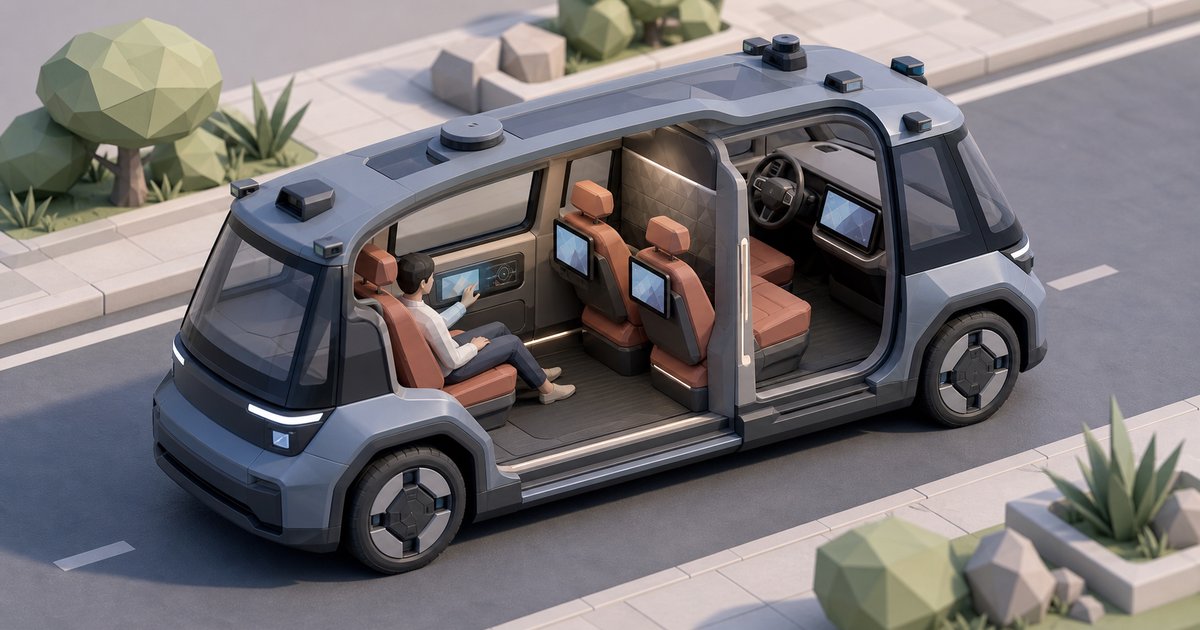
The Ojai is Waymo's sixth-generation, purpose-built robotaxi — an all-electric passenger van built with Chinese manufacturer Zeekr, with a tall interior and elevator-style sliding doors. Early-access testing was under way in August 2026, with a wider rollout to more service areas promised.
A cabin that watches who is sitting in it
The centrepiece is a choreographed three-screen layout: a display up front and one behind each front seat. Rather than showing the same thing everywhere, the interface responds to occupancy — a screen serving an occupied seat shows the full set of controls, while an empty seat's screen drops to a simplified view.
There is also a Calm Mode, which dims the brightness and reduces the display to essential trip information only. It is a small feature that says something about the design brief: the assumption is no longer that a passenger wants to be shown how clever the car is for the whole journey.
Gemini is a passenger, not a driver
Google's Gemini assistant is present, and the boundaries drawn around it are the most interesting part of the announcement. It sits behind a dedicated icon on the screen and stays inactive until a passenger taps it. Once engaged, it handles conversational requests: adjusting cabin climate, answering questions about nearby points of interest, or reporting progress on the journey.
What it does not do is touch routing or vehicle movement. The driving stack and the language model are kept apart by design.
That separation is a deliberate safety architecture, and it is the opposite of where the wider industry rhetoric has been pointing. Putting a general-purpose language model anywhere near a vehicle's path planning creates a failure mode that is very hard to bound; keeping it on the comfort controls does not.
The Tesla contrast
The Ojai keeps a steering wheel and conventional driving controls. Tesla's Cybercab, currently carrying employees at Giga Texas, has none. The two vehicles represent genuinely different bets about how quickly a regulator will accept a car with no way for a human to take over.
Not everything impressed. One early tester praised the automated door closure and the interface animations, but reported that the Ojai's self-driving behaviour felt less confident than the fifth-generation Waymo Driver platform it succeeds — a reminder that a new vehicle means a new sensor suite and a new validation curve, not a straight upgrade.
Why this matters in Europe
Waymo does not operate in Europe, and nothing here changes that. The relevance is that European robotaxi services are arriving now, and they will be judged on exactly the axis Waymo has just moved to.
Uber and Wayve cleared London's licensing hurdle for supervised robotaxis this month, and Moove raised $250 million to build the depot infrastructure behind them. Safety cases get a service licensed. Once several licensed services compete for the same passenger, the cabin is what the passenger actually experiences — and the evidence that the driving itself is good enough is already being published independently.