
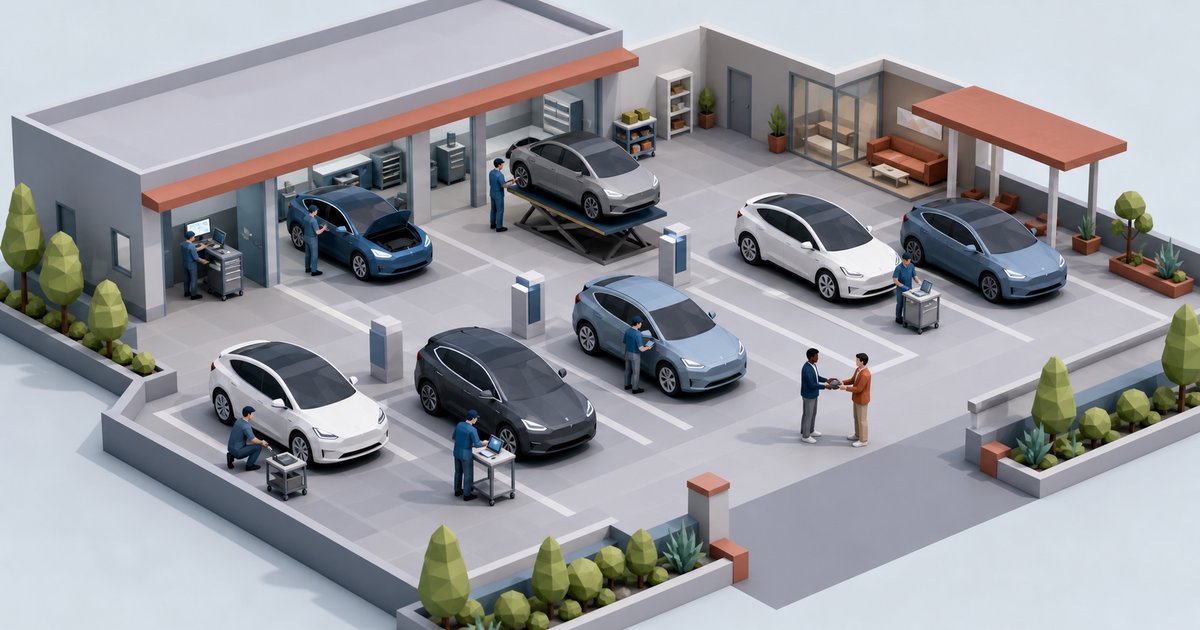
Tesla has launched a Certified Pre-Owned programme in the United States, adding a formal inspection and warranty layer to a used-car operation it has run for years without one. It is a small administrative change with a large commercial purpose: propping up what a used Tesla is worth.
What certification actually covers
Cars entering the programme go through an inspection of more than 115 points covering cosmetic, functional and structural condition, are refurbished where needed, and are then certified. Tesla says certified cars carry no history of structural damage or airbag deployment.
Each certified car comes with a Pre-Owned Limited Vehicle Warranty of one year or 10,000 miles, whichever comes first. Any remaining coverage from the original New Vehicle Limited Warranty stays with the car on top of that.
| Element | Terms |
|---|---|
| Inspection | 115+ points, cosmetic, functional and structural |
| Excluded history | Structural damage, airbag deployment |
| Warranty added | 1 year or 10,000 miles, whichever first |
| Original warranty | Any remaining balance retained |
| Market | United States |
Drive Tesla reports the programme is not available in Canada. Tesla has announced nothing for Europe.
Why now
The timing is not accidental. Used Tesla values have fallen hard, and the gap between what the cars are worth and what condition they are actually in has become the story. TeslAnt reported this week that used Model S prices have collapsed while the batteries largely have not — high-mileage cars commonly retain 85-90% of original capacity after a decade, with one European listing at €14,000.
That gap is an opportunity and a problem at once. It means used Teslas are genuinely good value; it also means residuals are weak, which raises lease costs and makes new cars harder to sell. Certification is the conventional tool for narrowing it. Every established premium brand runs one, for exactly this reason.
What a buyer is really paying for
The honest framing is that certification does not make a car better. It transfers risk. A buyer who can assess an EV's battery, check service history and inspect for repair work is paying a premium for reassurance they could have sourced themselves.
For most buyers that reassurance is worth something, because the two failure modes that frighten used-EV shoppers — a degraded pack and an undisclosed structural repair — are the two hardest to check from a listing. A 115-point inspection with a stated exclusion for structural damage speaks directly to the second. It says notably less about the first: Tesla has not published a battery-health threshold a car must meet to be certified, and a one-year, 10,000-mile warranty is short cover for a component that fails, when it fails, long after that.
What European buyers get, for now
Nothing new. Tesla sells used inventory in Europe through its own site with its own used-vehicle warranty terms, but there is no announced European equivalent of this programme and no date for one.
Europeans shopping used are doing so in a market where prices have started falling and independent dealers, not the manufacturer, set the terms. Until Tesla extends certification across the Atlantic, a European buyer's protection is whatever their dealer offers and whatever is left of the original warranty.
Bottom line
A sensible, overdue move in the US that mostly benefits Tesla's residual values, with a real but limited benefit to buyers. Watch whether it crosses to Europe — that is where used Tesla pricing is under the most pressure.