
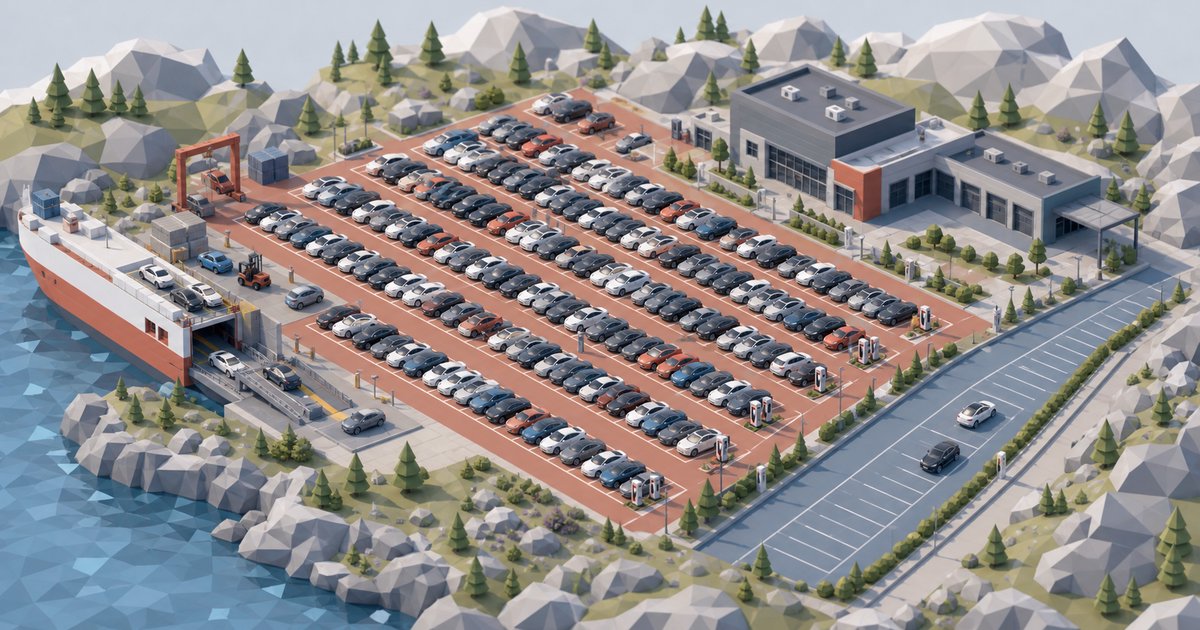
Norway's new car market delivered one of its strangest months in years in July: battery-electric cars took 97.6% of registrations, an all-time high — and Tesla, the brand that has led the country for most of 2026, registered 24 cars.
What the July numbers say
The Norwegian Road Traffic Information Council (OFV) counted 9,609 new passenger cars in July, up 0.5% on the same month last year. Of those, 9,379 were battery-electric, lifting the electric share to 97.6% from 96.5% in June. Petrol, diesel and hybrid drivetrains between them accounted for fewer than 250 cars in the entire country.
Toyota led the brand table with 1,260 registrations. Xpeng climbed to third on a 161% year-on-year jump. Tesla finished the month with 24 cars — a 97% fall against July 2025.
| Top models, Norway, July 2026 | Units |
|---|---|
| Toyota bZ4X | 532 |
| Volkswagen ID.4 | 485 |
| Toyota Urban Cruiser | 437 |
OFV summarised the reshuffle bluntly: Toyota has gone from tenth place to first in a year, and Xpeng from thirteenth to third.
Why Tesla's 24 cars are not what they look like
A 97% drop reads like collapse, but Norway is the market where monthly figures are least trustworthy as a demand signal. Tesla supplies the country in shipments rather than a steady flow, so a month that falls between boat arrivals produces a near-zero result regardless of how many orders are waiting.
The year-to-date table makes the point. Across January to July, Tesla still leads Norway with 14,413 registrations, up 3.9% on last year, ahead of Toyota on 9,972 and Volkswagen on 8,149. Norway registered 83,012 cars in total over those seven months, down 2.4%, while battery-electric volume rose 1.3% to 81,040.
The same pattern across Europe
July was uneven for Tesla everywhere, in both directions:
| Market | Tesla registrations, July 2026 |
|---|---|
| France | +86% |
| Denmark | +52% |
| Sweden | −60% |
| Spain | 131 units, −81.3% |
| Norway | 24 units, −97% |
Swings of that size in opposite directions during a single month are the signature of shipment timing and tax-change deadlines, not of demand moving. The reading that fits the data is that Tesla prioritised markets where incentives were strongest in July — France above all — and let the Nordic queue wait for the next delivery wave.
What it means for Norwegian buyers
Two things are worth separating. Tesla's monthly number will bounce back; the competitive picture underneath it is the part that has actually changed. Toyota did not reach first place by discounting a single model — it arrived with the bZ4X and the Urban Cruiser selling in volume together, and Xpeng has gone from a curiosity to a top-three brand in twelve months. That is the same squeeze that saw BYD match Tesla's European market share for the first time in the first half.
For anyone shopping in Norway, the practical consequence is choice and negotiating room. A market at 97.6% electric with a dozen credible brands competing for it behaves differently from one where two models dominate. If you are waiting on a Tesla delivery, the July figure says nothing about your order — but the brand table says a great deal about how many alternatives now exist while you wait.