
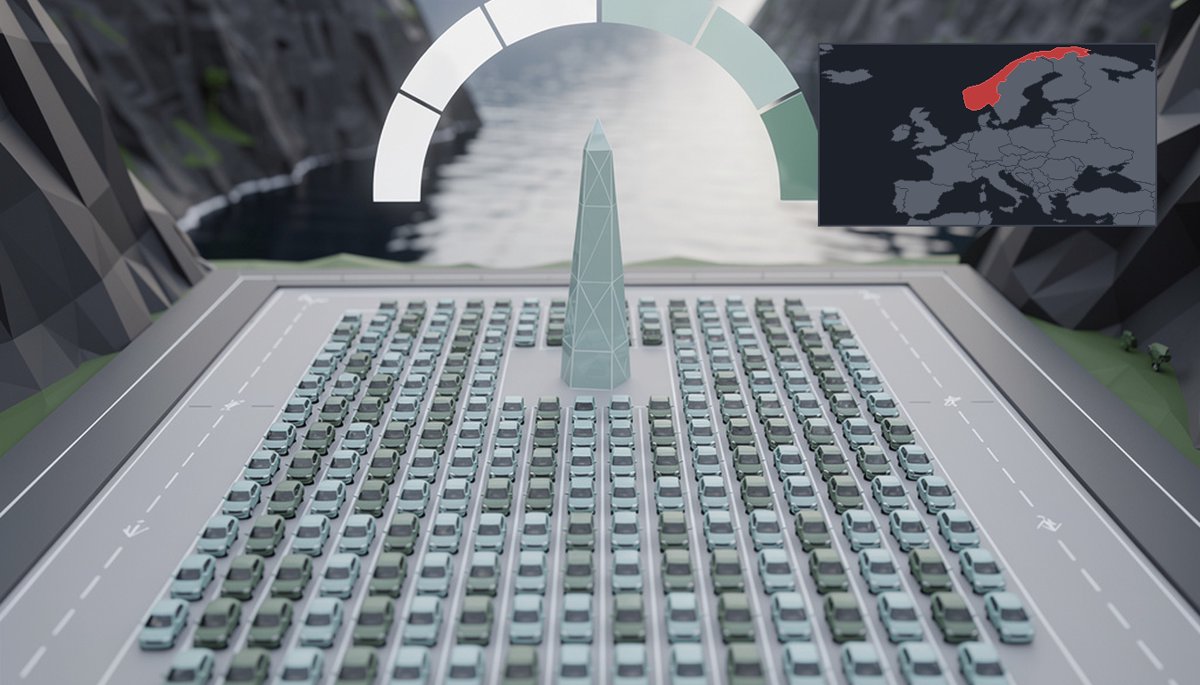
Norway continues to set the pace for the rest of Europe. In June 2026, battery-electric vehicles accounted for 96.5% of all new passenger-car registrations in the country, with 18,875 new BEVs hitting the road. In the same month Norway crossed a symbolic threshold: its on-road electric-vehicle fleet passed one million vehicles for the first time.
A market that is now almost entirely electric
The June figure is not an outlier. Across the first half of 2026 the electric share of new-car sales rose to 97.6%, even as the overall market contracted slightly. For practical purposes, the internal-combustion new-car market in Norway has ceased to exist — petrol and diesel models now make up a rounding error in the monthly registration data. What was once a policy target is now simply how the market works.
The one-million milestone matters because it marks the shift from "selling EVs" to "running an EV fleet." A country of roughly 5.5 million people now has more than a million electric cars in daily use, which changes the questions that matter: from purchase incentives to charging density, grid load, winter range, and the second-hand market.
Adoption is uneven across regions
Even in a near-saturated market, geography still shows through. Rural and smaller-city counties are running ahead of the big urban areas, where higher shares of company cars, taxis, and delayed replacement cycles pull the average down.
| Region | EV share of new registrations (June 2026) |
|---|---|
| Telemark | 99.8% |
| Rogaland | 99.0% |
| Oslo | 93.7% |
| Akershus | 92.0% |
The spread — from a near-perfect 99.8% in Telemark to the low-90s around the capital — is a reminder that the last few percentage points are the hardest to close, and that fleet and commercial buyers move on a different timeline from private owners.
Why it matters beyond Norway
Norway is not a template that other European markets can copy wholesale — its combination of hydropower, high fuel taxes, and long-standing EV incentives is unusual. But it is the closest thing Europe has to a live preview of a post-combustion car market, and that makes it a useful reference point for every other country still climbing the adoption curve.
Tesla is one of the brands that helped build that market: the Model Y and Model 3 have repeatedly ranked among Norway's best-selling cars, and the country remains one of Tesla's strongest markets per capita. As Norway's fleet matures, the pressure shifts from getting people into their first EV to keeping a million-plus electric cars charged, serviced, and holding their value — the same challenges the rest of Europe will face as its own EV shares climb toward Norwegian levels.