
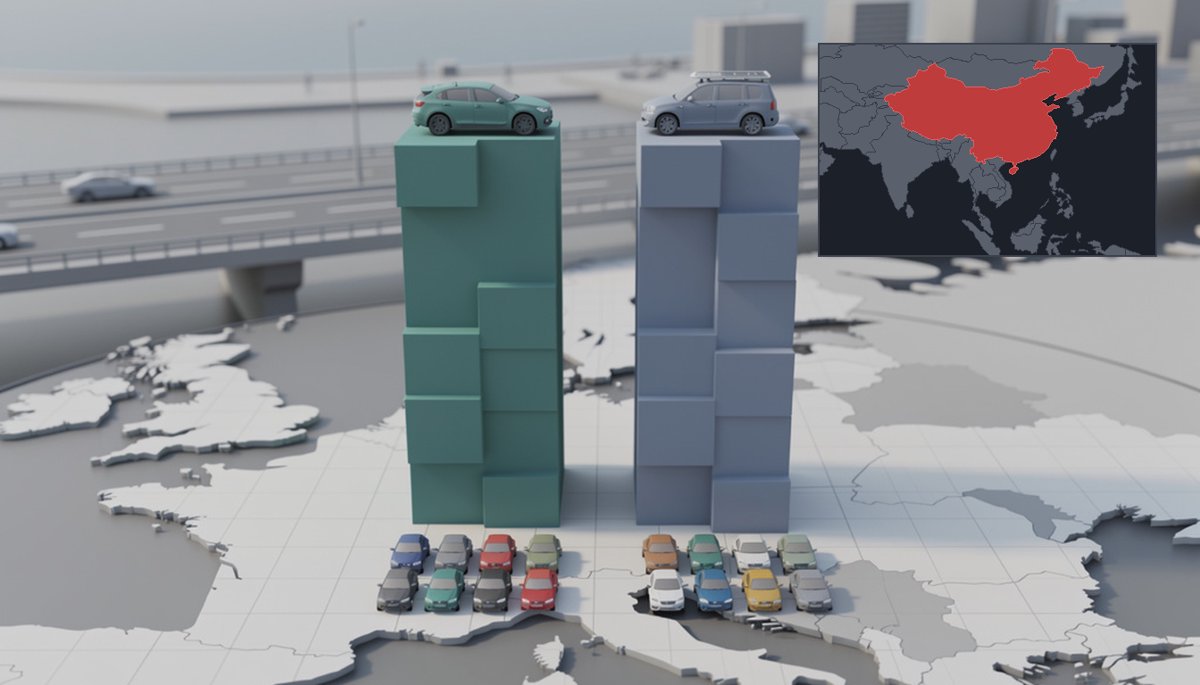
For the first time, BYD has drawn level with Tesla in Europe. New-car registration data for the first half of 2026 shows the Chinese group and the American EV maker finishing the period with an identical share of the European market — a symbolic moment in a rivalry that has reshaped the continent's electric-car landscape.
A dead heat in the first half
Across the EU, the EFTA countries and the United Kingdom, BYD registered 174,144 vehicles in the first six months of 2026, while Tesla registered 170,351. Both ended the half with a 2.4% share of the total car market. The gap between them — fewer than 4,000 cars over six months — is a rounding error at this scale.
| Brand | H1 2026 registrations | Year-on-year change | Market share |
|---|---|---|---|
| BYD | 174,144 | +145.5% | 2.4% |
| Tesla | 170,351 | +54.6% | 2.4% |
The headline "BYD catches Tesla" tells only half the story, though. Both numbers are growing — and growing fast.
Not a like-for-like comparison
The two tallies count different things. BYD's figure blends fully electric cars with a rapidly expanding line of plug-in hybrids, and its range skews toward cheaper models that undercut Tesla on price. Tesla, by contrast, sells only battery-electric vehicles and competes further up the price ladder. Matching BYD's registration count while selling pricier, pure-electric cars is a different achievement from BYD's, and reading the two 2.4% shares as identical performance flattens that nuance.
Tesla is rebounding, not retreating
The more surprising line in the data is Tesla's own. After a bruising 2025, Tesla's European registrations rose 54.6% year-on-year in the first half of 2026 — a sharp recovery rather than the decline much of the coverage last year predicted. The refreshed Model Y and aggressive pricing across several markets appear to have reignited demand. BYD grew faster, but it did so from a smaller base and with a far wider model line-up; Tesla's rebound came with essentially two volume models.
How BYD cleared the tariff wall
BYD's surge is all the more striking given the EU's countervailing duties on Chinese-built battery-electric cars, introduced to offset state subsidies. The company has leaned on two levers to blunt them: pushing plug-in hybrids, which fall outside the BEV-specific tariffs, and localising production, with a new plant in Hungary intended to put European-built BYDs beyond the reach of import duties altogether. The result is a brand that has turned a policy headwind into a growth story.
What it means for European buyers
For shoppers, the practical upshot is a genuine two-horse race at the affordable end of the EV market — and more pressure on prices. Tesla's response has already been to cut Model Y and Model 3 pricing in several markets and lean on incentives; BYD keeps widening its line-up. Whether Tesla holds its ground through the second half will depend on how quickly BYD's local production ramps and whether Tesla brings a genuinely lower-cost model to Europe. On current trends, the two brands will spend the rest of 2026 trading places at the top of the challenger pack.