
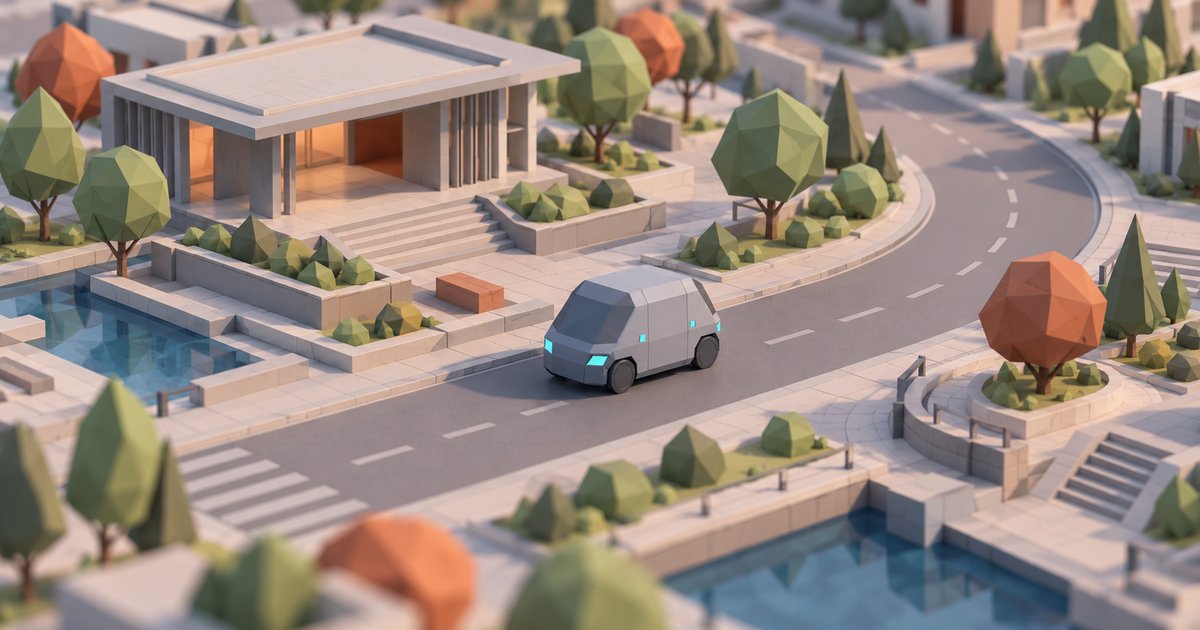
The US safety regulator has proposed a federal colour for "nobody is driving": cyan. A notice of proposed rulemaking on FMVSS No. 108, the US vehicle-lighting standard, went on public inspection at the Federal Register on 23 October 2026 and is due to be published on 26 October (docket NHTSA-2026-1519). It would let manufacturers fit cyan lamps that show an automated driving system (ADS) is in control, and it would drop driver-specific lighting rules for vehicles with no steering wheel or pedals, the category Tesla's Cybercab belongs to.
What NHTSA is proposing
| Proposed change | Vehicles affected |
|---|---|
| Optional cyan ADS marker lamps, with federal specifications | ADS-equipped vehicles only |
| Manual and self-cancelling turn-signal control rules apply only to cars with manual driving controls | No steering wheel or pedals |
| Hand- or foot-operated headlamp beam switching no longer required | No steering wheel or pedals |
| Turn-signal and high-beam telltales no longer required | No steering wheel or pedals |
| Integral-beam headlamps tested at the maker's stated voltage instead of 12.8 V | All vehicles |
| Low beam no longer has to sit above high beam in vertical layouts | All vehicles |
A car without manual controls would still need turn signals, hazard warning signals and beam switching, operated by the ADS. Without turn-signal telltales, it would need a lamp-failure telltale visible from every seat. The hazard warning telltale stays, and NHTSA asks whether it should. NHTSA says such vehicles would otherwise seek exemptions.
The cyan lamp
The proposal defines an ADS marker lamp as one "used to indicate when a vehicle is operating without the expectation that an occupant is monitoring the roadway". Fitted lamps would burn steadily in the cyan defined by SAE J578, one or two each at the front, sides and rear, so four to eight in all, at least 15 inches (38 cm) above the ground. They could not be optically combined with other lamps. The specification largely follows SAE J3134, revised in December 2025.
NHTSA is not making the lamps mandatory, because it says it lacks the information to show a safety need. It wants them standardised so that manufacturers do not invent conflicting signals. It cites a survey of more than 4,400 drivers in the UK, Japan, the US and Germany, in which a majority in each country wanted such lamps, including upwards of 80% in the US and the UK. It also cites a two-year Mercedes-Benz trial with five cars in California from 2023 to 2025.
What it means for Tesla
For owners, the definition settles one thing. FSD (Supervised) expects the driver to watch the road, so under this wording a consumer Tesla could not light a cyan lamp, and the proposal would bar the lamps from vehicles without ADS functionality altogether. They are meant for driverless operation such as the Cybercab's.
For the Cybercab, the control changes matter more. The car has no steering wheel, pedals or mirrors, and NHTSA has been auditing how Tesla certified it since 3 September, with Tesla's answer to a Special Order due on 30 October. A proposal changes the standard for the future. It does not settle whether the car met the standards as written when Tesla certified it. The notice follows the June proposal to drop the brake-pedal requirement for driverless vehicles, and NHTSA says a separate rulemaking will cover telltales across several standards.
Comments are due 30 days after publication, which puts the deadline at 25 November if the notice appears on 26 October.
Where Europe stands
In Europe, lighting is set by UNECE regulations. The notice says a task force of UNECE's lighting working party (GRE) is drafting a harmonised ADS lamp standard, while the automated-driving working party (GRVA) does not recommend requiring extra ADS lighting, citing the need for more research. NHTSA also rejected combining front ADS lamps with daytime running lights, which a 2023 UNECE draft would allow.