
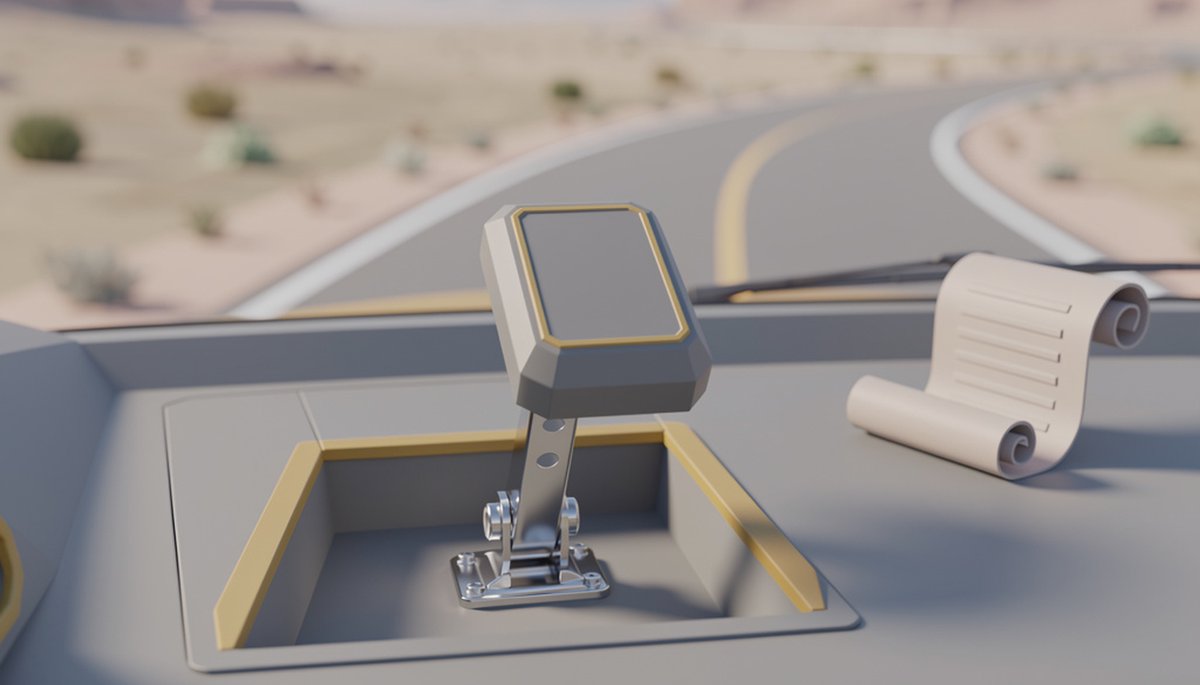
United States regulators have proposed scrapping a decades-old rule that requires every car to have a brake pedal, a change aimed squarely at vehicles built to drive themselves. The move removes one of the last federal obstacles to deploying purpose-built robotaxis — and Tesla's two-seat Cybercab, designed from the outset without a steering wheel or pedals, stands to benefit most.
What NHTSA is proposing
On 25 June 2026, the National Highway Traffic Safety Administration (NHTSA), part of the Department of Transportation, proposed updating Federal Motor Vehicle Safety Standard No. 135 — the standard governing brake systems — to remove the requirement for hand- or foot-operated brake controls in vehicles designed never to be operated by a human driver. A companion change would exempt such vehicles from Standard No. 102, which mandates a transmission shift-position display intended for human drivers.
Crucially, the proposal does not relax the performance side of braking. Vehicles that qualify must still meet strict stopping-distance criteria, demonstrated through alternative test procedures rather than a human pressing a pedal. The public has 30 days to comment before the DOT decides whether to finalise the rule.
Why it matters for Tesla
Tesla has spent years developing the Cybercab as a vehicle with no steering wheel and no pedals. Rather than apply for a one-off exemption, the company waited for the rules themselves to change — and this proposal is exactly that change. Cybercab production has reportedly begun at Giga Texas, so a cleared regulatory path matters to Tesla's timeline.
The shift also reshapes the competitive field. Amazon's Zoox previously secured an exemption to run its purpose-built robotaxi, but that route caps deployment at 2,500 vehicles per year; removing the underlying requirement would eliminate that ceiling entirely. Waymo, which retrofits conventional cars such as the Jaguar I-Pace, already keeps manual controls and so was never constrained by the rule.
The European picture
For European owners watching from afar, the contrast is instructive. The EU does not deregulate by deleting controls; it certifies vehicles through type approval, anchored in UNECE Regulation 157. In June 2026 the UNECE World Forum adopted the first global regulation for fully automated driving systems, built on a "safety case" approach and the principle that a self-driving system must perform at least as well as a competent, careful human driver. The European Commission, meanwhile, is preparing type-approval changes — including regulatory sandboxes and dedicated automated-driving corridors — to allow series production of automated vehicles.
In other words, Washington is clearing a path by removing hardware mandates, while Brussels is building one by defining how autonomy must be proven safe. As Europe's own debate over EU-wide FSD approval shows, that caution runs deep.
What happens next
The 30-day comment window means nothing is final yet, and even an approved rule would only remove a hardware barrier — Tesla would still need to prove its unsupervised software is safe enough to deploy. For European drivers, a pedal-free Cybercab on local roads remains a question for EU type approval, not US rulemaking. But the direction of travel on both continents is now unmistakable.