
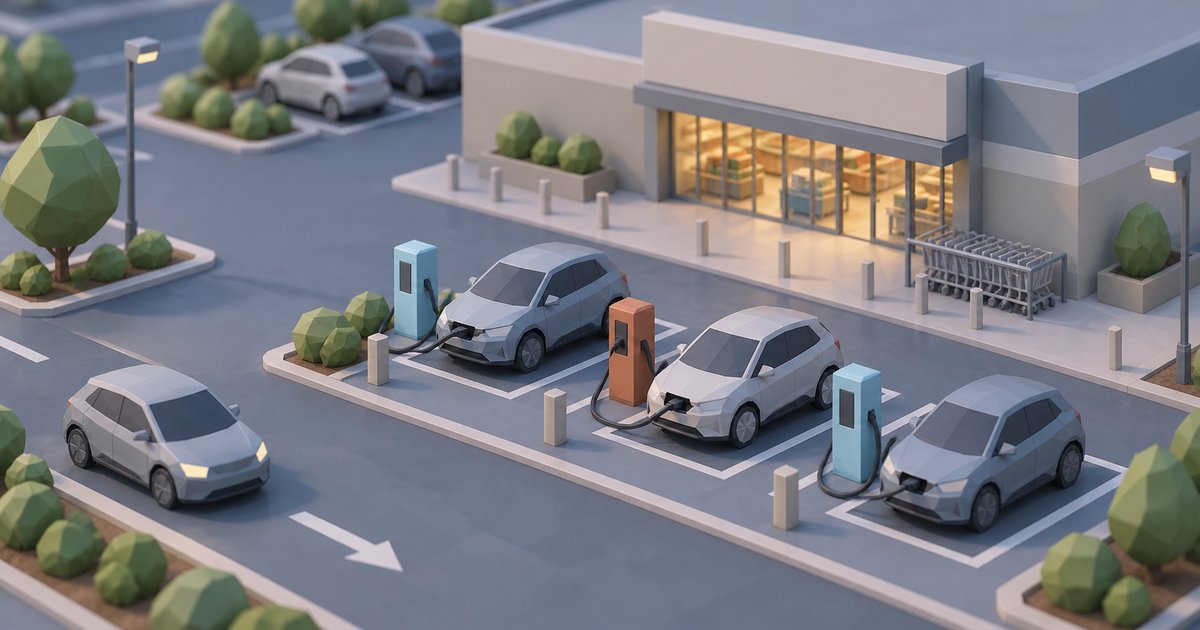
Lidl GB cut the price of rapid charging at its stores to 59p/kWh on 8 September 2026, down from 62p/kWh, for drivers who pay through the Lidl Plus app. It also committed £10 million to installing about 100 more rapid chargers at existing stores before the end of its financial year, plus chargers at most newly built stores.
That is a real price cut and a real expansion. It is also worth putting next to what a Tesla already pays.
What Lidl is claiming
| Figure | |
|---|---|
| New Lidl Plus rapid tariff | 59p/kWh |
| Previous Lidl Plus tariff | 62p/kWh |
| Saving per session (Lidl's estimate) | about £4 |
| Saving per year (Lidl's estimate) | about £529 |
| Investment this financial year | £10 million |
| New rapid chargers planned | about 100 |
| Invested since 2017 | £25 million |
| Stores with rapid charging | about one third |
The two savings figures need their baseline stated, because Lidl's press material does not lead with it: the £4 per session and £529 per year are measured against a market average of 80p/kWh, not against Lidl's own previous 62p. Against the old tariff, the cut is 3p/kWh — roughly 90p on a 30 kWh top-up.
Lidl's explanation for being able to cut at all is structural, and it is the most interesting line in the announcement: unlike supermarkets that hand their car parks to a third-party charge point operator, Lidl owns its chargers outright, so it sets the tariff rather than negotiating it.
"By expanding our rapid chargers, we're making it as simple and affordable as possible for shoppers to top up while they shop," said Richard Taylor, Lidl GB's chief real estate officer.
What it means if you drive a Tesla
Bluntly: 59p/kWh is not a cheap rate for you. Tesla's UK Supercharger tariff is time-banded and tiered — roughly 25p/kWh off-peak and 41p peak on the £9.99-a-month membership, and about 35p off-peak and 60p peak without it, per network trackers. Non-Tesla EVs pay around 65p/kWh on the same hardware.
So Lidl's new member rate lands about level with an unmembered Supercharger session at peak, and more than double an off-peak membership rate. The £529 figure is a saving relative to the expensive end of the public market, not relative to Tesla's network.
Where it does matter is geography and dwell time. A supermarket car park is a 20-minute stop you were making anyway, in a town rather than beside a motorway — precisely the gap that matters for drivers with no off-street parking, the group left exposed by the finding that half of Britain's councils offer no on-street charging at all. For them, 100 more rapid chargers in residential retail parks is worth more than a 3p tariff cut.
What it means elsewhere in Europe
Retail charging is becoming the third tier of European charging, below the motorway networks and above home. A Tesla owner in Germany reading this should recognise the shape: the BDEW survey we covered last week found German drivers charging in cities and skipping the motorway — the same substitution Lidl is now pricing for. What differs is who sets the tariff. Across most of Europe a supermarket's car park is leased to a charge point operator; in Britain, Lidl owns its own, and that is why it could cut this week and its competitors cannot.
Retailers are becoming price-setters in charging, not just landlords. Lidl owning its hardware is what let it move on price this week; Walmart's own-brand network in the US undercut Superchargers on the same logic. Tesla's network is no longer the only one with an integrated app, a fixed tariff and a captive audience — and this is the first British supermarket to compete on all three.