
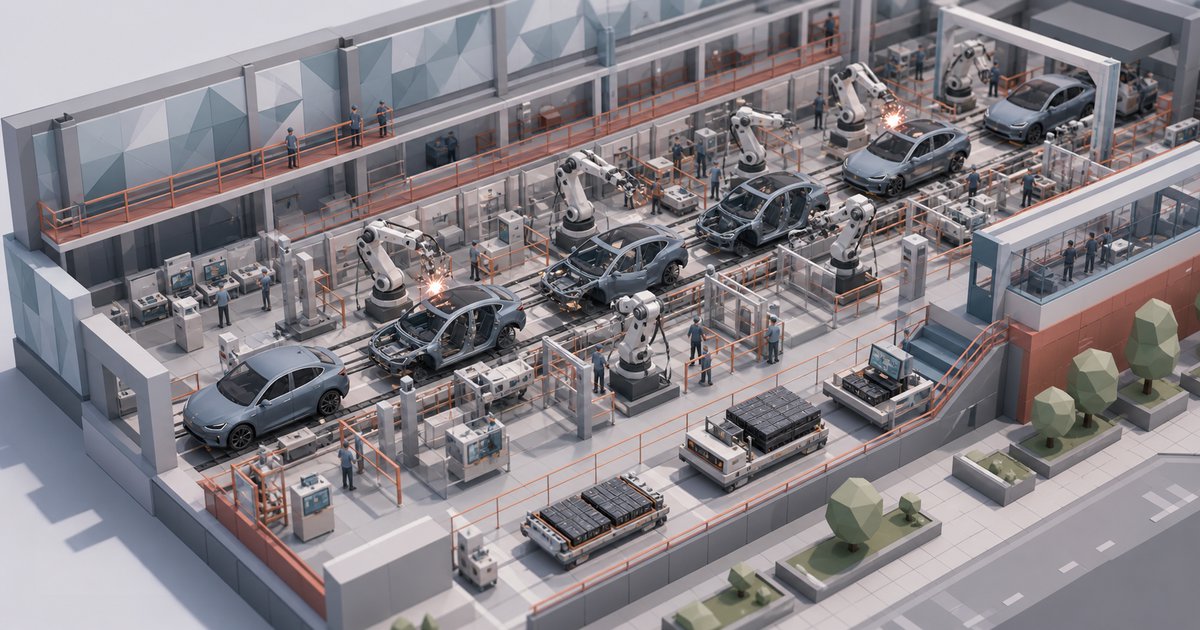
BMW started series production of the electric i3 at its Munich plant on 6 August 2026. It is the second Neue Klasse model after the iX3, and the first car built from the ground up as an EV to come off a line that has been assembling 3 Series saloons since 1975.
The symbolism is heavy — more than nine million 3 Series cars have been built at the site — but the more interesting part is the industrial claim BMW is making alongside the launch.
A four-year rebuild that never stopped the line
BMW put roughly €650 million into converting its oldest vehicle plant, and did it without halting production of the cars already being built there. The result is a new body shop with around 800 industrial robots and an automation rate of roughly 98%. From 2027 the Munich plant builds electric cars exclusively.
The cost claim is the headline
BMW says production costs at Munich will fall by about 10% with the i3 launch, dropping below the level of the vehicle generation it replaces. The company attributes the saving to three things: the Neue Klasse vehicle architecture itself, automation applied selectively rather than everywhere, and reworked production processes.
That is worth pausing on. The standard European complaint about the transition is that electric cars cost more to build than the combustion cars they replace, and that the gap is what keeps them expensive. A major manufacturer claiming its new EV is cheaper to produce than the outgoing car — on the same site, with the same workforce — is the first argument that runs the other way at volume.
A deliberately European supply chain
The i3's sixth-generation high-voltage batteries come from BMW's new plant at Irlbach-Straßkirchen in Lower Bavaria. The sixth-generation electric motor is built at BMW Group Plant Steyr in Austria.
Both matter more than they look. Cells, packs, motors and final assembly inside the EU is precisely the structure that European policy has been trying to buy into with instruments like the EU's €1.5 billion Battery Booster call, and it is the opposite of the dependency Deloitte warned is costing Europe billions. BMW got there with its own capital rather than a subsidy programme.
Demand pulled the ramp forward
Preorders opened in June 2026, and BMW says demand has run ahead of what it planned for — enough that it opened orders early and is now ramping what it describes as a steep launch curve. Customer deliveries begin in autumn 2026.
What it means for Tesla buyers in Europe
The i3 is a mid-size electric saloon, built in Germany, arriving at exactly the point in the market the Model 3 occupies. Tesla's European position has already been squeezed this year, with BYD and other rivals taking share through the first half of 2026.
What BMW has not published yet is the number that decides how much of a problem this is: European pricing per trim. Until that lands, the i3 is a credible German-built rival with a manufacturing cost advantage its maker is willing to talk about publicly — and an unknown sticker price. Anyone shortlisting a Model 3 this autumn should wait for the price list before deciding.