
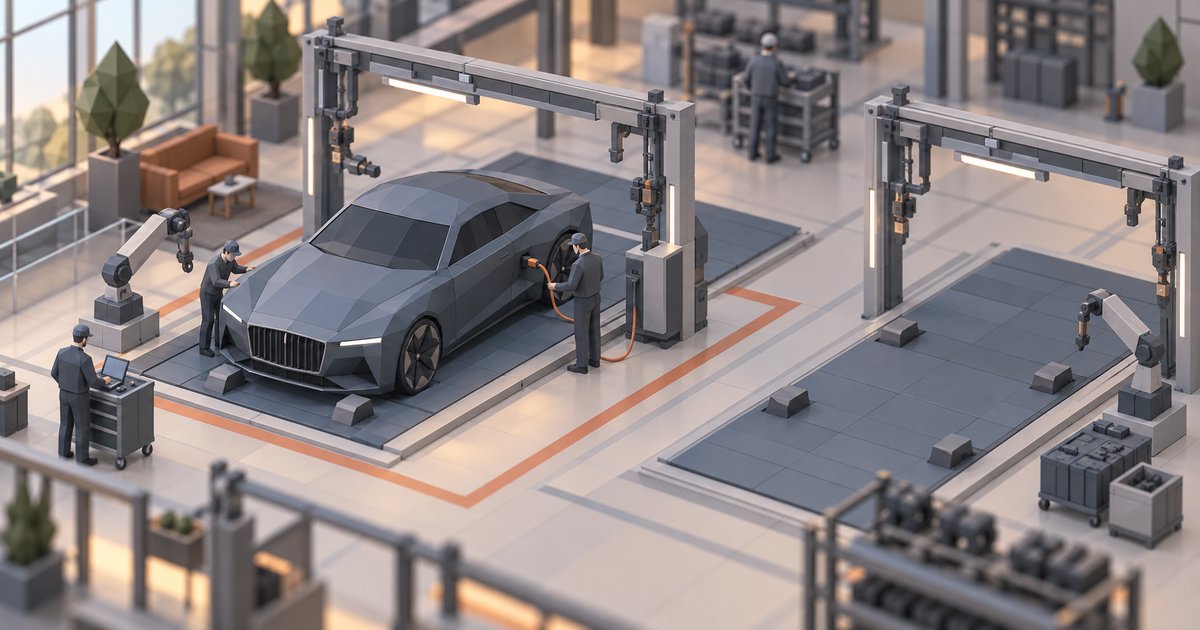
Bentley unveiled the Torcal on 23 September 2026, the first battery-electric car in the company's history. The following day its chief executive explained that it will also be the only one until 2030.
The 2030 date had already gone
Most reports of this framed it as Bentley abandoning a 2030 all-electric target. That target was abandoned in November 2024, when the Beyond100+ plan moved full electrification from 2030 to 2035. What Frank-Steffen Walliser confirmed this week is a second, quieter retreat on top of the first.
Three things changed:
- The second EV slips past 2030. The Torcal is Bentley's entire electric line-up for the rest of the decade.
- Combustion and plug-in hybrids continue through at least 2035, and the 2035 date itself is now conditional on how PHEV demand develops rather than fixed.
- Crewe is being tooled so EVs and plug-in hybrids share one assembly line, letting output swing toward whichever powertrain customers order.
"This predictable planning is honestly gone, and I do not think it will come back," Walliser said, pointing to cooling luxury-EV demand and moving regulation.
The car itself is not the retreat
The Torcal is a serious piece of engineering, which is what makes the timeline notable.
| Torcal | |
|---|---|
| Power | 888 PS (876 hp) |
| Battery | 113 kWh |
| Architecture | 800 volt |
| Range | around 600 km |
| Charging | 10–80% in 16 minutes |
| 0–60 mph (Torcal S) | 2.8 seconds |
| Model year / on sale | 2028 model year, sale from 2027 |
| Estimated price | about $250,000 |
There is no hybrid version planned, because the car sits on a dedicated EV platform. Bentley built a proper electric car and then said it would not build another for four years.
A pattern, not an incident
This is the third retreat from a European premium maker TeslAnt has covered in seven weeks. Peugeot dropped its own all-electric pledge in August while announcing seven new models. Volkswagen Group took a €6 billion impairment on its EV retreat on 20 September, with Porsche at the centre of it. Bentley sits inside that same group.
The common move is not cancelling electric cars. It is refusing to commit to a date, and building factories flexible enough that the decision never has to be made in advance.
Why a European Tesla buyer should care
Two reasons, and neither is about a $250,000 SUV.
The first is competitive. Europe's premium brands are the companies that were supposed to take share from Tesla at the top of the market. A rival whose second electric model is four years out is not contesting that ground in the meantime.
The second is about resale and residuals. Manufacturer commitment shapes how buyers price an electric car's future — charging support, software updates, parts. Every flexible-powertrain announcement is a signal that the industry's own confidence in the 2030s transition is softer than its 2020 press releases were, and used-EV values respond to that sentiment.
Tesla's position is unchanged by any of it: it has no combustion line to retreat to. Whether that reads as conviction or as exposure depends on whether Bentley's caution turns out to be right.