
A timeline, at last
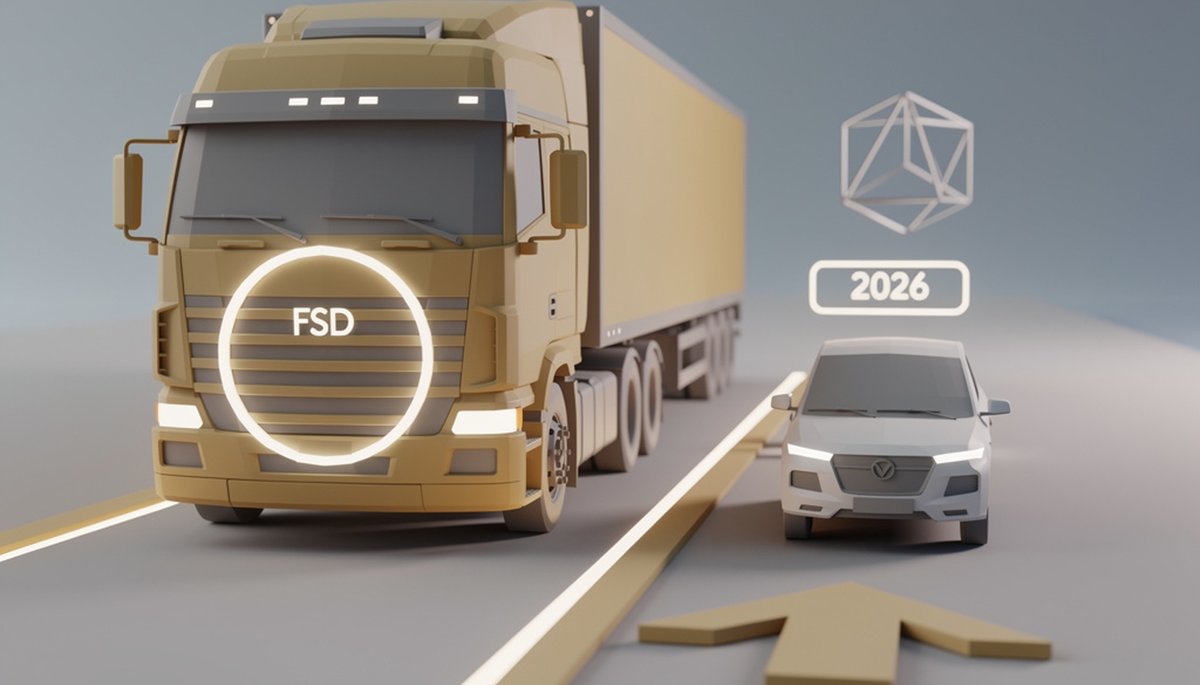
For the first time, Tesla has put a rough date on autonomous driving for its Class 8 truck. On the company's second-quarter 2026 earnings call on 22 July, Elon Musk confirmed that Full Self-Driving is coming to the Tesla Semi, saying he expects to "get self-driving working on it probably around the end of this year or early next year." It is the clearest commitment yet for a vehicle that has, until now, been left out of Tesla's autonomy roadmap entirely.
The confirmation matters because the Semi's software has always trailed the passenger fleet. While Model 3 and Model Y owners have run successive FSD (Supervised) builds for years, the Semi has been driven the old-fashioned way. Musk's comments finally fold the truck into the same self-driving programme.
Priority, not capability
Musk was careful to frame the wait as a matter of focus rather than a technical limit. He said he does not want Semi development to distract from improving self-driving safety on the Model 3, Model Y and the Cybercab, where Tesla's autonomy team is concentrated today. The plan, as he described it, is to have FSD ready for the Semi as high-volume manufacturing of the truck ramps up — expected in late 2026 into 2027.
In other words, the engineering is not the bottleneck; the queue is. The Cybercab, Tesla's purpose-built robotaxi, sits ahead of the Semi in line, and the consumer cars that generate the bulk of Tesla's FSD data and revenue stay first in the pecking order.
Why the Cybercab comes first
Tesla's near-term autonomy story is built around the Cybercab and its expanding Robotaxi service, not freight. The company has been scaling driverless ride-hailing city by city in the United States, and that programme is where unsupervised FSD is being proven in the real world. Only once that foundation is solid does Musk want to spread the team's attention to a 40-tonne truck operating in a very different environment — motorways, depots and loading yards rather than city streets.
What it means for Europe
For European fleet operators, autonomous freight remains a distant prospect. The Semi is still in the early stages of its European story, and even a fully self-driving version would run headlong into the same regulatory wall that consumer FSD faces on the continent. Tesla is still fighting for basic FSD (Supervised) approval market by market — France declined to sign off the system this month, as TeslAnt covered in the French regulator's refusal to approve FSD.
Autonomous heavy trucking sits even further back in the European regulatory pipeline than passenger-car driver assistance, so a self-driving Semi hauling freight on EU motorways is years away regardless of when the software is ready. For now, the confirmation is a statement of direction — useful for logistics operators planning fleets, but not something European hauliers can factor into near-term decisions.
The usual timeline caveat
One note of caution: Musk's self-driving timelines have a long history of slipping. His FSD milestones are almost always more optimistic than the reality that follows, and "end of this year or early next year" for a brand-new vehicle platform should be read as an aspiration rather than a deadline. What is new — and what Tesla has now put on the record — is the commitment itself: the Semi is finally on the FSD roadmap.