
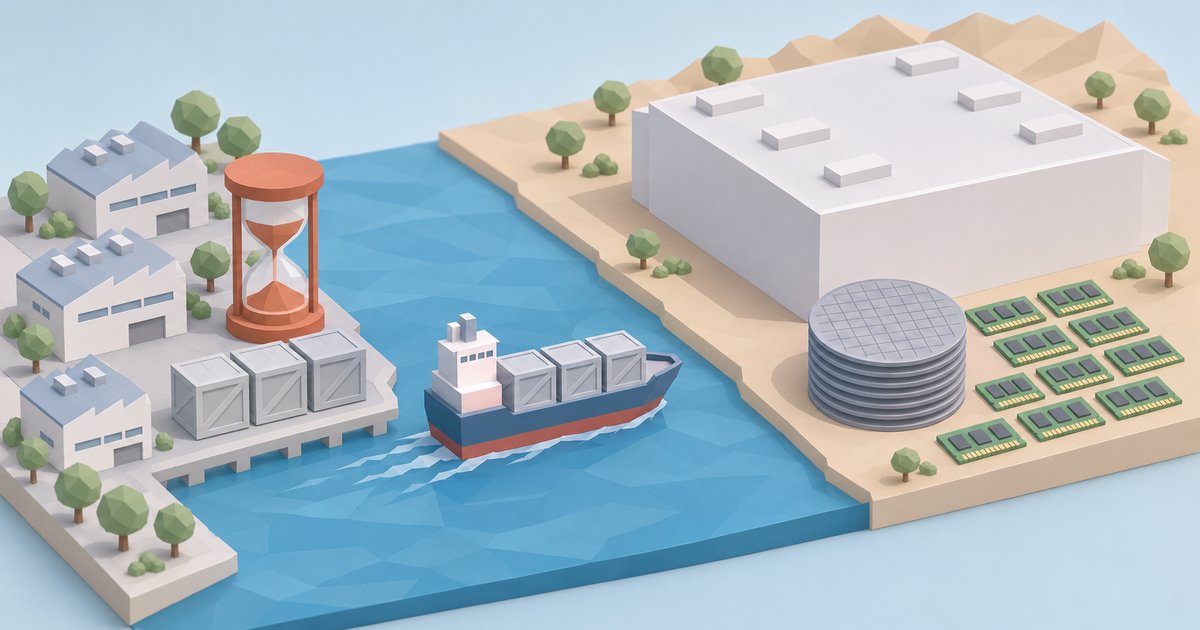
Buyers for Terafab, the chip plant Tesla and SpaceX are building in Texas, made an unannounced trip to Japan at the start of November and gave some semiconductor-equipment makers delivery deadlines only a few months away, Nikkei reported on 9 November 2026. The paper also says Terafab has told suppliers how it intends to split its long-term output: of the one million wafers a month it is aiming for from 2032, about 700,000 would be memory chips. Neither Tesla nor SpaceX has commented.
What Nikkei reports
According to Nikkei, Terafab's procurement team met Japanese toolmakers to present its order plans, and asked several of them for equipment within months so that the plant can keep to Elon Musk's target of volume production in the second half of 2028. One equipment maker told the paper the request was unreasonable but that it would do everything it could to meet it. "The biggest topic in the chip industry right now is not Kioxia or Rapidus. It's Elon Musk," a supplier executive said.
The trip follows Terafab staff lining up Korean equipment makers at SEMICON West in October. On SpaceX's results call on 20 October, Musk thanked ASML and other suppliers for pulling equipment deliveries forward.
The memory plan
The one-million-wafer goal was already known; the split is new. According to Nikkei, Terafab informally told equipment makers this autumn that it plans to produce at that scale from 2032, with roughly 700,000 wafers a month for memory and more than 300,000 for logic chips. The logic chips are to use Intel's 14A process.
| Monthly capacity, in wafers | Figure |
|---|---|
| Terafab target from 2032, total | about 1,000,000 |
| of which memory | about 700,000 |
| of which logic | more than 300,000 |
| Samsung's entire DRAM capacity today | 650,000–700,000 |
| Rapidus's planned plant in Chitose, Japan | 25,000 |
On memory alone, Terafab would match all of Samsung's DRAM output. Nikkei puts the total at 40 times what Rapidus, Japan's state-backed chip venture, plans to make.
Where it stands
Nikkei repeats the schedule Musk gave in October: a first working test chip at Terafab's research fab in Austin around May or June 2027, then volume from the second half of 2028 at the main site in Grimes County, whose first phase alone is put at $16.8 billion. Musk himself has called the dates "very aggressive". A leading-edge fab usually takes more than three years from planning to volume, and raising yields takes longer still. Omdia analyst Hisaya Suzuki told the paper it is unclear how many chips SpaceX will actually need, and so whether the plant can be kept full once it is built.
Nikkei also says the form of any TSMC involvement is undecided. The two sides are still discussing control and investment, and Musk has ruled out TSMC taking a stake in Terafab or running it. That is the condition TSMC's chief executive set in October, when he said any fab TSMC joins has to be run by TSMC.
What it means for owners
Nothing changes in the cars yet. Memory is where Tesla has felt the squeeze: during this year's supply crunch it cut the memory on its AI5 and AI6 chips to keep Optimus production on track. A memory line of Samsung's size would end that dependence on outside suppliers, but on Nikkei's account it is a plan for 2032. Even on Musk's own timetable, Terafab's first volume chips are not due before late 2028.