
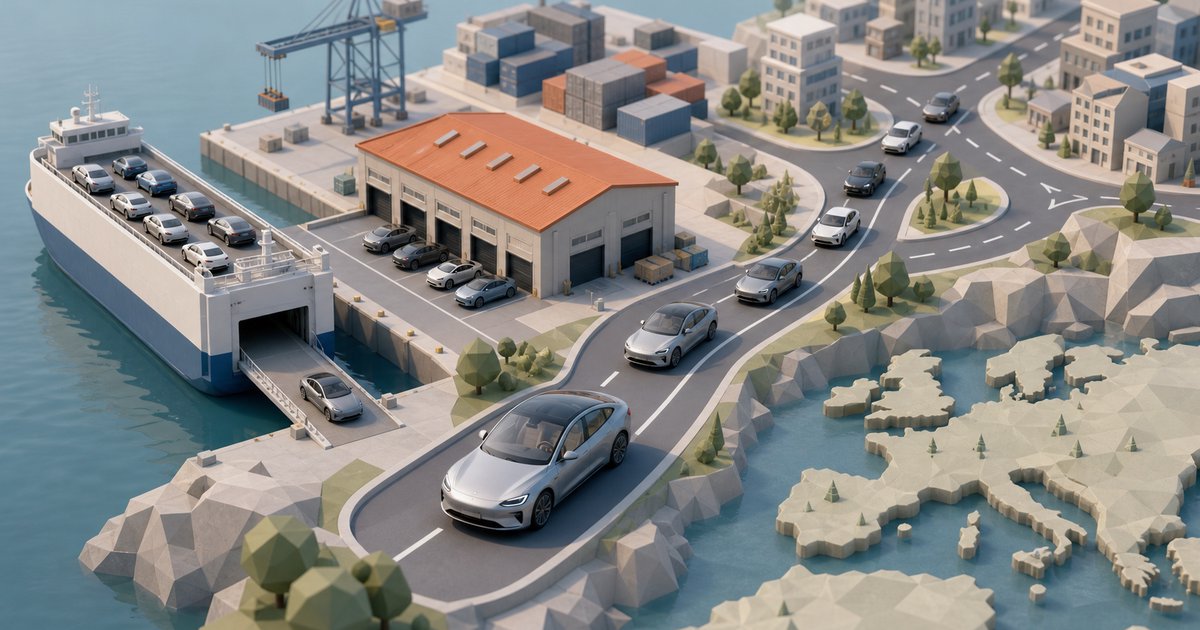
Xiaomi Auto put an international website and a set of overseas social channels live on 26 August 2026, and the site says plainly that the brand will officially enter the European market in 2027. It has also opened enquiries for dealer and distribution partnerships. This is the first time the Europe date has come from Xiaomi's own public-facing infrastructure rather than from an executive interview.
What the site does and does not say
The homepage showcases the SU7, SU7 Ultra, YU7 GT, Sky Nomad and Vision Gran Turismo. It does not name which countries come first, does not give local prices, and does not narrow 2027 to a quarter. Company president William Lu said in May that the overseas push would formally begin in the third or fourth quarter of 2027, and that preparations were on schedule — so the realistic reading is deliveries late in 2027 at the earliest, not January.
The sequencing Xiaomi has stated is the more useful detail. Developed markets before developing ones. Mid-to-high-end before midrange. And right-hand-drive markets before left-hand-drive ones.
The right-hand-drive clause splits Europe
That last item inverts what most Chinese entrants have done. Continental Europe is left-hand drive; the United Kingdom is not. A right-hand-drive-first strategy points at the UK — and at Ireland, Australia and Japan — ahead of Germany, France and the Netherlands. For a European buyer on the continent, the practical implication is that 2027 may be the year Xiaomi arrives in Europe without arriving in their country.
It also means the first head-to-head market is the one where Tesla does not build locally. Cars for the UK are imported whoever makes them, so the tariff and logistics comparison there is cleaner than it would be against Giga Berlin output.
Why Tesla owners should care
The SU7 is a Model 3-sized saloon and the YU7 a Model Y-sized SUV. That is not an accident of packaging; it is the segment Tesla depends on for European volume. Xiaomi has the scale to make the threat real — the SU7 passed 500,000 cumulative deliveries, even as its 2026 target slipped — and it is building the same vertical stack Tesla built, including its own 3 nm self-driving chip.
The context it enters is a market where Chinese brands and Tesla together took a record 13.3% of Western European sales in Q2 2026. Xiaomi joining that column in 2027 adds a competitor that is already profitable on phones, already trusted as a consumer-electronics brand across Europe, and unencumbered by a legacy dealer network.
The open question is the tariff
Nothing announced this week addresses how Xiaomi will handle EU duties on Chinese-built electric vehicles, and the company has not said whether European cars will be imported or assembled locally. Every Chinese brand ahead of it has converged on building in Europe, which Brussels is now answering with pressure for European parts in those cars. A website is a statement of intent. The factory decision is the one that will set the price.