
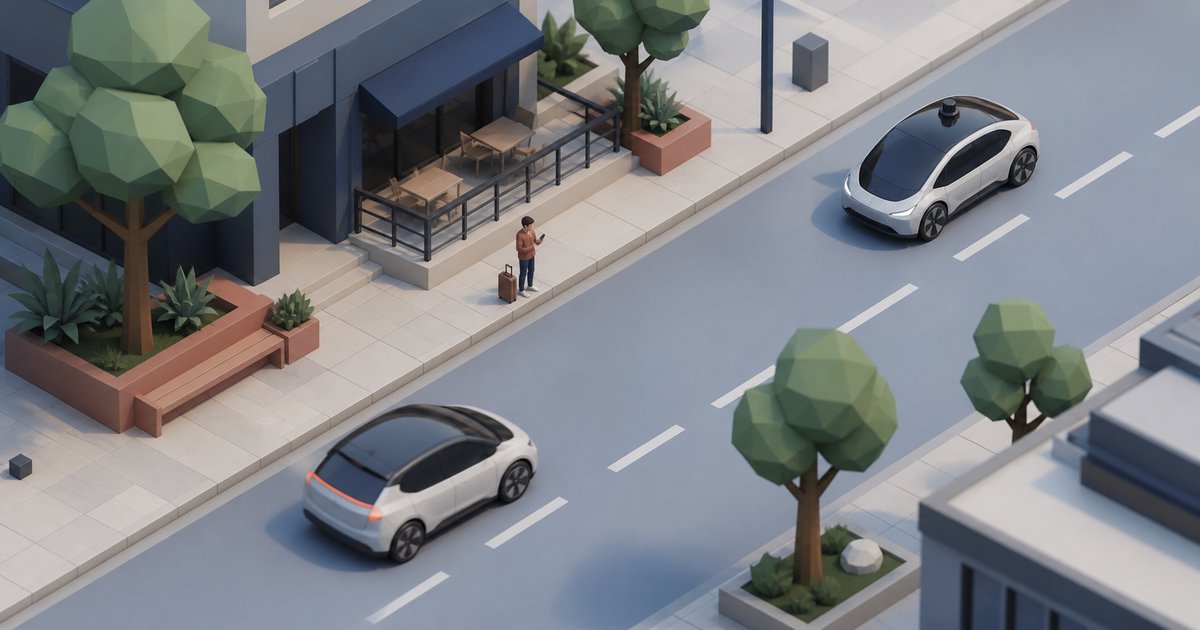
The complaints about Tesla's robotaxi service in Austin are not new. What is new is who is making them.
On 22 August a rider whose own biography reads "Tesla Ambassador, MBA, AI/ML certified" published a detailed account of ordering a robotaxi for a 2.3-mile trip. The app quoted one hour and six minutes. He watched the estimate fall to 16 minutes, then climb back to 57. Support told him it was a bug and that they could not reroute the car. He got out and called an Uber.
A second rider, a four-time Tesla owner, has been logging a run of missed pickups and drop-offs that ended blocks — in one case miles — from where he asked to go.
Why loyalist complaints land differently
Tesla's robotaxi service has had critics since it opened. They were easy to discount as people predisposed to dislike it. Ambassadors are not: they are the constituency that buys the next car, defends the software in public, and gives Tesla the benefit of the doubt as a matter of habit. When the person calling an Uber instead has "Tesla Ambassador" in their bio, the failure is not being reported by an opponent.
It also isolates the problem. Nobody in these accounts is describing a car that drove badly. They are describing dispatch, routing, ETA estimation and drop-off selection — the fleet-management layer around the autonomy, not the autonomy itself.
The wait times behind the anecdotes
Anecdotes are anecdotes. There is measured data underneath them: a Reuters reporter in Austin spent three weeks in April sampling robotaxi wait times eight times a day.
| Observation | Share of checks |
|---|---|
| Wait longer than 15 minutes | about half |
| Wait of 25 minutes or more | more than a quarter |
| No cars available at all | 27% |
Austin is Tesla's oldest and densest robotaxi market. These are the numbers from the city where the service should be at its best.
The timing
Tesla launches the Cybercab in Austin on 3 September, an event it has confirmed and will livestream. Nevada has just raised Tesla's robotaxi cap from ten vehicles to 5,000. The company is scaling on the assumption that the service works.
There is a pattern in the last month worth noticing. In July Tesla called the Austin operation impeccable; four weeks later a driverless Tesla drove through a row of bollards. Now the ETA engine is quoting an hour for a 2.3-mile trip and support cannot override it.
What it means for Europe
Nothing here is a regulatory event, and none of it applies to a European Tesla today — FSD Supervised is still awaiting approval, and robotaxi is not offered in any European market.
It matters anyway, because Europe's regulators will assess a system, not a demo. Approval questions in the EU have so far focused on whether the car drives safely. These complaints point at something a type-approval file does not cover and a passenger notices immediately: whether the service around the car is good enough to use. A fleet that cannot reliably tell you when it will arrive, or put you where you asked, has a problem that no amount of FSD version numbers fixes.