
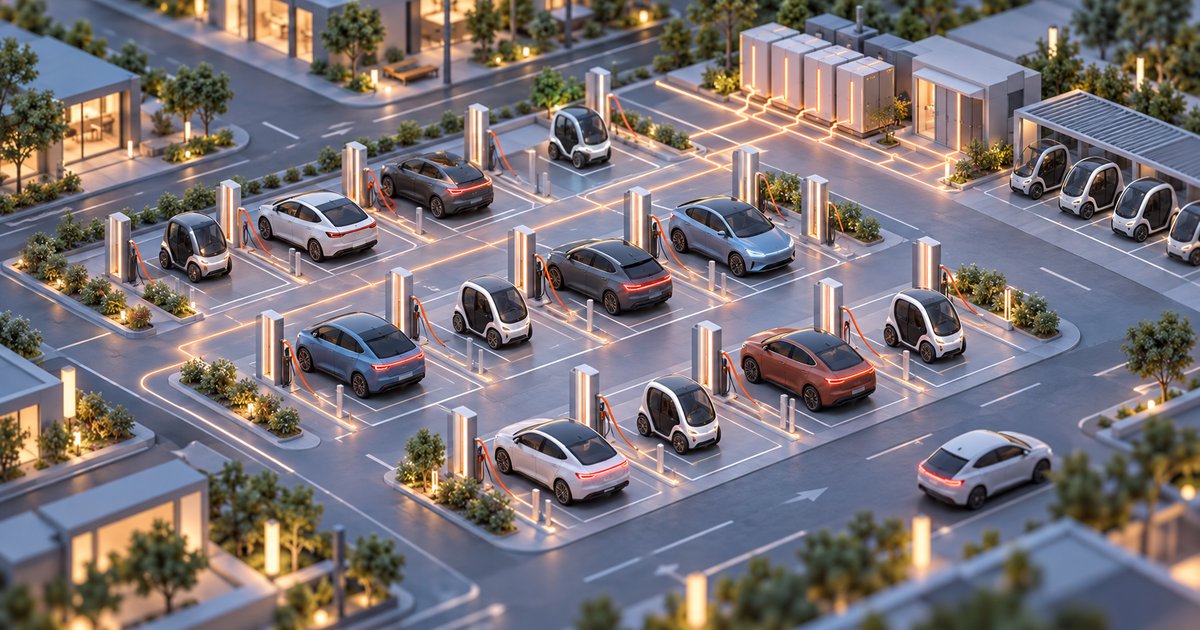
Tesla's charging team published its third-quarter numbers on 1 October 2026. The Supercharger network took 69 million charging sessions and delivered 2.4 TWh of electricity between July and September, both up 29% on the same quarter last year, and it has now delivered 28.9 TWh since the first Superchargers opened in 2012.
The quarter in figures
| Measure | Q3 2026 | Change |
|---|---|---|
| Charging sessions | 69 million | +29% YoY |
| Energy delivered | 2.4 TWh | +29% YoY |
| New stalls opened | about 2,700 | — |
| Network size | about 85,000 stalls | +15% YoY |
| Energy to the Robotaxi fleet | 7.0 GWh | — |
| All-time energy delivered | 28.9 TWh | — |
Tesla also puts the quarter's output at 1.1 billion litres of petrol displaced and 4.4 billion kilograms of CO2 equivalent avoided.
Two divisions are worth doing. Energy over sessions gives an average Supercharger stop of about 35 kWh — a top-up, not a fill. Sessions over stalls over the 92 days of the quarter gives roughly nine sessions per stall per day, which is the highest the network has run at.
That second number is the one Tesla's charging lead, Max de Zegher, built his comment around: "High utilization = affordable Supercharging. Rare waiters = dependable travel." It is the argument this site saw demonstrated at the Lost Hills Oasis site over the US Labor Day weekend — 6,038 sessions in four days with nobody queued. Tesla says the share of drivers who wait stayed low and trended down again this quarter, without putting a figure on it.
The Robotaxi line is small, and Tesla called it meaningful
Tesla broke out energy delivered to its autonomous fleet for the quarter: 7.0 GWh, which it described as "a meaningful part" of network usage.
Against 2.4 TWh, 7.0 GWh is 0.29%. That is not a meaningful share of anything today, and the word is doing forward-looking work rather than describing the quarter. What makes it worth reporting is that Tesla chose to break the line out at all — you disclose a rounding error when you expect it to stop being one.
One number Tesla has never published, implied
Tesla illustrated the 7.0 GWh by saying it was enough to charge "roughly 146,000 Cybercab batteries".
Divide one by the other and the Cybercab pack comes out at about 48 kWh. Tesla has never published a capacity for the car, and this is the first figure that constrains it.
Treat it as an estimate: 146,000 is rounded, and Tesla has not said whether it means a full charge from empty. The order of magnitude still tells you something. A 48 kWh two-seater sits well under the Model 3's smallest pack — a car built for short urban trips on a dense charging network, not for range.
For scale on what produced that 7.0 GWh: Tesla's Austin fleet stood at 125 Cybercabs and about 420 Model Y robotaxis in late September, after doubling in four days.
What a European owner takes from this
Not a price, unfortunately. Tesla does not break Europe out of these figures, the Robotaxi energy is entirely American, and nothing here says what a kWh will cost in Germany or Norway this winter.
What it does say is what Tesla believes the lever is. The company is explicitly tying what you pay to how busy the stalls are — and it added about 2,700 of them in a quarter while utilisation rose anyway. On Tesla's own logic, a European network that fills up is one that stays cheap. That is a claim worth holding it to.