
Kia has launched a worldwide recall of the first-generation e-Niro because the software that is supposed to watch the high-voltage battery does not watch it closely enough. The company is inspecting 14,117 cars globally, of which 11,331 are in Europe.
What is actually wrong
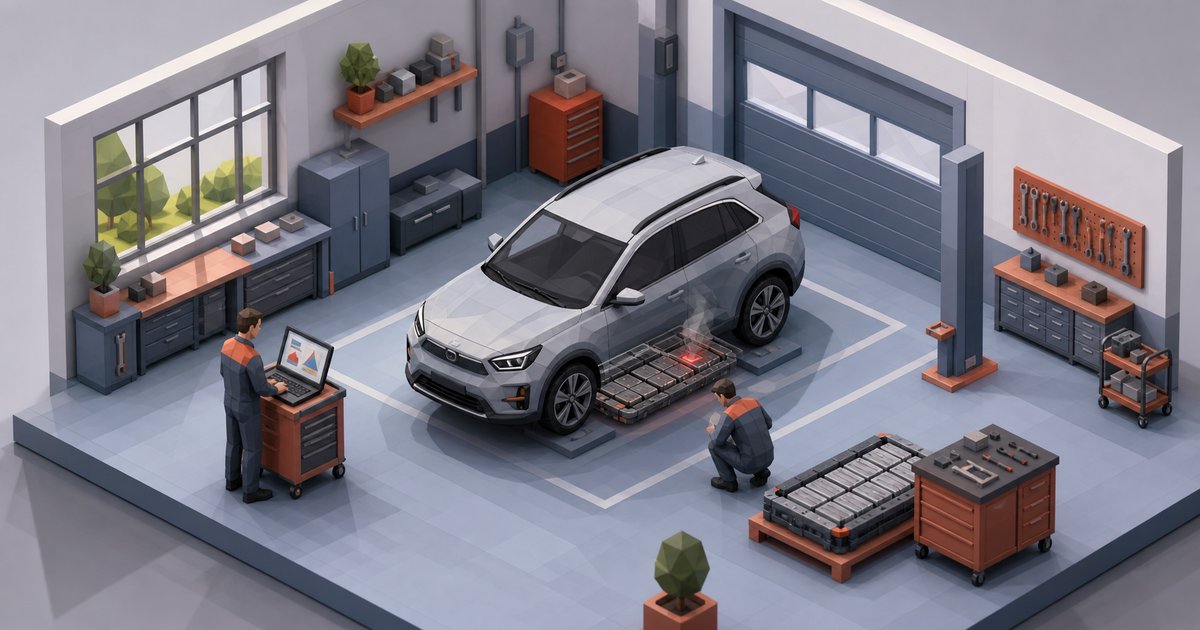
The fault is in the monitoring logic of the battery management system. Under certain operating conditions the BMS can lose control of the high-voltage battery, which can let cells overheat and raises the risk of a fire.
The detail that matters most to owners is when it can happen: while the car is being driven, while it is parked, and while it is charging. A fault that can develop in a parked or charging car is a different kind of problem from one that only appears under load — it means leaving the car on a home charger overnight is inside the risk window, not outside it.
Which cars are affected
| Model | Kia e-Niro, first generation only |
| Build dates | 19 May 2020 – 18 March 2022 |
| Cars worldwide | 14,117 |
| Cars in Europe | 11,331 |
| Campaign code | 261261 |
| Not affected | Second-generation Niro EV (different battery components) |
The generation split is clean. The current car, sold as the Niro EV, uses different battery components and is outside the campaign.
The fix
The primary remedy is a battery management system software update — the monitoring logic is being corrected rather than the hardware replaced. If the inspection finds that the high-voltage battery has already been damaged, Kia replaces the entire pack free of charge.
That is a genuinely good outcome for an affected owner: a free diagnostic on a five- or six-year-old EV battery, with a free pack if it fails. It is also worth reading the other way round. "Insufficient monitoring" means these cars have been operating with less battery oversight than their designers intended for as long as six years, and the recall is what closed that gap rather than what opened it.
A second fire-risk recall in weeks
This is the second EV fire-risk recall to hit the European market in a short window from the same corporate family. TeslAnt covered the Hyundai Inster recall in July.
The two are not the same defect, and it would be wrong to read a pattern in the cells themselves. The Kia campaign is a monitoring-logic problem addressed in software. What the pair do share is that both were caught and both are being handled through the type-approval recall machinery rather than through owner complaints — which is the system working as intended, unglamorous as that sounds.
What owners should do
If you own a first-generation e-Niro built in that window, expect a letter from Kia. You do not have to wait for it: any Kia dealer can check your VIN against campaign 261261 now, and the inspection and any remedy are free.
Do not treat this as optional maintenance. The fault can develop in a parked car, so "I hardly drive it" is not a reason to defer the appointment — it is a reason to book it sooner.