
Samsung SDI said on 11 August that it will acquire General Motors' 49.99% stake in Synergy Cells, the battery joint venture the two set up in 2024 to build a $3.5 billion cell plant at New Carlisle, Indiana. Once the deal closes, the 680-acre site becomes Samsung SDI's first wholly owned battery factory in North America. Neither company disclosed the purchase price or a completion date.
The stated reason is the same from both sides, and it is not a technical one: EV demand in the United States grew more slowly than the venture was sized for. Samsung SDI cited changes in the market outlook and slower-than-expected growth.
What was built, and what it becomes
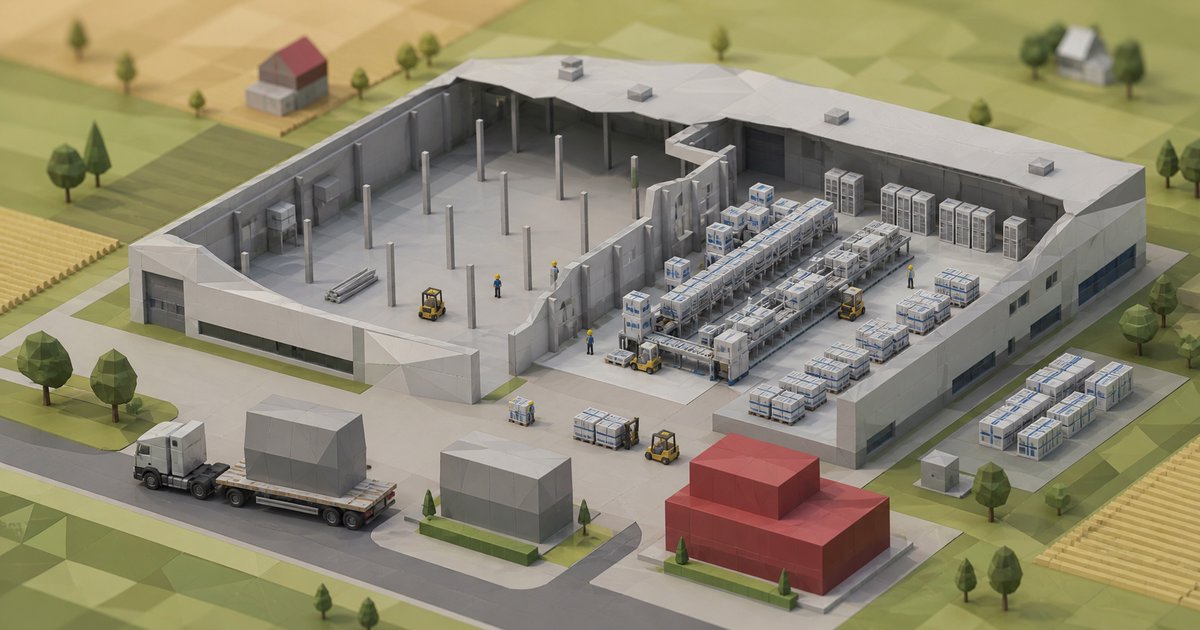
The plant was announced with an annual capacity of 27 GWh, more than 1,600 jobs and large-scale manufacturing starting in 2027. GM has spent roughly $300 million on the site so far. What that money produced is a finished building with no production equipment in it — the project was delayed before the tooling went in.
Samsung SDI's plan changes the mix rather than the address. Alongside vehicle cells, it intends to add an energy-storage-system line, aiming the site at grid and commercial storage demand that is growing considerably faster in the US than passenger-EV demand. A half-built cell plant is a great deal easier to repurpose than to abandon, and stationary storage is the obvious place for capacity that cars are not yet asking for.
Investors were not uniformly pleased. Samsung SDI shares fell 4.5% on the news, which is a reasonable reaction to taking on 100% of a project's risk in a market that has just disappointed its original sponsor.
GM's pattern, not a one-off
This is the second time GM has handed a planned battery plant to its partner. It previously sold its stake in another site to LG Energy Solution, and it has taken about $11 billion in writedowns across its EV programmes. The company is not exiting electric vehicles, but it has clearly decided that owning cell manufacturing is not where it wants its capital.
That is a real strategic split in the industry. Tesla, BYD and CATL treat cell production as something to control. GM is converging on the older model: buy cells, build cars.
Why a plant in Indiana matters in Europe
Nothing here changes what a European buyer pays or waits for. The signal is about who ends up owning western cell capacity.
Europe's own cell projects have been running into the same arithmetic — a demand curve that arrived later and flatter than the business cases assumed, as Deloitte's assessment of the European battery industry set out. When a carmaker retreats, the capacity does not vanish; it passes to an Asian cell maker that already knows how to run it. The plants get built. The question the Indiana deal answers is whose name is on the door, and the answer keeps coming back the same.