
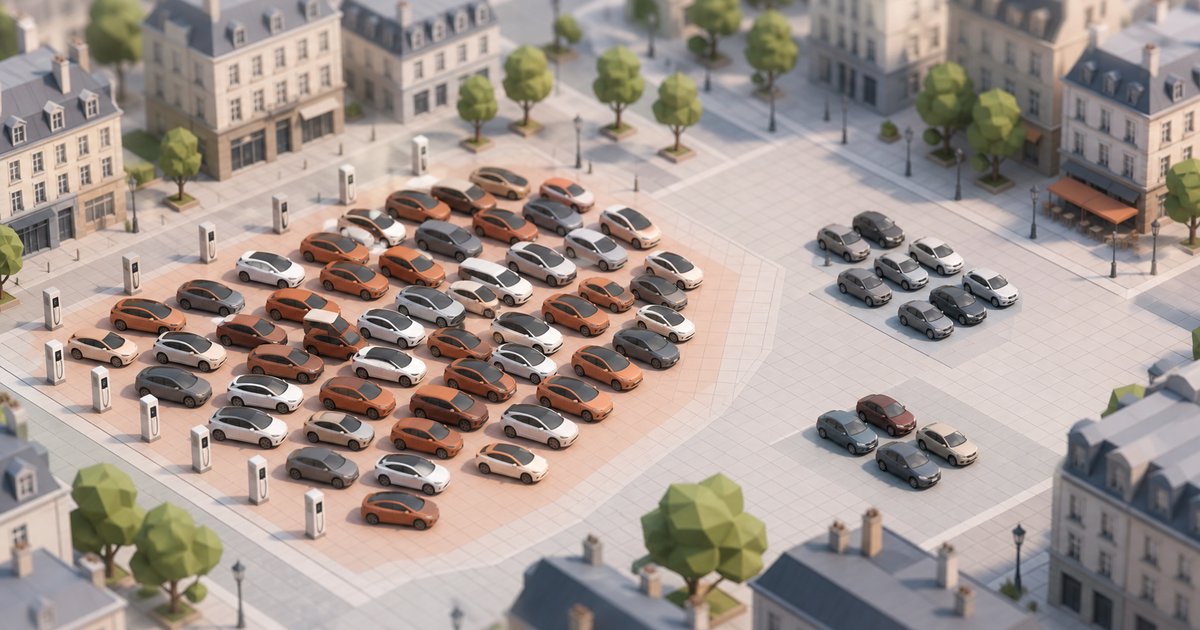
France registered 44,378 battery-electric cars in July 2026 — 35% of a 126,808-unit market, and the highest monthly BEV share any major European market has recorded. Petrol and diesel together took 13.2%.
That gap is the story. A year ago the comparison would have been the other way round; BEV volume is up 126.7% year on year while petrol fell 44.2% and diesel 59.7%. The overall market grew 9%, so this is not a case of one fuel collapsing and dragging the rest down with it — buyers moved.
What each powertrain actually took
| Powertrain | Units | Share | YoY |
|---|---|---|---|
| Hybrid (incl. mild) | — | 41.9% | -0.2% |
| Battery-electric | 44,378 | 35.0% | +126.7% |
| Petrol | 13,903 | 11.0% | -44.2% |
| PHEV | 7,527 | 5.9% | -10.6% |
| Diesel | 2,750 | 2.2% | -59.7% |
Hybrids remain the largest single category at 41.9%, and it is worth being precise about that: BEVs did not lead the French market in July, they led everything with a combustion engine driving the wheels alone. Diesel, once more than half of French sales, is now a rounding error at 2.2%.
Year to date the picture is less dramatic but points the same way — 285,943 BEVs, 29.1% of the market, up 70% on the same period in 2025.
Renault owns the podium
Three of the nine best-selling cars in France in July were Renault BEVs.
| Model | Units | Overall rank |
|---|---|---|
| Renault 5 | 3,794 | 4 |
| Renault Scenic E-Tech | 2,910 | 6 |
| Renault Twingo E-Tech | 2,564 | 9 |
| Tesla Model Y | 2,401 | 12 |
BEVs accounted for 47% of everything Renault sold in France that month. The Twingo E-Tech is the newest of the three and is tracking the R5's launch curve closely, which suggests the podium is not a one-month artefact.
For Tesla the comparison is uncomfortable. TeslAnt reported in July that the Model Y led France's H1 electric chart, edging past the Renault 5 over six months. One month later it sits behind three Renault models and outside the overall top ten. The Model Y did not collapse — 2,401 units in a market where fourth place takes 3,794 is respectable — but Renault added a second and third volume BEV while Tesla's line-up stayed where it was.
The policy lever behind the number
July's surge has an identifiable cause. Round three of France's leasing social scheme opened to low-income commuters on 16 July, putting income-targeted lease deals on small EVs in front of exactly the buyers who were previously priced out. The R5 and Twingo are the cars that scheme is built around.
That makes the 35% figure real but not automatically repeatable. Social leasing pulls demand forward into the months it is open, and the previous rounds showed a hangover afterwards. The YTD share of 29.1% is the steadier number to watch.
How France compares across Europe
France is now clearly ahead of Germany, which posted a 29.3% BEV share in the same month on 78,609 units. Germany's growth was driven by a purchase grant, France's by subsidised leasing — two different instruments producing the same direction of travel in Europe's two largest car markets, at a point when Brussels is still arguing about the 2035 engine rules.
For European Tesla watchers the useful signal is not the share figure. It is that in the market where incentives are working hardest right now, the buyers they unlocked went to a domestic brand selling three small cars, not to the Model Y.