
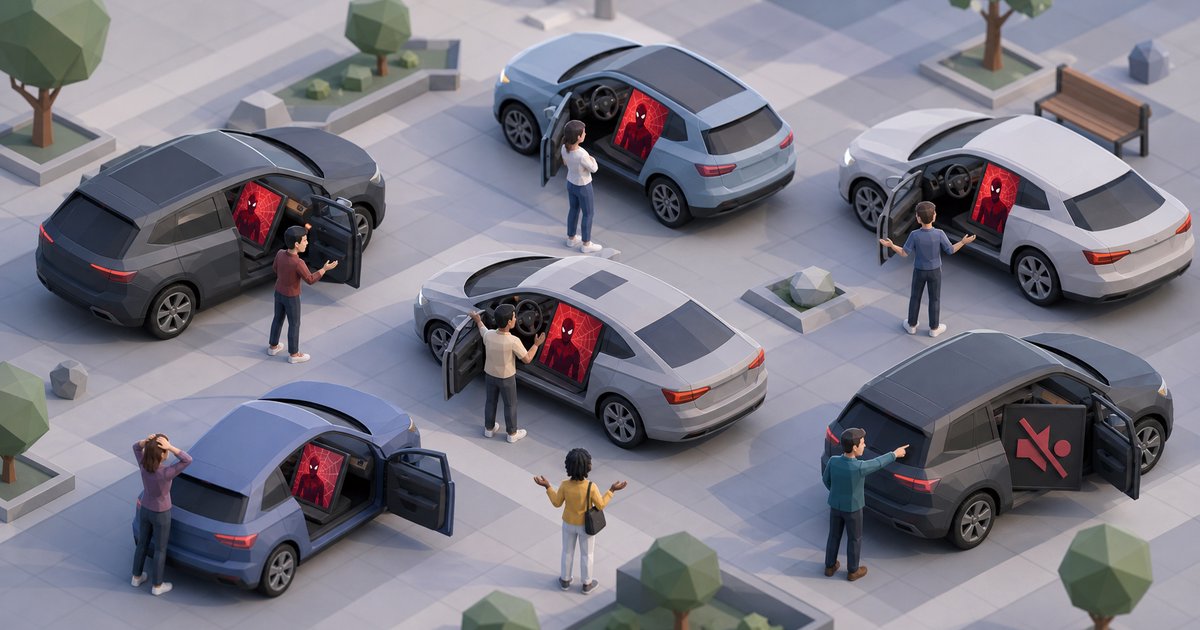
BMW drivers getting into their cars this week have been met with something other than the usual start-up screen: a roughly 20-second full-screen animation promoting the new Spider-Man: Brand New Day film, with music and coordinated ambient lighting. The reaction has been what you would expect.
What is appearing, and where
The animation runs on BMW models built from July 2020 onwards that have compatible hardware and software — the iX3 and 5 Series have been named specifically — and the campaign is global. It is scheduled to run until 10 August 2026. Its nominal subject is the iX3's appearance in the film.
Criticism surfaced quickly on Reddit and owner forums, where the objection was less about the film than about the precedent. Drivers described it as advertising in a space they had assumed was theirs; one commenter suggested cars may soon need ad blockers. Whether the animation can be dismissed or disabled has not been established.
BMW says it is not an advert
BMW's response draws a distinction its customers are not accepting. The company said the animation "was only intended to be a fun experience which celebrates that our vehicles are featured in the new movie", and added that "BMW has no plans to introduce advertising into its vehicles."
Both statements can be true and still miss the complaint. A full-screen, unrequested, time-limited promotion for a third-party commercial product, appearing on a screen the owner cannot avoid looking at, matches most people's working definition of an advert regardless of intent. The film is not a BMW product; the placement is a cross-promotion; the driver did not opt in.
The awkwardness is sharpened by BMW's own record on the question. In December 2023, a BMW senior vice-president said the company had no intention of turning vehicle displays into advertising space, describing the screen as "a private space" unsuitable for commercials. That is a clear position, and this campaign is hard to reconcile with it.
Why this is bigger than one film promotion
Cars became software platforms without their owners agreeing to platform economics. The infotainment screen is now the same kind of surface as a phone home screen or a smart TV interface — and on both of those, the commercial gravity has pulled in exactly one direction. Manufacturers already sell heated seats and driver assistance as subscriptions; the screen is the obvious next inventory.
What makes the backlash worth taking seriously is that it is cheap for BMW to lose. The company is in the middle of launching its most important electric product in years — the new i3, whose series production started in Munich this month — and it is competing on interior quality and software experience against manufacturers that will happily promise a screen with nothing on it but the car.
What it means for owners
The useful question is not whether this particular animation is objectionable. It is whether a car sold today can have its interface changed remotely to show commercial content the buyer never agreed to. On the evidence of this week, it can — and the only meaningful constraint is how loudly customers complain.