
Germany's ADAC published the ten-year balance of its keyless-entry security testing on 18 August 2026. The database now runs to more than 850 vehicles, and almost half of them could be opened with an artificially extended key signal. In about one in three cases the testers could also start the engine and drive away. (Some coverage put it at 710 of 850; ADAC's own wording is "almost half".)
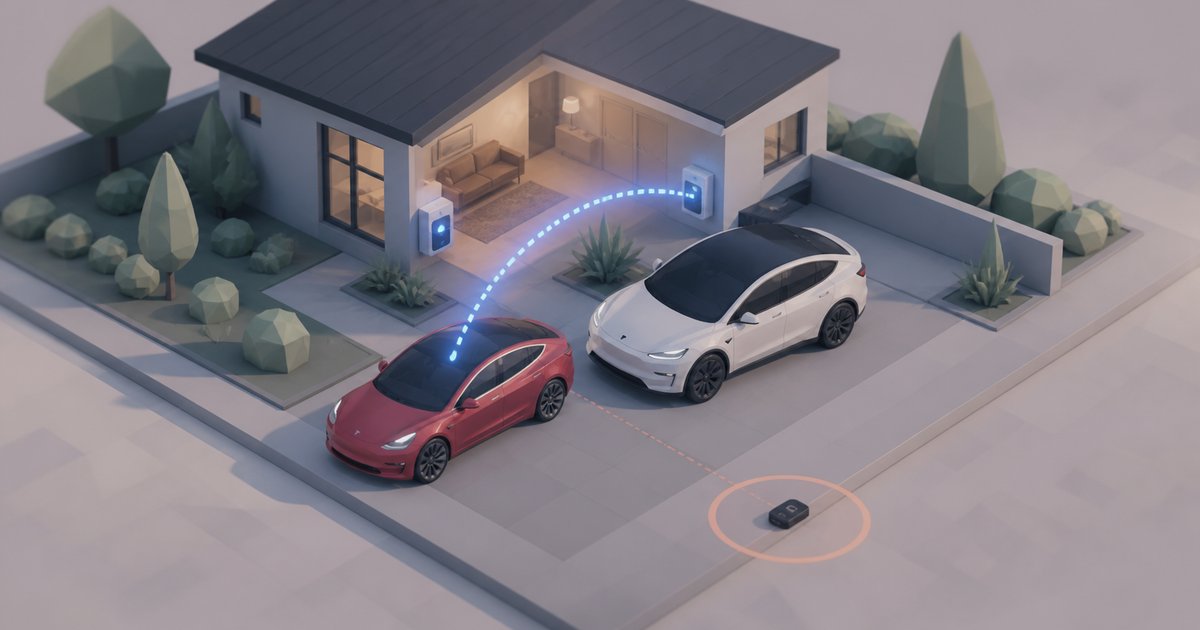
The attack has not changed in a decade. Two devices — one held near the key, often just inside a front door, and one at the car — relay the key's radio signal across hundreds of metres. The car believes the key is in the driver's hand. Walls do not stop it, and the key never leaves the house.
One thing defeats it
ADAC is unambiguous about what works: ultra-wideband. UWB measures the true distance to the key from the signal's propagation time rather than merely detecting its presence, so a relayed signal from 50 metres away reads as 50 metres away. Of everything ADAC has tested, only UWB-equipped cars could not be opened and driven off.
Jaguar Land Rover shipped it first, from 2018, and Volkswagen Group followed from 2019 — which is why an Audi A3, Skoda Octavia or Golf built after the switch passes where the previous generation of the same car fails. ADAC now puts roughly 70 percent of the models it has examined in the better-protected column.
Where Tesla sits
ADAC lists seventeen brands for which it found no adequately protected model at all. Tesla is one, alongside Aiways, Alfa Romeo, Alpine, BYD, Chevrolet, DS Automobiles, Fiat, Honda, Infiniti, Isuzu, Jeep, KGM/SsangYong, Lynk & Co, MG, Opel and Subaru. Subaru and Tesla appear on ADAC's test page but not in the press release issued the same day, which names fifteen; the lists are otherwise identical, and ADAC has not explained the gap.
The result is not for want of hardware. Tesla shipped UWB Phone Key with vehicle software 2024.2.3 in February 2024, iOS first.
| Tesla model | UWB hardware |
|---|---|
| Model 3 (2024 refresh) | Yes |
| Model Y (2025 refresh) | Yes |
| Model S / Model X (2021 on) | Yes |
| Cybertruck | Yes |
| Model 3 (first generation) | No |
| Model S / Model X (legacy) | No |
Having the radio is not the same as using it for security. In May 2024 the Beijing security firm GoGoByte relay-attacked a UWB-equipped refreshed Model 3 — over Bluetooth. Tesla uses UWB to make the phone key more reliable, not to enforce a distance check before a Bluetooth unlock, so the attack takes the older path. Tesla said then it was working on ranging, to be enabled once reliability testing finished; ADAC's 2026 list is the clearest public sign that it has not been.
What an owner can do tonight
None of it waits on Tesla.
- Turn on PIN to Drive. A relay attack that unlocks and starts the car still cannot move it past a code entered on the touchscreen. It is the most effective setting available today.
- Turn off passive entry for the fob and card, so the car unlocks on a deliberate action, not on proximity.
- Keep the fob in a signal-blocking pouch at home, so the key cannot be reached from the doorstep.
ADAC wants every manufacturer to fit proven protection as standard. For a buyer, the practical version is one question for the salesperson: does this car use UWB for the key? It is the second ADAC measurement this month to find a gap between what a car advertises and what it delivers, after the club's wallbox-versus-socket charging-loss test.