
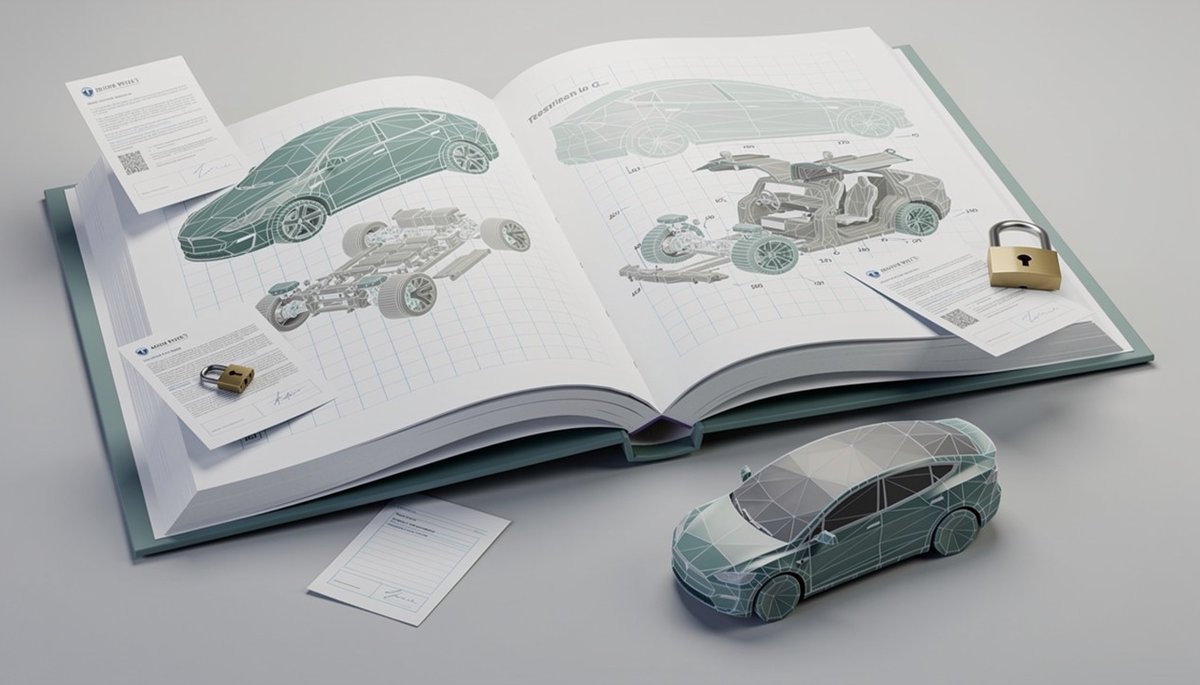
Elon Musk says Tesla intends to "open source" the Model S and Model X, its two ageing flagships. In a post on X on 24 July 2026, Musk wrote: "Just as Tesla made the original Roadster design & software open source, we plan to do the same with Model S & X." No timeline, scope or licence was attached to the statement, and Tesla has not published anything official beyond the tweet.
On its face the idea is striking. Genuinely opening the engineering behind a modern car — CAD files, wiring schematics, firmware, the bill of materials — would be a gift to independent repairers, restorers and the modding community, and a notable move in a market where owners increasingly clash with carmakers over locked-down software. For European owners of the low-volume S and X, where dealer support and parts can be thin, real documentation would be especially useful.
The Roadster precedent gives reason to pause
The problem is the comparison Musk himself chose. Tesla's November 2023 Roadster "open source" release, which he cited as the template, was far narrower than the phrase suggests. As Electrek's audit of the release notes, the public repository contained only about eight files — CAN database files and diagnostic software — plus five documents sitting behind a login wall.
Crucially, the material carried only a liability disclaimer, not an actual open-source licence granting the right to copy, modify or redistribute. Missing were the things that would make an "open source" car meaningful: CAD files, mechanical drawings, firmware source code, schematics, the bill of materials and the motor and battery-pack designs. The repository has seen no commits in roughly two and a half years, despite gathering some 1,100 stars from interested developers.
What a real release would need to include
If Tesla applies the same approach to the Model S and Model X, the result would likely be another thin drop: a few reference files and a disclaimer, with the genuinely valuable intellectual property retained. True open-sourcing would require a recognised licence and complete design files — a level of disclosure Tesla has never shown willingness to provide for a vehicle still, in some form, on its books.
What it could mean for European owners
The angle that matters most in Europe is repair. The EU has been steadily strengthening right-to-repair rules, and access to technical documentation, diagnostics and spare parts is a live regulatory battleground across the bloc. Genuinely open engineering data for the Model S and Model X — cars sold in relatively small numbers here and increasingly hard to service outside Tesla's own network — would be a meaningful win for independent workshops and long-term owners. A repeat of the Roadster's thin release, by contrast, would do little to change the day-to-day reality of keeping an older Tesla on the road in Europe.
Why the timing makes sense
The gesture fits the moment. The Model S and Model X are now Tesla's oldest and lowest-volume cars, overshadowed by the Model 3, Model Y and the company's robotaxi and Optimus ambitions. Musk has said internal space once used for S and X assembly is being converted toward Optimus production. "Open-sourcing" a pair of legacy halo cars costs Tesla little and generates goodwill — but until an actual licence and real files appear, this belongs firmly in the rumour column. We will update this article if Tesla publishes anything concrete.