
Hyundai Motor Group used a media day at 42dot's headquarters in Seongnam on 11 September 2026 to explain why its self-driving programme has been quiet, and to make a claim about Tesla. Both halves have been reported more loosely than they were said.
The claim, as made
Park Min-woo, president and head of the Advanced Vehicle Platform division at Hyundai Motor and Kia and chief executive of autonomy affiliate 42dot, presented the delay as a choice. "We believe Atria AI could move faster if we pushed with everything we have. But we made a strategic decision to slow down," he said. "Rushing into mass production now risks delivering a middling Level 2++ system, far short of our real target."
The overtaking claim came with two qualifiers that several headlines dropped. A company official put it as overtaking "our competitors' data volumes within five years" — not their capability — and the five years run from the start of full-scale mass production, not from today. With Atria AI mass production set for the second half of 2029, that points to the mid-2030s; outlets have rendered the target year as both 2033 and 2034, and at least one European report read it as five years from now.
The timeline
| When | What Hyundai says ships |
|---|---|
| 2027 | Improvements to driving, parking and active-safety features |
| H1 2028 | Level 2+ on Nvidia hardware, in mass production |
| H2 2028 | Level 2++, Nvidia-based |
| H2 2029 | Level 2++ on Hyundai's own Atria AI, with safety certification sought in Korea, North America and Europe |
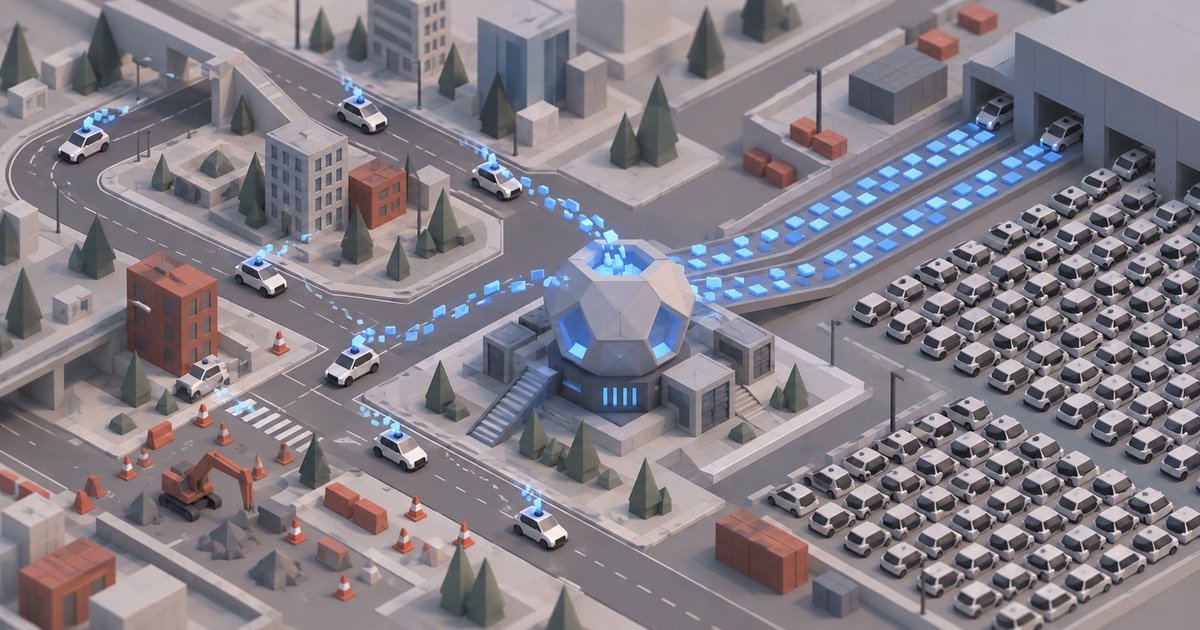
The strategy Park calls a "data flywheel" is the familiar one: production cars send back data, the data improves the model, the improved model ships to more cars. "Hyundai sells 7 million vehicles a year across 190 markets, which means we can accumulate data at scale," he said. "The competition in autonomous driving is no longer about the speed. It comes down to how much data you can gather." Atria AI uses vision-language-action models to add reasoning over what the cameras see. Right now the dedicated data-collection fleet is 40 vehicles running around the clock, flagging construction zones, bad weather, sudden lane changes and badly parked cars for retraining.
Why a Tesla owner should care
Strip out the framing and this is a competitor conceding the near term. Hyundai's headline capability target for 2029 is Level 2++ — hands-on, driver-responsible assistance. Tesla ships FSD (Supervised) to customer cars today and is already running driverless Robotaxi service in the United States. On capability, Hyundai is not claiming to catch Tesla by 2029; it is claiming to have a better data position sometime after.
The interesting part is the disagreement about method. Tesla's bet has always been that shipping an imperfect system to a large fleet is how you get the data. Hyundai is arguing the opposite — that shipping a "middling" system early is the mistake — while counting on 7 million cars a year to make up the difference later. It is a rerun of the argument Waymo made against FSD's roadmap, from a volume manufacturer rather than a robotaxi operator.
For a European buyer it changes nothing this decade. Hyundai's own certification ambition for Europe sits at the back end of 2029, and everything before that is Level 2+ driver assistance of the kind already on sale.