
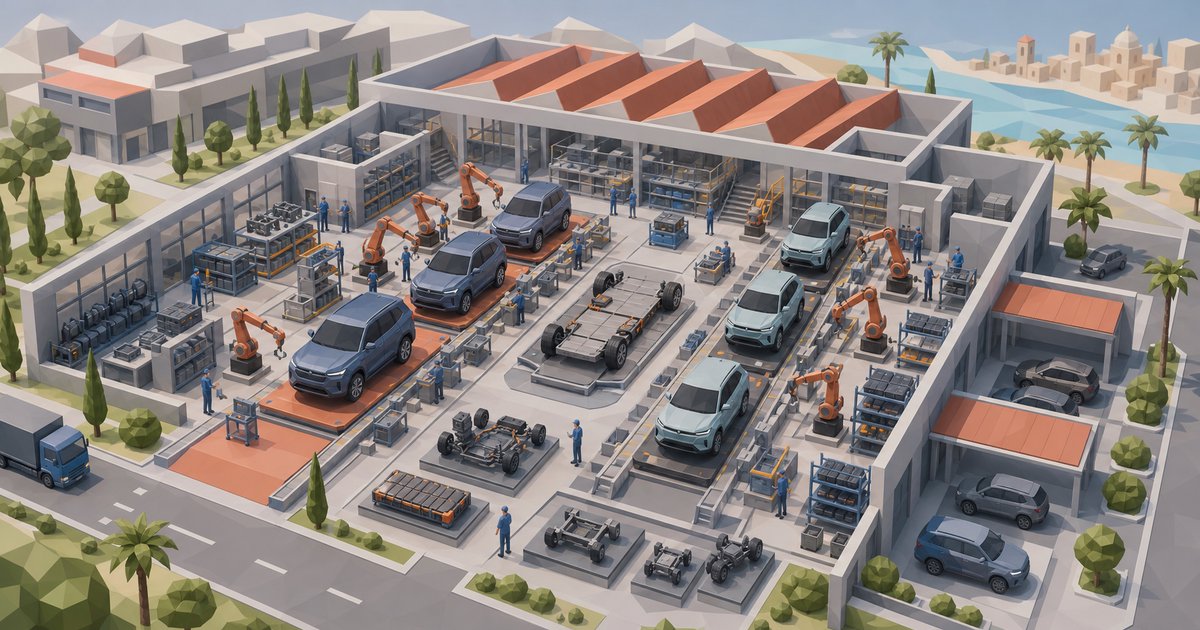
Ford confirmed a European joint venture with Geely in July 2026, and reporting since has filled in what it produces. The headline for European buyers: an all-new Kuga is expected in 2029, developed with Geely technology, and it will not be electric-only.
What has been announced, and what is reported
The joint venture itself is official. Ford will hold 66% and Geely 34%, the deal is expected to complete next year subject to regulatory approval, and the operation is based at Ford's plant in Valencia, Spain, with production starting in the first half of 2027.
| Milestone | Timing |
|---|---|
| JV completion | 2027, pending approvals |
| Valencia operations begin | First half of 2027 |
| First Geely-derived electric SUV | End of 2028 |
| All-new Kuga | 2029 |
The Kuga timing and the multi-powertrain plan come from press reporting rather than a Ford announcement, and should be read as such. Ford has not published a launch date for the next Kuga.
Why Ford is doing this
Ford's European car range has been shrinking for years. The Fiesta and Focus are gone, and the Kuga is one of the few volume models left. Building a replacement from scratch means paying for a platform, a battery supply chain and an electronics stack to amortise across a shrunken sales base — arithmetic that no longer works.
Geely supplies all three. Ford's stated rationale is scale and plant utilisation: pooling component sourcing, using Geely's battery supply chain, and filling Valencia, which has been running well below capacity. The plant keeps its jobs and Ford keeps a European product line it could not otherwise afford.
The uncomfortable part is what it concedes. A US manufacturer is buying the technology to stay in Europe from a Chinese group, and at least one American legislator has publicly called the arrangement incomprehensible. Regulatory approval is not a formality.
What it means for European buyers
Nothing before 2028. The current Kuga continues, and anyone choosing a family SUV in the next two years is choosing from today's range regardless of this deal.
The substantive change is the reversal of direction. Ford spent the early 2020s promising an all-electric European passenger range by 2030; a Kuga successor offered with several powertrains is the formal end of that plan. Ford is not alone — most European manufacturers have quietly relaxed the same pledge — but it is a clear marker.
It also puts Ford's two halves on visibly different tracks. In North America the company is pushing its own cheap electric platform, most recently the Fathom pickup at $28,350. In Europe it is licensing someone else's. Both are rational responses to the market each division actually faces, but they are no longer the same company strategy.