
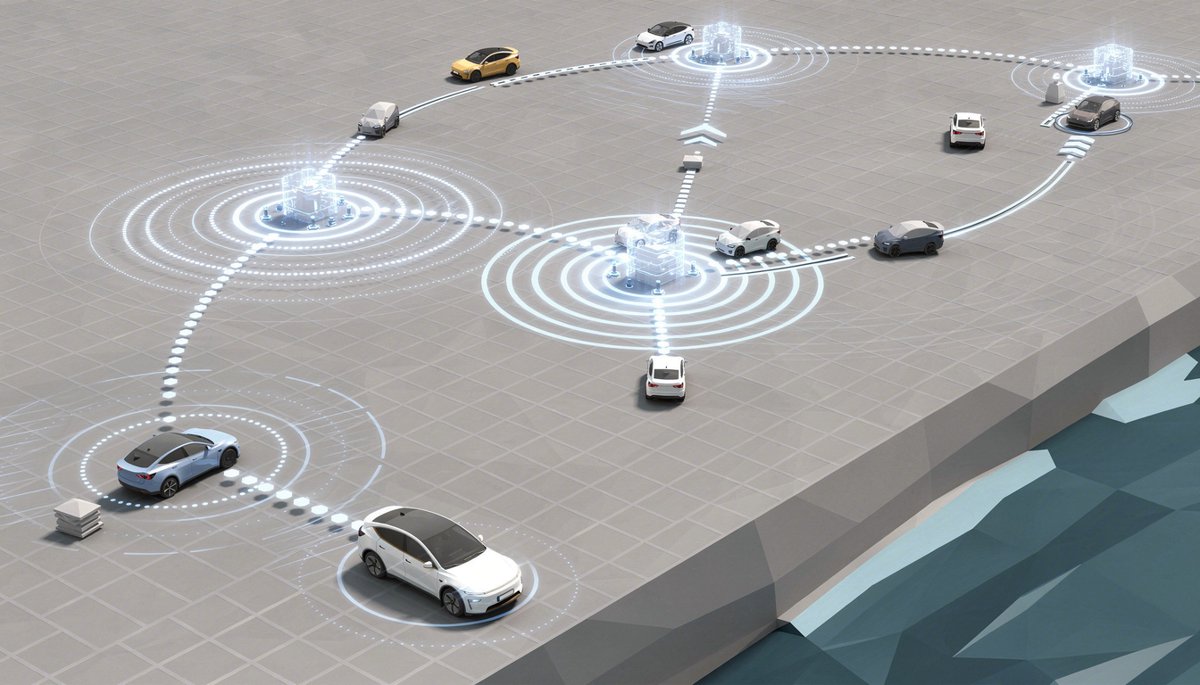
Tesla's driverless ambitions took another concrete step in July. On 21 July 2026 the company began operating unsupervised Model Y robotaxis in Tampa and Orlando, extending its Florida footprint beyond the Miami launch just 18 days earlier. A day later, at its Q2 2026 earnings call, Tesla put a number on the program's progress: more than 380,000 unsupervised miles driven.
The Florida expansion
The new service areas are modest but real. In Orlando, the ride zone covers roughly 12 to 15 square miles across eastern and south-eastern neighbourhoods, including the Conway and Lee Vista districts. Tampa launched with a smaller footprint of about 4 to 5 square miles, centred just north of downtown and around Hyde Park.
These are genuinely unsupervised rides in the mapped zones — no safety driver behind the wheel — using standard Model Y vehicles rather than the purpose-built Cybercab, which is still to come. Florida had already become Tesla's third robotaxi state, after Texas and California, when Miami went live on 3 July; Tampa and Orlando now deepen that Florida presence rather than opening a new region.
380,000 miles and "no notable incidents"
The headline milestone came from Tesla's AI leadership. VP of AI software Ashok Elluswamy told investors the robotaxi fleet had logged more than 380,000 unsupervised miles across several U.S. cities in two states with zero notable incidents, describing the safety record so far as "impeccable." That framing matters: Tesla's entire regulatory and commercial case for driverless operation rests on demonstrating a clean safety record at increasing scale, and a headline mileage figure with no serious incidents is the metric it wants investors and regulators to anchor on. Tesla also named additional markets it is targeting for expansion in the coming months, and confirmed the robotaxi fleet is now running the "v15" build of Full Self-Driving.
A rollout that is fast in cities, slow in cars
The geographic expansion has been rapid — Miami, then Tampa and Orlando within three weeks — but the fleet itself is still small. Electrek reported that the original Austin operation had stalled at around 17 cars, underlining that Tesla is prioritising adding cities over scaling vehicle counts within each one. The result is a wide but thin network: many service areas, few cars per area.
What it means for Europe
None of this is available in Europe yet, and it will not be soon. Unsupervised robotaxi operation depends on the same underlying autonomy Tesla is still fighting to get approved for supervised use on the continent — an effort that just hit a wall in France, where regulators blocked FSD approval over safety concerns. Until supervised FSD clears European type-approval, a driverless robotaxi service in Paris, Berlin or Amsterdam remains a distant prospect. For now, the Florida expansion is best read as a proof-of-concept: Tesla is demonstrating the technology works at small scale in permissive U.S. jurisdictions, while the regulatory path in Europe is only just beginning.