
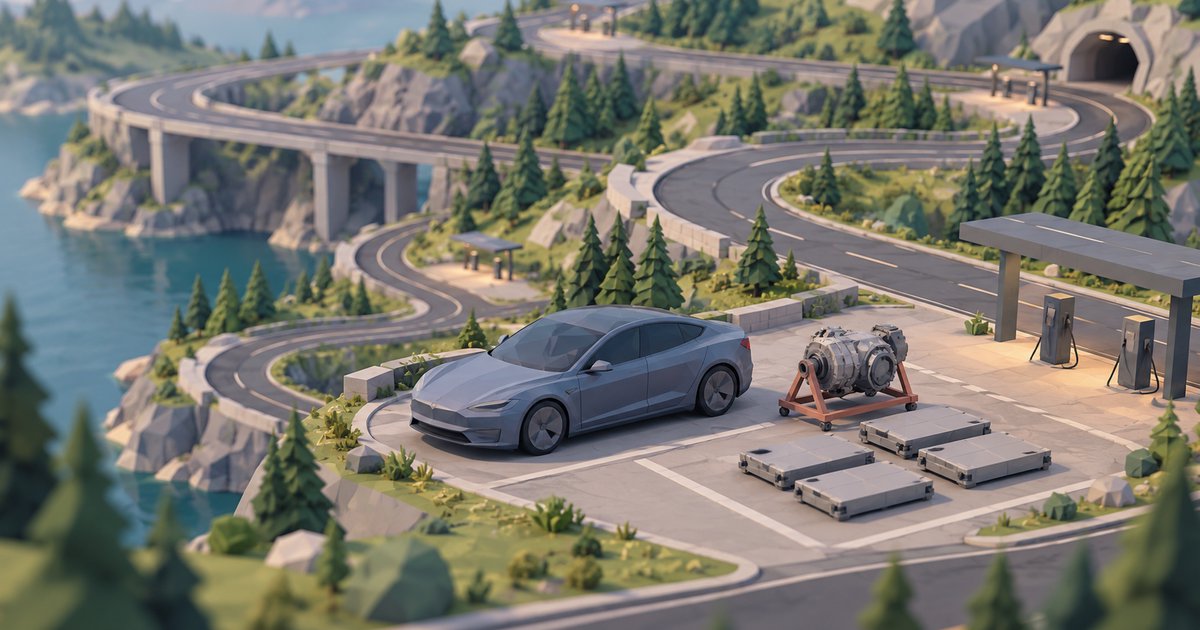
On 30 September 2026 Hansjörg Gemmingen posted that the odometer of his 2013 Tesla Model S P85+ had turned over 3,000,000 km — 1,864,113 miles. No electric car is known to have covered more.
The rate is the part that is hard to believe
Gemmingen passed one million miles in June 2022. The 1.39 million kilometres since then work out at roughly 889 km a day, every day, for more than four years. Between November 2019 and June 2022 his average was about 654 km a day, so he has not slowed down; he has sped up.
Four packs, and the current one is holding
The car is on its fourth battery. The pack now fitted went in during 2023 at about 1.76 million km. By March 2026 that single pack had itself covered a million kilometres and was still reporting roughly 85% of its original capacity.
That number deserves to be read carefully. It is one pack, in one car, driven in a pattern almost nobody shares — long motorway runs, charged constantly, rarely sitting. It is not a prediction of what a commuter's battery will do. What it does show is that a Tesla pack losing about 15% over a million kilometres is a thing that has physically happened, which is a stronger claim than any warranty table makes.
The drive unit is the real story
Batteries are what people worry about. They were not this car's problem.
| Component | Record to 3,000,000 km |
|---|---|
| Battery packs | 4, current one fitted at ~1.76M km |
| Motors to 1.8M km | 14, mostly remanufactured Tesla units |
| Dominant failure mode | Coolant seal leaks |
| Motors since 1.8M km | 1, rebuilt by an independent shop |
Fourteen motors in the first 1.8 million kilometres is a failure roughly every 130,000 km, and the cause was consistent: coolant seals letting go on the early large rear drive unit. Tesla kept supplying remanufactured units, and the remanufactured units kept failing the same way.
Then at about 1.8 million km an independent specialist, EV Clinic in Zagreb, rebuilt the unit rather than swapping it. That one motor has since added more than 1.2 million kilometres, reportedly with only minor shaft seal wear. A single independent rebuild has now outlasted all fourteen factory replacements put together.
What a European owner should take from this
Very little about the odometer, and quite a lot about the pattern. High-mileage electric cars hold up better than the used trade assumes — New AutoMotive's analysis of 47.4 million British MOT tests found electric failure rates flattening above 60,000 miles while petrol kept climbing — and the component that fails is more often a seal than a cell.
The caveat is the same one that applies to the Byron Bay Model S that reached nearly a million kilometres on one battery and the Kelowna taxi that passed a million: these are self-reported odometers on individually maintained cars, not a fleet study. They are evidence that the ceiling is high. They are not evidence of where the average sits.
The P85+ that set this record is a car Tesla no longer builds, with a drive unit it redesigned and a pack chemistry it has moved on from. Its successor packs have not had the chance to be driven three million kilometres yet.