
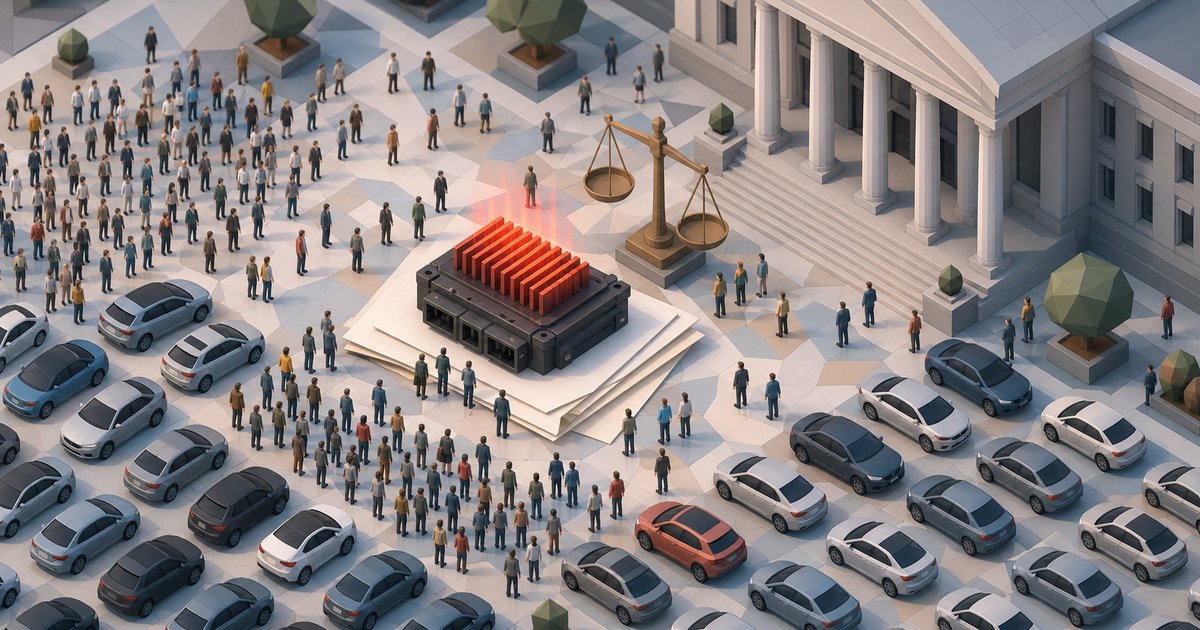
The European collective claim over Tesla's Hardware 3 Full Self-Driving promise has reached 7,907 verified participants from 39 countries, according to the live figures published by the initiative behind it. Between them they report €15.5 million spent on FSD, a number the organisers project will rise to €19.4 million as pending registrations are verified.
The claim was launched in April 2026 by Dutch Model 3 owner Mischa Sigtermans, after Tesla brought FSD (Supervised) to the Netherlands and excluded cars built on Hardware 3 — the computer fitted to vehicles delivered between roughly 2019 and 2023. Those owners had paid for the package at European prices reaching €7,500, in some cases years before any version of the software arrived. The action is being prepared as a collective claim under Dutch law.
Where Europe's claimants are
The Netherlands supplies more than a quarter of the total, which is unsurprising given where the initiative started and where FSD launched first in Europe. Germany is second.
| Country | Participants | FSD spend reported |
|---|---|---|
| Netherlands | 2,062 | €4,885,958 |
| Germany | 617 | €2,170,306 |
| Belgium | 450 | €1,544,609 |
| France | 305 | €1,076,235 |
| Denmark | 212 | DKK 3,302,569 |
The registered cars skew towards the volume models, as the fleet does: 2,881 Model 3, 1,501 Model Y, 587 Model S and 483 Model X.
The organisers also publish a figure that explains the tone of the complaint better than the money does. For first owners, the average wait between buying FSD and getting a usable version of it stands at about five years and three months — 1,913 days. The longest single case they have logged is ten years.
Why the number is climbing again
Registrations stood at roughly 5,700 across 37 countries in early May. The growth since then tracks a second grievance: the software Tesla did eventually offer HW3 owners is causing hardware to fail.
As HW3 Autopilot computers overheat on FSD v14 Lite, owners have reported boards passing 90 °C, forced disengagements and, in some cases, units that had to be replaced outright. German outlet teslamag reported on 5 August that the claim had drawn close to 8,000 European HW3 owners, and framed the thermal failures as the reason the count was moving again.
That sequence is the heart of the dispute. Elon Musk said for years that HW3 would be sufficient for autonomous driving. In April he withdrew that, announcing an upgrade programme to the newer AI4 computer, then shifted again to offering HW3 cars a cut-down build — FSD v14 Lite — rather than the hardware swap. For a buyer who paid for a promise of full autonomy, a distilled version of the software running on a computer that now overheats is a poor substitute.
What happens next
A Dutch collective action is a slow instrument, and nothing about the claim obliges Tesla to negotiate. The organisers have said they would prefer a settlement to litigation, and the registration drive serves both routes — a larger, verified group with documented purchase amounts is what gives either one weight.
Tesla has not responded publicly to the claim, and has not commented on the overheating reports despite repeated questions on social media. For European owners still driving HW3 cars, the practical position is unchanged: the promised capability has not arrived, and the software that did arrive is, for some, making the car worse.