
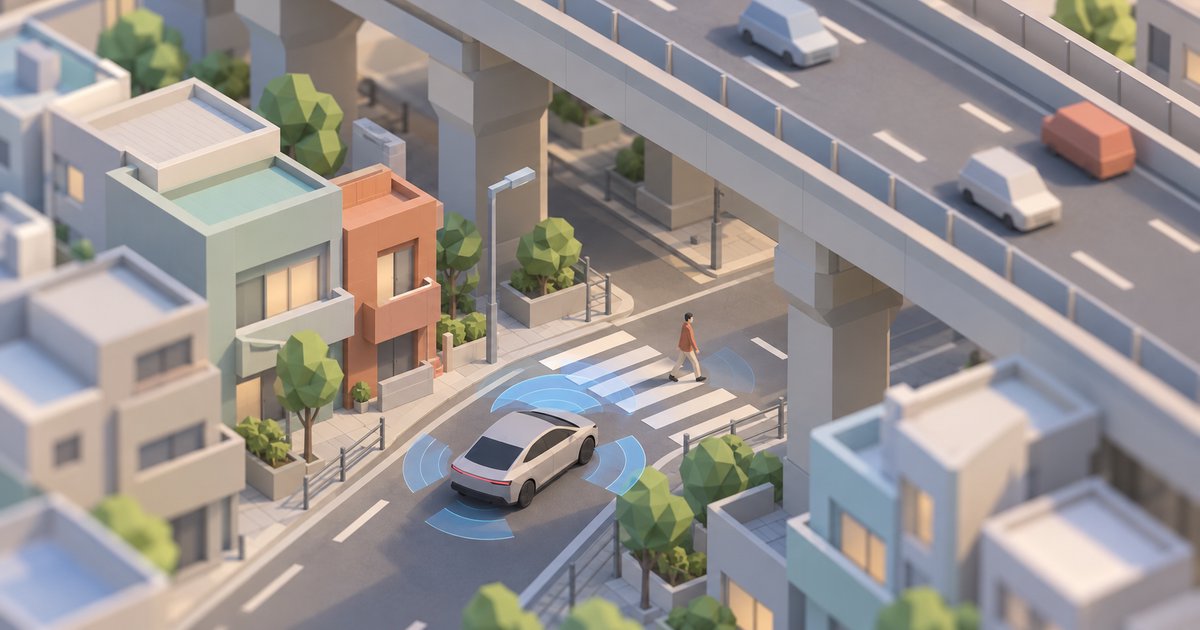
Tesla's head in Japan says the company is still aiming to switch on Full Self-Driving (Supervised) in the country before the end of 2026. With ten weeks of the year left, he also concedes that the decision is not Tesla's alone.
"We will make the maximum effort so that we can do it 100%," Hashimoto, president of Tesla Japan, told Nikkei in an interview published on 19 October 2026, Japan time. Asked about the view that a 2026 launch looks difficult, he replied that "it is not something we can achieve by ourselves, so it is difficult." Tesla Japan first set the 2026 target in a Nikkei interview in March.
Where the project stands
- Testing: FSD (Supervised) has been running on Japanese public roads since August 2025. The test fleet started with a Model 3 and later added a Model Y.
- Regulator: Tesla says it is continuing talks with the Ministry of Land, Infrastructure, Transport and Tourism. FSD (Supervised) is a Level 2 system, so the driver stays responsible at all times.
- Hardware and price: In March, Touch Lab reported that the Japanese release requires AI4 hardware (Model Y built from April 2024, Model 3 from late 2024, Model S and Model X from around January 2023) and that Tesla Japan sells the FSD package for ¥871,000 including tax.
What is different about Japanese roads
Hashimoto named three problems, according to Touch Lab's summary of the interview:
- Narrow streets, common in Japanese cities.
- Roads running directly beneath elevated expressways, a layout he described as unusual by international standards.
- Places where FSD's own judgement differs from Japanese law. The example Tesla has given since March is stopping before pedestrian crossings, which Japanese traffic law requires when a pedestrian is crossing or about to cross. Tesla is closing those gaps with local road testing and further training of its AI model.
He also said safety would not be traded for speed: the system has to meet Japan's road-traffic safety standards before it launches.
Touch Lab, which follows Tesla Japan closely, points out that narrow streets are common in Europe too, where FSD is already approved, and says it will take the 2026 target with a pinch of salt.
How this compares with Europe
Europe's route ran through one national approval that other countries can adopt. The Dutch RDW granted a provisional approval in April under Article 39 of EU Regulation 2018/858, and member states have been recognising it one by one: Slovakia became the ninth on 16 October. In Japan the approval rests with the national authorities, and Tesla's own president now says publicly that the timing is not in Tesla's hands.
Elsewhere in Asia, Tesla's supervised system is already available in China and South Korea, where FSD v14 Lite reached US-built Hardware 3 cars in August.
Why Tesla is pushing
Japan is one of Tesla's fastest-growing markets: the Model Y was the country's best-selling foreign model again in September, on Tesla Japan's own count. The Cybercab was shown in Tokyo, Osaka and Nagoya in September as part of an Asia-Pacific display tour, with no date for operation in Japan. Tesla's position, per the interview, is that FSD comes first, because the robotaxi is built on it.
Once approved, FSD would reach eligible Japanese cars by over-the-air update, with no visit to a service centre needed.