
Tesla China wholesaled 93,579 vehicles in July, its strongest month of 2026 and the best July in the company's history in the market, according to China Passenger Car Association data. The headline number is up 37.9% on the 67,886 units of July 2025 and 5.0% on June's 89,091.
It is also, read carefully, not a story about Chinese demand.
The month in numbers
| Metric | July 2026 | Comparison |
|---|---|---|
| Wholesale volume | 93,579 | — |
| vs July 2025 | +37.9% | 67,886 units |
| vs June 2026 | +5.0% | 89,091 units |
| Best month since | Dec 2025 | 97,171 units |
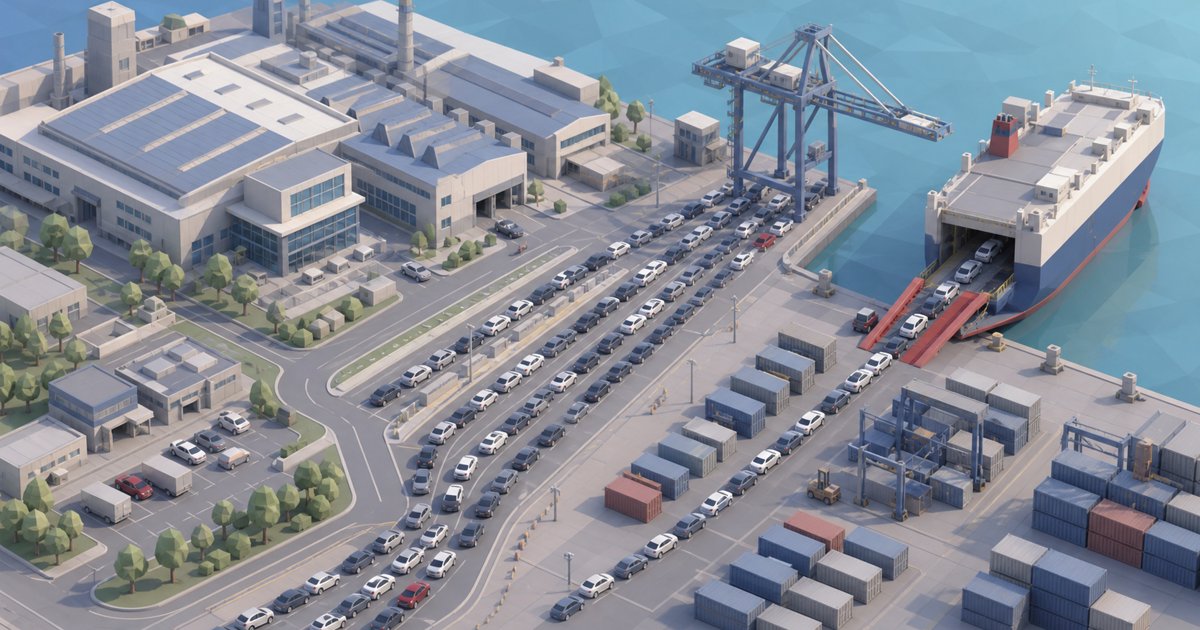
Wholesale counts everything that leaves the Shanghai plant — cars sold to Chinese customers and cars loaded onto ships for export. That distinction is doing most of the work in this figure, and it is why a record wholesale month can coexist with a shrinking domestic business.
Domestic down, exports way up
The first half of 2026 makes the split explicit:
| H1 measure | 2026 | 2025 | Change |
|---|---|---|---|
| Domestic retail sales | 238,955 | 263,410 | −9% |
| Exports from Giga Shanghai | 228,994 | 101,064 | +127% |
Exports now account for 49% of everything Giga Shanghai builds, up from 28% a year earlier. In January and April, Tesla shipped more cars out of China than it sold inside it — a reversal that would have been unthinkable when Shanghai was built explicitly to serve the Chinese market.
The domestic decline is not a blip. 2025 was Tesla's first-ever annual sales decline in China, and pressure from BYD, Xiaomi, NIO and a deep field of domestic rivals has not eased. Shanghai's answer has been to redirect capacity rather than idle it.
Why European owners should care
This is the part that matters outside China: Giga Shanghai is a primary supply source for European Model 3 and Model Y deliveries, alongside Giga Berlin. A 127% export surge is the mechanism that fills European order books, and it goes a long way to explaining why delivery estimates in several European markets have tightened this year even as Tesla's Chinese retail performance deteriorated.
It also carries a risk European buyers should understand. Capacity pointed at export markets is capacity that can be re-pointed. If Chinese domestic demand recovers, or if EU tariff policy on China-built EVs shifts, the flow that has been shortening European wait times is the same flow that would slow first. Shanghai-built cars entering the EU are subject to the bloc's countervailing duties on Chinese-made electric vehicles, which is a live variable rather than a settled one.
Against the wider trend
Tesla's July result runs ahead of the market it sits in — the CPCA reported China's overall NEV wholesale up 23% for the month, against Tesla's 37.9%. On a like-for-like wholesale basis Tesla gained ground.
But the comparison flatters. Tesla's outperformance is export-driven, while Chinese rivals' growth is substantially domestic. TeslAnt covered June's 2026 high and the 33% Q2 volume jump as the same pattern taking shape; July extends it rather than changing it. The Shanghai plant is running well. What it is increasingly running for is customers somewhere else.