
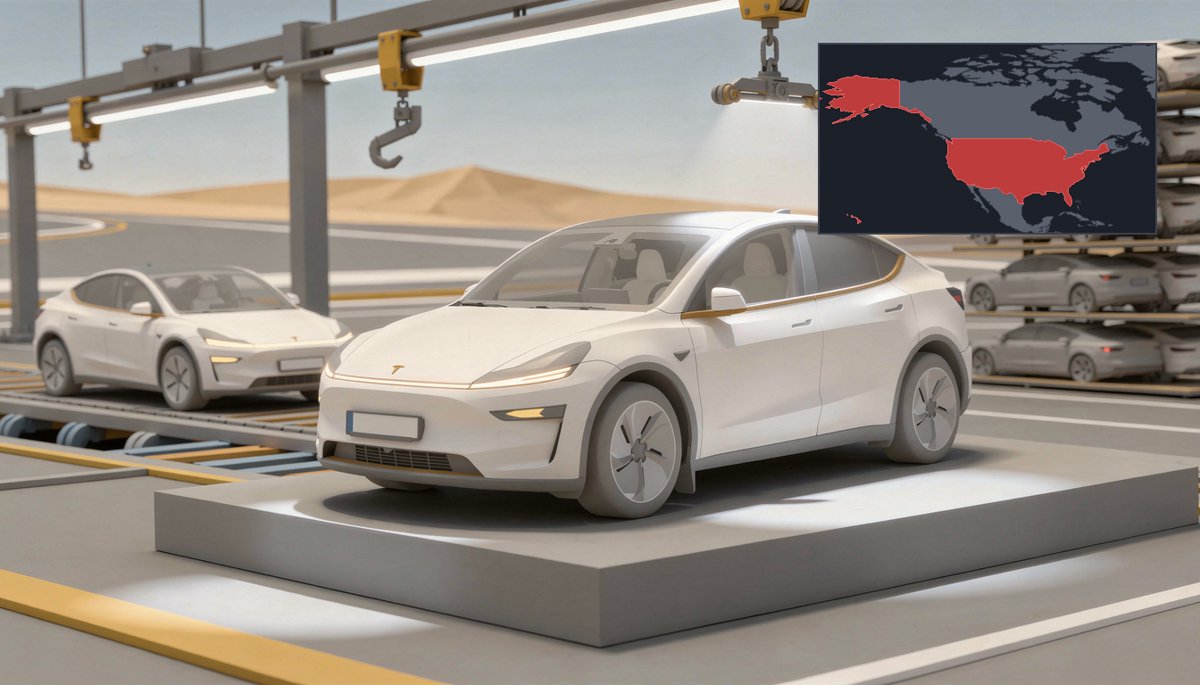
Tesla has built its 10 millionth car. The company confirmed the milestone on 30 July 2026, revealing that the landmark vehicle — a Diamond Black Model Y — rolled off the line at its original Fremont factory in California. It is a headline number that puts Tesla in a class of its own among electric-vehicle makers, even as the story underneath the celebration is more complicated.
The first pure-EV maker to reach 10 million
Tesla is the first company built solely around electric vehicles to reach 10 million units produced. It got there on the back of just four assembly plants: Fremont in California, Giga Shanghai, Giga Texas and Giga Berlin. That last one matters most to European owners — the Berlin-Brandenburg plant is the source of many of the Model Ys on the continent's roads, and its output is part of the total Tesla just celebrated.
The pace of the climb tells its own story. Tesla took more than a decade to build its first million cars, passing that mark in 2020. The jump from one million to ten million took roughly six years — a reflection of how quickly the Gigafactory network scaled once it was in place.
A milestone, and a plateau
The timing is awkward. Tesla reached 10 million vehicles at a point when its growth has stalled rather than accelerated. Deliveries have come off their peak, and the company is no longer posting the year-on-year gains that defined its earlier expansion. Reaching a big round number is a genuine engineering and manufacturing achievement; it does not, on its own, reverse the slowdown that analysts have been tracking through 2026.
That tension — a record cumulative figure set against softening demand — is the real context for European buyers. The installed base of Teslas keeps growing, which strengthens the used market, the Supercharger network's utilisation and the case for long-term software support. But it does not signal a surge in new sales.
Halfway to Musk's production target
Crossing 10 million also carries symbolic weight for Tesla's leadership. The figure is exactly half of the 20 million vehicles the company would need to build by 2035 to unlock one of the four core product goals tied to CEO Elon Musk's compensation package. The other three — 10 million active Full Self-Driving subscriptions, one million humanoid "bots" and one million robotaxis in service — remain far further out.
Framing the milestone that way is a reminder of how much of Tesla's forward story now rests on targets that stretch a decade ahead, rather than on this year's delivery figures.
What it means for European owners
For drivers in Europe, the practical takeaway is continuity rather than change. A larger global fleet means a deeper parts and service ecosystem, a more liquid second-hand market, and continued incentive for Tesla to keep pushing over-the-air software to cars long after they leave the showroom. The 10 millionth car is a marketing moment — but the infrastructure it represents is what owners actually benefit from.