
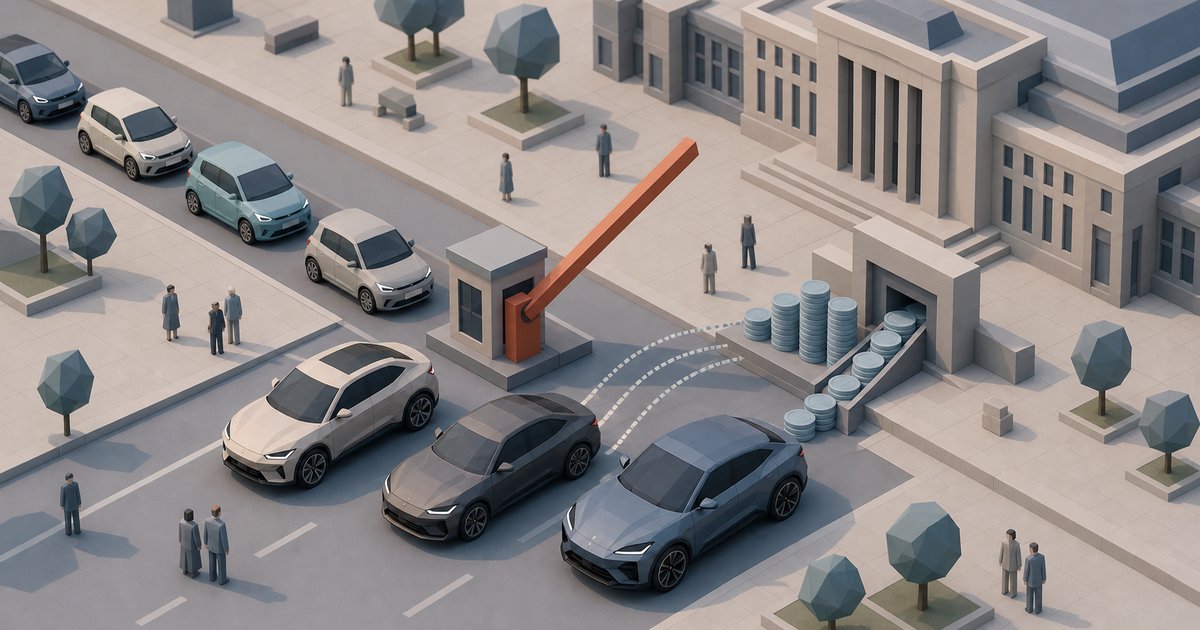
Germany's electric-car purchase premium tests the buyer, not the car. There is an income ceiling on who may apply, and no price ceiling at all on what they may buy with it. By 1 August that combination had put federal money into more than 50 luxury electric cars, among them 36 Porsches.
The figures come from a Handelsblatt report on BAFA approval data, and they have opened a political fight over a scheme barely three months old.
What the money bought
| Model | Note |
|---|---|
| Porsche Macan and Taycan | 36 cars, the largest single block |
| Mercedes-Benz EQS 450+ | Executive saloon |
| Mercedes-Benz G 580 | Electric G-Class |
| BMW i7 | Flagship saloon |
| BMW XM 50e | Plug-in hybrid SUV |
The rule that allows it
The premium reopened on 19 May 2026, backdated to purchases from 1 January, and is means-tested on the applicant. Taxable household income must not exceed €80,000, rising by €5,000 per child to a maximum of €90,000. Qualifying buyers receive €3,000, rising to €6,000 for lower-income households with children.
What the scheme does not do is cap the vehicle. Germany's previous Umweltbonus carried a list-price ceiling; this one dropped it in favour of pure income targeting. A household inside the income limit can therefore claim the same grant on an electric G-Class as on the cheapest city car on the market.
The ministry calls it a rounding error
The Federal Environment Ministry, under Carsten Schneider, has refused to change the rules. A spokesperson called support for high-priced vehicles "a very small marginal phenomenon", noting that more than 80% of subsidised cars cost under €50,000. The arithmetic supports that: BAFA had granted 26,875 approvals and paid out €117 million by 1 August, so fifty-odd luxury cars is a fraction of a percent.
The objection is not really about the money, and it is not coming from the opposition. SPD transport spokesperson Isabel Cademartori said the subsidy must live up to its social purpose; her colleague Sebastian Roloff said luxury cars should not receive state support. The Greens' Swantje Michaelsen called the design an invitation to top earners. Schneider is himself an SPD minister, which is what gives the row its edge.
What it means for Tesla buyers in Europe's biggest market
Tesla has more exposure to a price cap than any other brand here, because it already leads the approved applications and because its German range sits directly across the €50,000 line the ministry is using to defend the scheme.
| Model (Germany) | Price | Under €50,000 |
|---|---|---|
| Model 3 Standard RWD | €36,990 | Yes |
| Model Y Standard | €39,990 | Yes |
| Model Y Long Range RWD | €46,990 | Yes |
| Model Y Long Range AWD | €52,990 | No |
| Model Y Performance | €61,990 | No |
A €50,000 ceiling would leave the volume cars untouched and cut off the top two Model Y trims. Model S and Model X are already out of the argument — neither is freely configurable in Germany any more.
What reform would actually change
Four proposals are circulating: a list-price ceiling, lower income thresholds, subsidies extended to used EVs, and a "made in Europe" content requirement — the last already pushed by the CSU in a form aimed at Chinese imports. Any of them would apply to future applications, not the 103,500 already filed.
For anyone in Germany weighing a higher-trim Tesla, the current rules are the generous ones. Tesla has been pricing against this scheme all summer, down to a revived €2,000 Model Y bonus — and the rules that make that stack work are the ones now under review.