
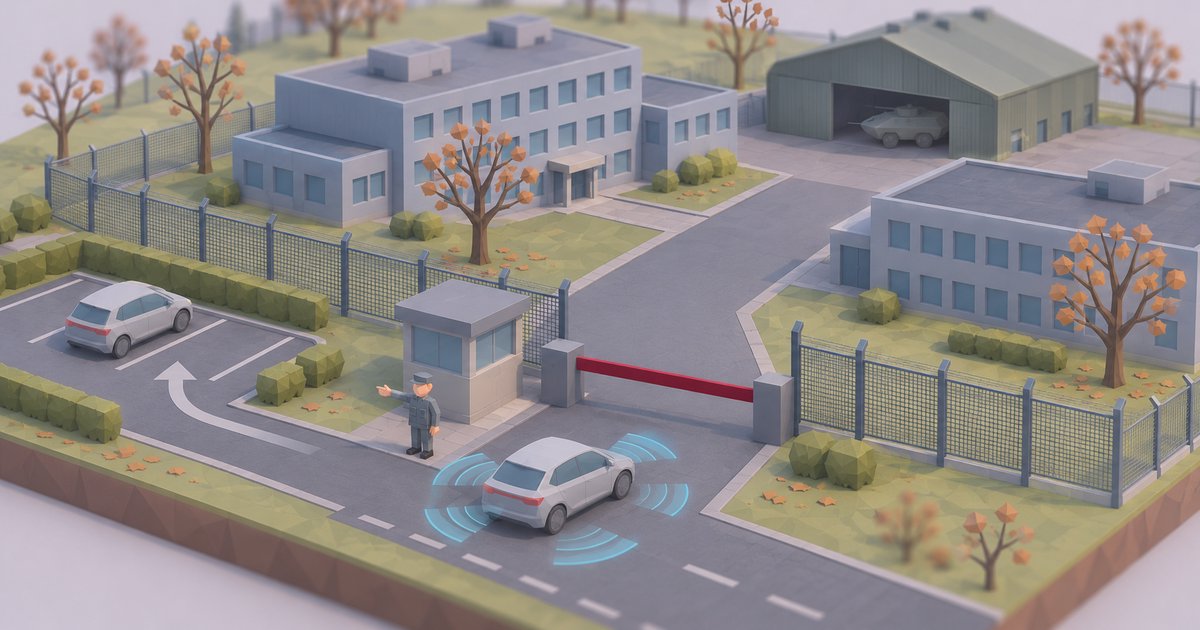
Germany's armed forces are restricting the access of connected cars to sensitive military areas, and the rule can apply to Teslas as much as to Chinese brands. A spokesperson for the defence ministry told Handelsblatt on 11 November 2026 that where a potential risk exists, a vehicle may no longer drive onto the site or into the security area, whatever country its maker comes from. Vehicles of every manufacturer can be affected, "including models from the Chinese electric-car maker BYD and the US manufacturer Tesla", Golem summarised.
On 13 November the head of a German domestic intelligence agency went further. Stephan Kramer, president of Thuringia's Office for the Protection of the Constitution (Verfassungsschutz), backed the Bundeswehr's decision and called for similar protection at ministries, police stations and intelligence services, in an interview with Handelsblatt relayed by Hasepost.
What the Bundeswehr rule says
The concern is that cameras, microphones and sensors in modern cars could record confidential information. The rule is not a general ban on connected cars at Bundeswehr premises, according to Golem. Local security officers decide which areas count as sensitive and how they must be protected, and some military security areas already exclude such vehicles.
Government spokesperson Stefan Kornelius said the ministry's threat assessment also matters for other security-relevant areas, but left it to each institution, authority and ministry to decide for itself.
"The same standard for Tesla"
Kramer warned against giving carmakers from allied countries the benefit of the doubt. "We should not rely on there being no spying among friends," he said. "The same test standard should apply to Tesla and all other manufacturers." What matters, he said, is "which data the vehicle records, where it is sent and who can access it".
He did not cite any evidence of espionage through such cars, and the report notes that there is none so far. He also said a blanket driving ban is not needed everywhere: depending on the site, parking at a sufficient distance or targeted access restrictions may be enough. Staff should be told not to discuss confidential matters inside a car. For Chinese makers such as BYD he sees an additional risk, because Chinese law obliges companies to cooperate with the state's intelligence services.
Precedents
| Where | Measure | Brand named |
|---|---|---|
| Germany, Bundeswehr | Access to sensitive areas can be refused case by case (November 2026) | All makers, incl. Tesla and BYD |
| US, Kadena Air Base (Okinawa) | Entry banned since October 2026 | BYD |
| China, government areas | Banned in 2021, lifted in 2024 | Tesla |
The Kadena and China entries come from Golem's report.
What it means for Tesla owners
For most owners, nothing changes. The rule matters to soldiers, civil servants and contractors who drive a Tesla to a Bundeswehr site, where a security officer can now direct the car to a car park outside a protected area. Whether other federal or state authorities follow is open; the government has left that to each of them. Neither report carries a comment from Tesla, whose cars record their surroundings with exterior cameras, including while parked in Sentry Mode.