
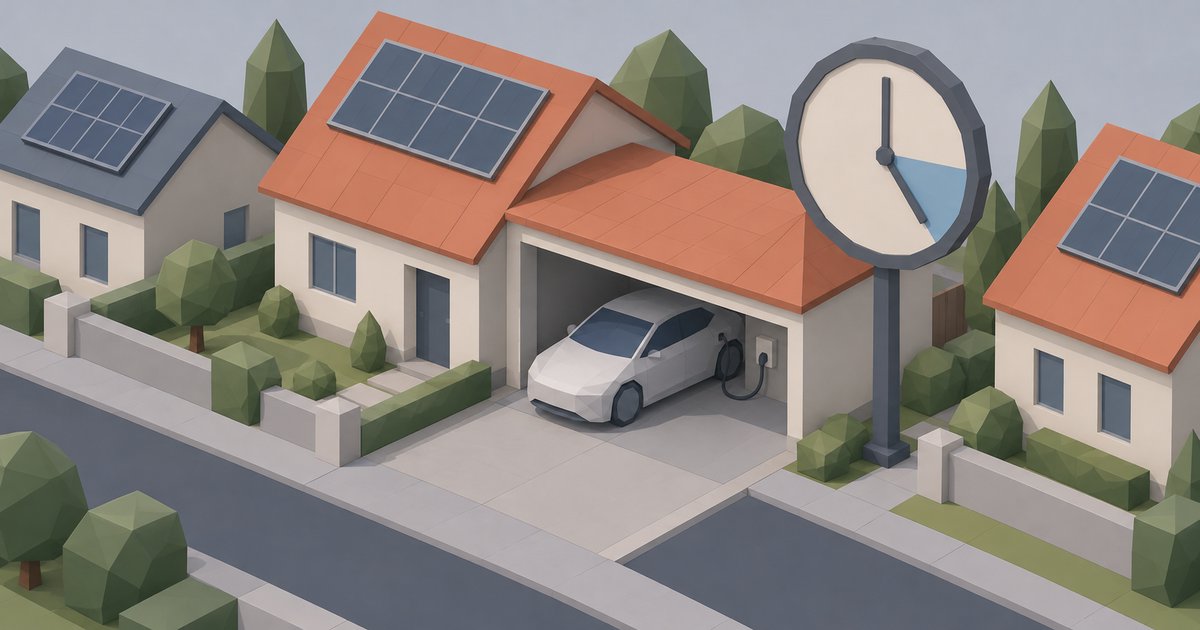
France is moving the cheap-electricity hours that many electric-car owners charge in. From 1 November 2026, the second phase of the off-peak reform starts to reach 9.3 million more households on the "heures pleines / heures creuses" (HP/HC) option, according to the national energy ombudsman. The reform is set by the energy regulator, the CRE, and carried out by Enedis, which runs the distribution network. A first phase, from November 2025 to June 2026, covered 1.7 million customers, and about 11 million homes with a Linky meter should have new slots by the end of 2027.
The number of off-peak hours does not change: eight a day at the lower price, sixteen at the full one. What changes is where they fall. With about 30 GW of solar capacity installed, France now has plenty of electricity at midday, Automobile Propre notes, and the reform shifts part of the off-peak time towards it.
What changes, season by season
The eight hours now follow the seasons. In winter, from 1 November to 31 March, the ombudsman says six fall between 23:00 and 07:00 and two in the daytime. EDF says all eight can be grouped at night, for example from 23:00 to 07:00, although some customers will keep an afternoon slot. In summer, from 1 April to 31 October, two or three of the hours can move to between 11:00 and 17:00. EDF guarantees at least five consecutive off-peak hours in the middle of the night and names charging an electric car as one of the loads they suit.
Enedis sets each meter's slots according to the local network, and customers cannot choose them. The switch is staggered. EDF says customers it has not yet moved will change between 4 November 2026 and 30 November 2027, while those moved between 1 November 2025 and 31 May 2026 keep their current slots. Customers who took EDF's off-peak option on or after 6 October 2026 already have seasonal slots, so their winter grid starts on 1 November. Suppliers must give at least a month's notice of any change. EDF's Tempo option is not affected, and neither are Corsica and the overseas territories.
Why it matters for a car on a timer
A charging schedule set in the car or the Tesla app keeps its own times. Appliances wired to the Linky meter, such as a hot-water tank, follow the new slots automatically, but a device with its own timer starts when it was told to, as Selectra points out. An owner whose slots move and who does not update the schedule risks paying the full rate for part of each overnight charge.
According to EDF, as reported by Tout sur mes finances, every off-peak slot that includes time between 07:00 and 11:00 or between 17:00 and 23:00 will change. That covers the common 22:00-to-06:00 window, because its first hour falls before 23:00.
Shorter nights also mean less energy. On a single-phase 7.4 kW home charger, eight off-peak hours add about 59 kWh, while five add about 37 kWh. In summer, a car parked at home in the early afternoon can use the new daytime hours; one that spends the day at the office cannot.
What to check
Look up your off-peak slots in your supplier's customer area or on your bill, and watch for the notice. When the slots change, update the car's charging schedule to match, twice a year if your contract has seasonal slots. For context, French households paid an average of €0.2485 per kWh in the first half of 2026, according to Eurostat's latest figures.