
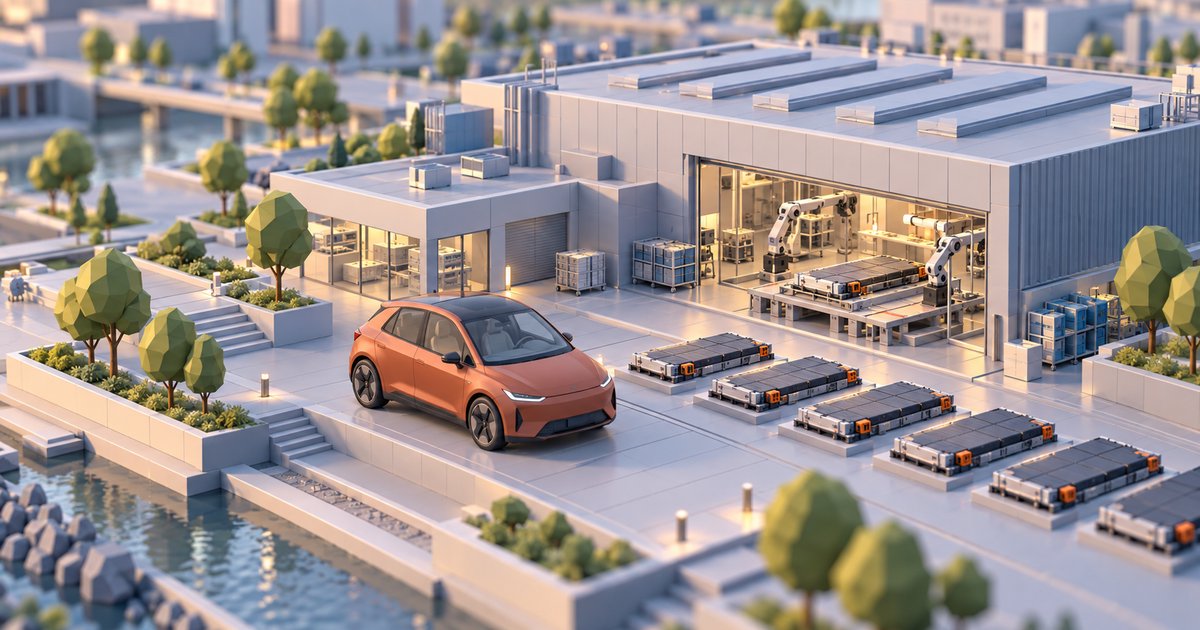
At its Capital Markets Day on 30 September 2026, BMW confirmed that it will add another all-electric Neue Klasse model in the high-volume entry segment in 2028, "with a focus on Europe". That is the whole of the official announcement, and almost everything else being written about the car is inference.
It is still the most consequential thing BMW said. Neue Klasse has so far launched from the top down — the iX3, then the i3 saloon. Confirming a smaller, cheaper car on the same platform means the architecture is meant to scale to volume, not to sit above it.
What BMW confirmed, and what it did not
| Item | Status |
|---|---|
| Entry-segment electric model in 2028 | Confirmed by BMW |
| Europe as the lead market | Confirmed |
| Neue Klasse platform | Confirmed |
| iX4 unveiling later in 2026 | Confirmed |
| Name "i1", codename NB0 | Reported, not confirmed |
| Hatchback or saloon body | Reported as market-dependent |
| 800V, Gen6 battery, rear-wheel drive | Expected from the platform, not stated |
The name is the part to be careful with. BMW has not said "i1". The widely-used designation comes from reporting around the internal codename NB0, and the body style is described as possibly a compact hatchback or a compact saloon depending on the market. Treat the specification as unannounced.
The number that makes the case
BMW also put figures against the car already on sale. The iX3 has taken more than 100,000 orders with over 30,000 delivered, the order book runs into the second quarter of 2027, and BMW says the model has reached margin parity with its combustion equivalents in key markets.
Margin parity is the claim that matters. It is the thing most legacy manufacturers have been unable to assert about an electric car, and it is BMW's argument that it can go down-market without going loss-making. The i3 saloon launched at €59,900 with up to 912 km of range; the 2028 car has to work at a fraction of that price.
The industrial side moved on the same schedule. On 2 October BMW opened its battery plant at Irlbach-Straßkirchen and began series production of sixth-generation high-voltage battery packs, supplying the new i3 built in Munich first.
Why this lands on Tesla's side of the board
BMW is building toward the segment below the Model 3 and Model Y, not at them. That is deliberate, and the regulatory weather currently favours it: the EU's auto package proposes super-credits for electric cars under 4.20 metres, a threshold neither Tesla model comes close to.
The competitive question for Tesla is not whether a 2028 BMW hatchback outsells a Model Y. It is that Europe's premium incumbent has committed to a cheap electric car on a platform it says already earns combustion-equivalent margins, aimed at a segment where Tesla currently offers nothing, at a moment when European policy is being written to reward exactly that car.
Set against a 2028 date, none of this changes what anyone buys next year. What it changes is the shape of the European market Tesla will be selling into at the end of the decade — more small, European-built, European-subsidised electric cars, from a maker that says it has solved the margin problem.