
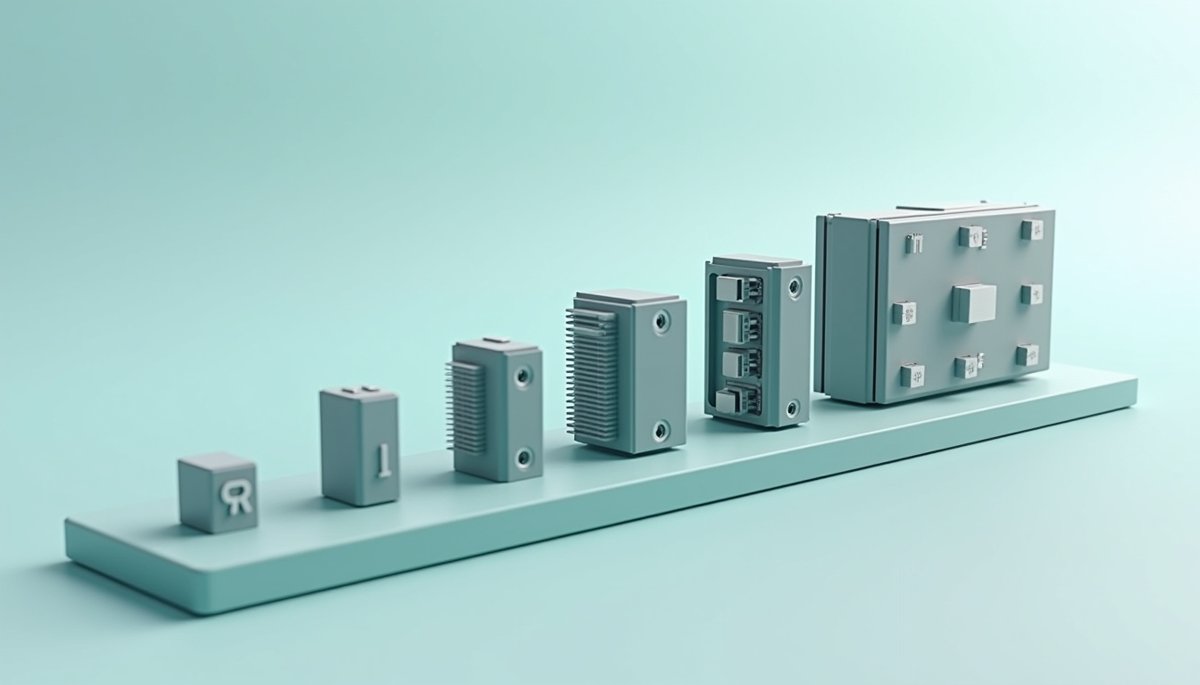
Tesla has shipped five generations of self-driving compute since the original Autopilot launched in 2014 — and switched chip vendors three times along the way (Wikipedia: Tesla Autopilot hardware). Which generation sits in your car decides what cameras it has, what version of FSD it can run, whether it will ever get unsupervised driving — and how much you might pay to upgrade if you bought into the long-promised future.
The five generations
| Gen | Years in new cars | Chip & vendor | Compute (peak) |
|---|---|---|---|
| HW1 | Sep 2014 – Oct 2016 | Mobileye EyeQ3 | ~0.25 TOPS |
| HW2 / HW2.5 | Oct 2016 – Apr 2019 | NVIDIA Drive PX 2 (Tegra Parker) | ~10 TOPS |
| HW3 | Apr 2019 – early/mid 2023 | Tesla in-house (dual chip, Samsung 14 nm) | ~144 TOPS |
| HW4 / AI4 | Jan 2023 – present | Tesla in-house (dual chip, Samsung 7 nm) | ~243 TOPS |
| HW5 / AI5 | Volume from mid-2027 | Tesla in-house, TSMC + Samsung 2/3 nm | ~2,000–2,500 TOPS target |
The big turning points: the Mobileye partnership ended after a May 2016 fatal crash; Tesla rebuilt vision in-house on NVIDIA hardware (HW2); then Pete Bannon's team designed Tesla's first custom FSD chip in 2019 (HW3). Every generation since has been Tesla silicon.
Which generation is in your Tesla?
| Model | Era | FSD hardware |
|---|---|---|
| Model S / Model X | 2014–2016 | HW1 |
| Model S / Model X | 2016–2019 | HW2 / HW2.5 |
| Model S / Model X | 2019–Jan 2023 | HW3 |
| Model S / Model X | Jan 2023–discontinued 2025 | HW4 |
| Model 3 | 2017–2019 | HW2.5 |
| Model 3 | 2019–late 2023 | HW3 |
| Model 3 Highland | Late 2023 onwards | HW4 |
| Model Y | 2020–~2023 | HW3 |
| Model Y Juniper | 2025 onwards | HW4 |
| Cybertruck | All (Nov 2023+) | HW4 (plus HD radar) |
| Tesla Semi | All (Dec 2022+) | HW4 |
| Cybercab | Initial production 2026 | HW4 (AI5 was the plan; volume slipped — see the AI5 delay reporting) |
To check yours: Controls → Software → Additional Vehicle Information → "Computer". A value starting with 3.x is HW3; 4.x is HW4.
Sensors changed too — sometimes by software, after the car shipped
The FSD generation set what the factory wired in, but Tesla has repeatedly turned sensors on and off via over-the-air updates in the years after delivery. The result is that two HW3 cars can have different active sensors depending on when they were built and what Tesla did to their software afterwards.
- Cameras — HW1 had a single forward camera. HW2 jumped to 8 cameras (still 1280×960). HW4 kept the 8-camera count but stepped resolution up to 5 megapixels on the front (2896×1876) with repositioned B-pillar and C-pillar units (AutoPilot Review). This is why HW3 can't simply "download" the HW4 vision stack — the input imagery is fundamentally different.
- Forward radar — present on every HW1, HW2 and early HW3 car. Removed from new builds in May 2021 (Model 3/Y) and February 2022 (Model S/X) as part of the "Tesla Vision" pivot, then deactivated on older cars via OTA. Re-introduced as high-definition imaging radar on Cybertruck and some HW4 S/X from late 2023.
- Ultrasonic parking sensors — 12 sensors standard from HW1 through 2022. Dropped from new builds in October 2022. Existing cars kept their USS hardware but Tesla disabled and partially restored proximity bars via software.
- Cabin camera — physically installed on every Model 3 from 2017 but kept dormant for almost four years. Activated May 2021 for driver-attention monitoring.
Infotainment hardware is a separate story
The touchscreen computer (Tesla calls it the MCU) is not the FSD computer. It has followed its own three-generation arc with three different vendors, and you can mix and match.
| MCU | Years | Chip | Vendor |
|---|---|---|---|
| MCU1 | 2012 – early 2018 (S/X only) | Tegra 3 | NVIDIA |
| MCU2 | 2017 – 2022 | Atom A3950 "Apollo Lake" | Intel |
| MCU3 | 2021 – present | Custom Ryzen embedded APU | AMD |
A 2019 Model 3 Long Range has an HW3 FSD computer and an Intel MCU2 infotainment. A 2021 Model S Plaid has the same HW3 FSD computer but with an AMD MCU3 infotainment — that's how the Plaid can run Steam-class games while the 2019 Model 3 can barely render the modern map. The two boards don't talk much; replacing one does nothing for the other.
The big 2026 story: HW3 won't get unsupervised FSD
For roughly seven years, Tesla maintained that anyone who bought the Full Self-Driving option on an HW3 car would receive unsupervised driving via software. On the Q1 2026 earnings call, the company reversed course: HW3 will not run unsupervised FSD. Three paths for affected owners (Not a Tesla App):
- A hardware retrofit to AI4 (new computer, new cameras, new wiring harness — done in dedicated microfactories) at an out-of-pocket cost reported at $3,000–$5,000 USD
- A discounted trade-in for a new HW4 (or later) car
- A stripped-down FSD v14 Lite stopgap, designed for functional feature parity with the HW4 fleet but with lower-fidelity occupancy and a lower capability ceiling — rolling out from late June 2026
Roughly four million HW3 vehicles worldwide are in scope. Microfactory openings have not yet been announced; first physical retrofits are unlikely before Q1 2027.
And HW5 — when it lands
Tesla taped out the AI5 chip on 15 April 2026, with volume production targeted for mid-2027 (Electrek). It is dual-sourced between TSMC (2 / 3 nm in Taiwan and Arizona) and Samsung's new Taylor, Texas fab — a first for Tesla — and targets 2,000–2,500 TOPS, roughly an order of magnitude over HW4. The Cybercab originally announced for AI5 will launch on AI4 instead because AI5 volume will not be ready in time. AI5 is the platform Tesla is now positioning for true Level 4 / Level 5 autonomy at scale.
For European owners
Most EU-market Model 3 and Model Y cars built after late 2023 come out of Giga Berlin or Giga Shanghai with HW4 from the factory. Model S/X were withdrawn from Europe in 2025; surviving EU examples are HW3. Two collective claims are progressing through European courts — a Dutch HW3-owner action and a wider pan-European claim — both arguing that the Q1 2026 admission constitutes a material breach of the FSD purchase contract. Outcomes will shape what European retrofit pricing eventually looks like.
Further reading
- Tesla Autopilot hardware — Wikipedia
- Tesla Autopilot — Wikipedia
- Self-driving car — Wikipedia
- Not a Tesla App — Everything we know about HW5 / AI5
- Electrek — Tesla AI5 chip taped out
- AutoPilot Review — Tesla Hardware 4 (AI4) full details
- Tesla — FSD (Supervised) v14 Trial
Wikipedia content used under CC BY-SA 4.0.