
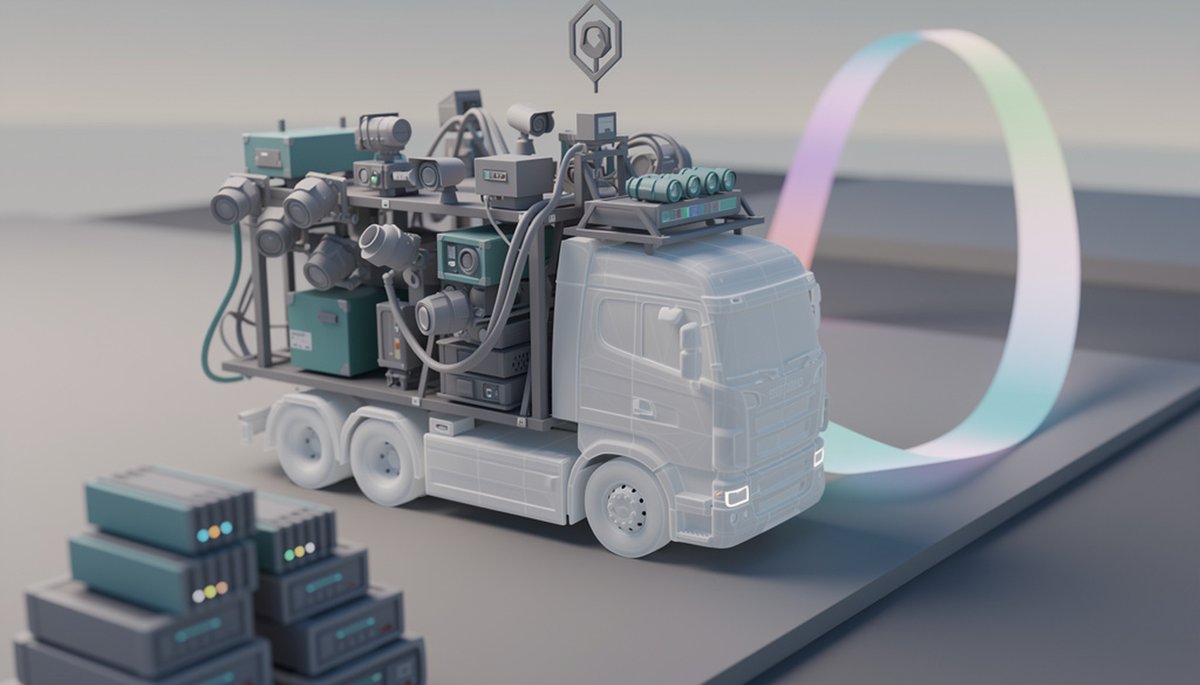
Tesla's autonomy push has so far centred on its cars and the Cybercab robotaxi. A fresh sighting suggests the electric Semi is now part of that programme too: a refreshed truck has been photographed carrying ground-truth validation equipment, the first time the combination has been publicly documented.
What was spotted
Observers caught a refreshed Tesla Semi in the wild mounted with an array of auxiliary sensors and data-logging hardware. This is not production equipment but a validation rig of the kind engineers bolt onto test vehicles. The significance is in the timing: it is the first public evidence that Tesla is running Full Self-Driving validation on the Semi itself, rather than simply describing the truck as autonomy-capable on paper.
What "ground truth" hardware does
Ground-truthing is a step in training and validating a self-driving system. The auxiliary sensors provide highly accurate, independent measurements of distance and velocity, a reliable reference that engineers compare against what the vehicle's own camera-based stack perceives. If the production system's estimate of where another vehicle is, and how fast it is moving, matches the ground-truth rig, the stack is performing correctly. Where it diverges, that data feeds back into training.
A typical rig adds extra cameras, sensor arrays and logging equipment used to capture real-world driving data and verify the AI before any software is pushed to customer vehicles. Seeing it on a Semi means the validation phase is underway, not merely planned.
Consistent with Tesla's stated plan
None of this comes out of nowhere. When Tesla unveiled the refreshed 2026 Semi in November 2025, Elon Musk described it as "designed for autonomy" and confirmed it was "FSD ready." The hardware to support self-driving was, in other words, baked into the refreshed truck from the start. This sighting is the first concrete sign that the software side has now reached on-road validation.
An autonomous heavy truck is a different proposition from a self-driving car: longer stopping distances, far greater mass, and freight economics that reward removing the driver from long highway hauls. Those same factors are why a validated system has to clear a much higher bar before deployment.
What it means for Europe
The Tesla Semi is not on sale in Europe, and there is no confirmed timeline for it to arrive, so this is forward-looking news rather than something European fleets can act on today. But autonomous trucking is squarely relevant to European logistics, where driver shortages and tight emissions targets are pushing operators toward electric freight. If Tesla can validate FSD on a Class 8 truck, it sets a marker for what an eventual European rollout could offer. For now, the sighting is best read as a signal of direction: Tesla is widening its autonomy effort beyond passenger cars and the robotaxi, and the Semi is next in line.