
What happened
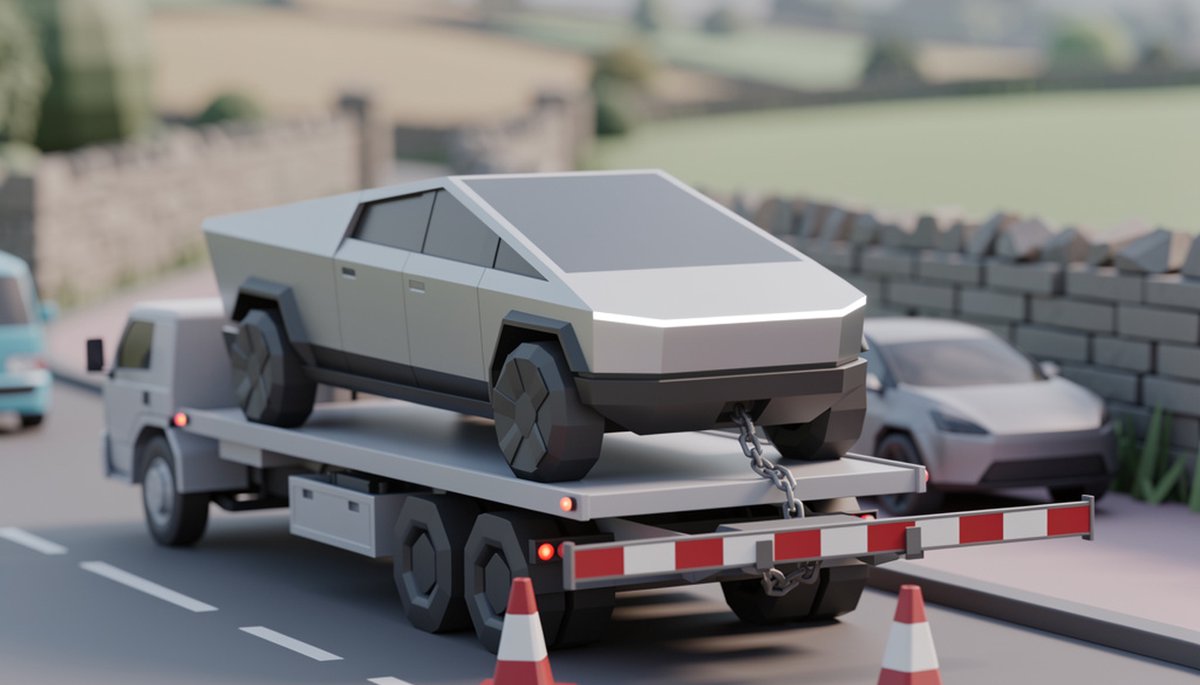
Greater Manchester Police seized a Tesla Cybertruck after stopping it in Whitefield, citing "legitimate concerns" about the vehicle's legality on British roads. Officers from the force's transport unit confirmed the pickup had been imported from the United States and was being driven in the UK despite never having been approved for sale here. The truck was taken under the Road Traffic Act, and the driver was told they must produce proof of ownership and valid insurance before they can reclaim it.
It is the latest in a small but growing run of UK Cybertruck seizures, and the reason is the same every time: the Cybertruck is not road-legal in the United Kingdom.
Why the Cybertruck cannot be registered here
Every new car sold in the UK or the EU must hold a certificate of conformity proving it meets the region's type-approval standards. Tesla has never put the Cybertruck through that process, because the truck was engineered to US federal motor vehicle safety standards, which differ substantially from European rules.
The sticking points are structural. UK and EU regulations include strict pedestrian-protection requirements designed to reduce injury when a vehicle strikes a person. The Cybertruck's stainless-steel exoskeleton, sharp body creases and rigid, unforgiving panels are difficult to reconcile with those rules. European crash and pedestrian-impact standards generally expect crumple zones and softer frontal structures, neither of which fits the Cybertruck's design philosophy.
Without type approval, the vehicle cannot be granted a UK registration. The handful of Cybertrucks seen on European roads are private grey imports, often registered and insured abroad, and driving one on a public road leaves the owner exposed to exactly the kind of stop that happened in Whitefield.
UK seizures like this are not isolated. Police forces elsewhere in Europe have stopped imported Cybertrucks on the same grounds, and registration authorities have repeatedly turned away owners seeking to put the truck on local plates. The pattern is consistent because the underlying obstacle — the absence of a European type approval — is identical wherever the truck turns up.
What it means for European owners
The practical takeaway for buyers across Europe is blunt: importing a Cybertruck does not make it legal to drive. The same type-approval barrier that applies in Britain applies across the EU, where the General Safety Regulation sets the pedestrian-protection and design standards a vehicle must meet to be homologated.
Tesla has not announced any plan to engineer a Europe-compliant Cybertruck, and a compliant version would require significant redesign work. Until that changes, the truck remains a US-market product. Owners tempted by an import face seizure, fines, and the cost of recovering a vehicle that they still will not be able to drive legally.
For now, the Cybertruck's presence in Europe is limited to display units, the occasional grey import, and Tesla's own promotional appearances — not a model any European buyer can order and register through normal channels.