
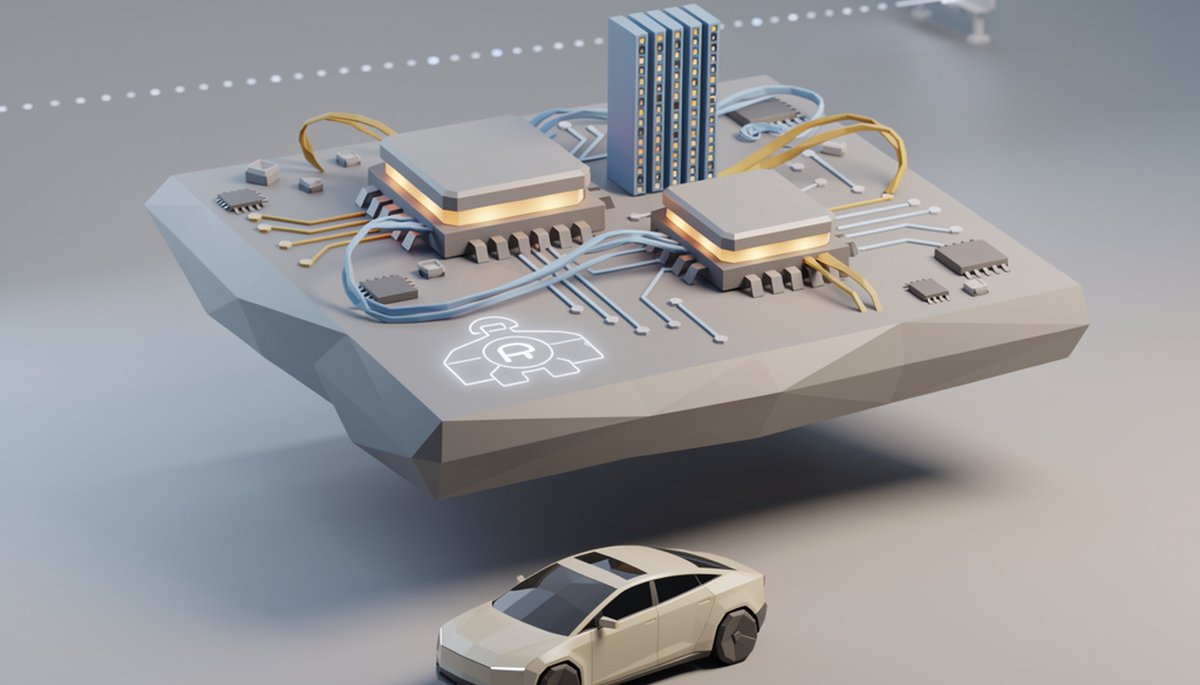
Tesla's Cybercab is arriving with a more capable self-driving computer than the one in cars you can buy today — but according to a new report, it is still not the next-generation chip many owners have been waiting for.
A more powerful chip — with a caveat
A report from NotATeslaApp, citing sources familiar with the hardware, says early production Cybercab units run a more powerful version of Tesla's Full Self-Driving computer than the one shipping in the current Model 3 and Model Y. The key difference is memory: the Cybercab's board reportedly carries more RAM than the AI4 (also called HW4) computer that Tesla installs in consumer vehicles today.
More memory matters for autonomy. It lets the car hold larger neural-network models in play and buffer more sensor data at once — useful for a vehicle that is designed to drive with no steering wheel and no pedals. Tesla has not commented on the report, so treat the specifics as unconfirmed until the company or teardown evidence backs them up.
Still AI4 underneath — not AI5
The more important point is what the Cybercab is not running. Tesla's genuinely next-generation inference chip, AI5 (sometimes referred to as HW5), is not part of this story. Elon Musk has confirmed that AI5 will not reach volume production until roughly mid-2027, and Electrek has reported that the Cybercab launches on the current AI4 platform rather than waiting for the new silicon.
That makes the Cybercab's chip an enhanced variant of the existing generation, not a leap to the next one.
| FSD computer | Where it runs | Relative capability |
|---|---|---|
| AI4 / HW4 | Current Model 3, Model Y | Baseline for today's fleet |
| AI4 (Cybercab variant) | Early Cybercab units | AI4-class with more RAM |
| AI5 / HW5 | From ~mid-2027 | Reportedly 3–5× more capable than AI4 |
Musk has said a single AI5 chip should offer roughly five times the useful compute of the dual-processor AI4 setup in cars now, and that AI5 as a whole targets a three-to-five-fold jump over AI4. None of that arrives with the Cybercab.
What it means for European owners
For drivers in Europe, the practical takeaway is about expectations, not immediate change. The Cybercab is a US-focused robotaxi with no confirmed European sale, and the reported RAM upgrade is specific to that vehicle — it does not retroactively improve the AI4 computer in a Model 3 or Model Y already on the road.
The more meaningful milestone for the wider fleet remains AI5. When it eventually reaches consumer cars, that is the generational step that could change what FSD hardware is capable of, as TeslAnt outlined in our coverage of Tesla's AI6 chip roadmap. Until then, the Cybercab's beefed-up AI4 is best read as a targeted tweak for a purpose-built robotaxi — not a preview of what your next Tesla will ship with.
The bottom line
The report is credible but unconfirmed: a more powerful, higher-RAM AI4 board in early Cybercabs, with AI5 still a 2027 story. If accurate, it shows Tesla is comfortable shipping its robotaxi on refined current-generation hardware while the next chip finishes its long road to volume.
Update: 2026-08-21
On 20 August 2026 the enhanced computer this article described as unconfirmed acquired a name and figures. Tesla told JPMorgan analysts at Fremont that it is rolling out AI4.5, with "roughly 10% more compute and about twice the memory" of the current HW4, according to Electrek. Two things above change. The extra memory is not a Cybercab-only tweak — AI4.5 is a rolling fleet change. And Tesla now claims AI4 on its own is enough to run both FSD v15 and unsupervised driving, which reframes the conclusion that AI5 remains the meaningful milestone: on Tesla's account, no generational chip is needed. Treat it as an assertion made to a bank rather than a release note — the identical claim was made for HW3 and later withdrawn.