
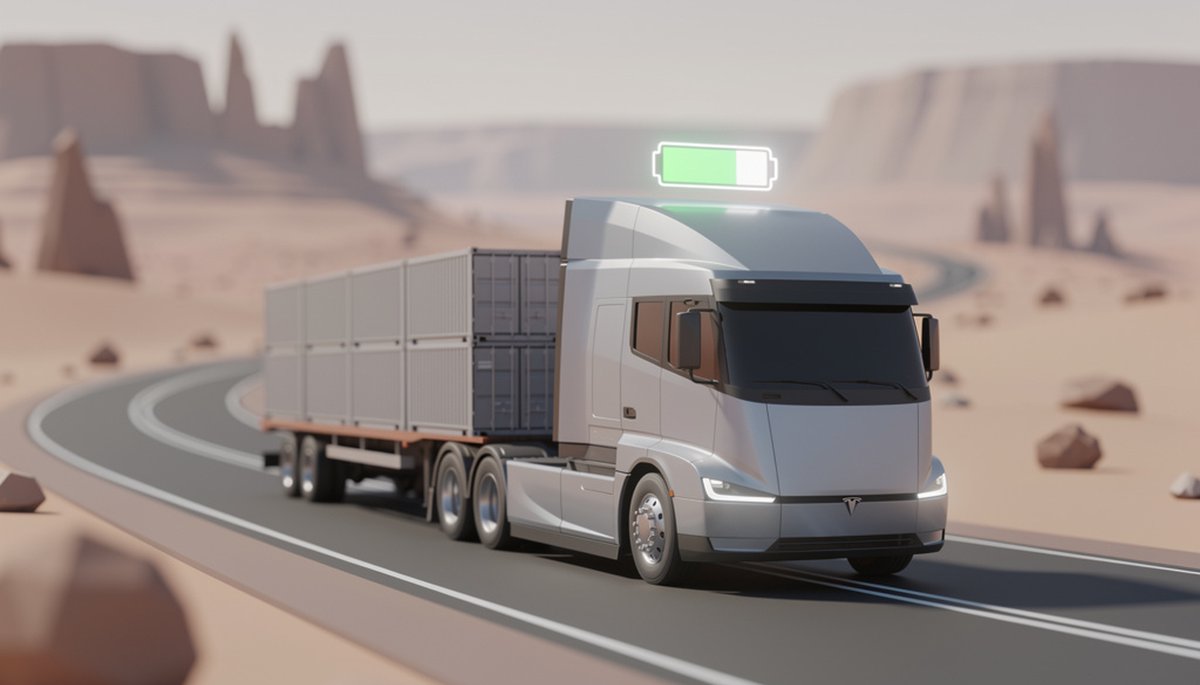
A Tesla Semi has been involved in the first known fatal crash of the company's electric Class 8 truck, killing two people in northern Nevada. The collision is a sobering milestone for a vehicle Tesla has spent years positioning as one of the safest heavy trucks on the road — though early evidence points to a human driver, not the truck's technology, as the likely cause.
What happened in Dayton
At around 7:20 a.m. on Sunday 28 June 2026, a Tesla Semi struck two passenger vehicles that were stopped at a red light on U.S. Highway 50 at its intersection with Traditions Parkway in Dayton, Nevada, east of Carson City. According to investigators, the truck rear-ended the stationary cars without slowing.
Two people died at the scene: Sergio "Boo" and Jennifer Villanueva, a local couple known for volunteering with a regional dog-rescue group. A third person was flown to hospital by Care Flight with life-threatening injuries. The Nevada Highway Patrol and the Lyon County Sheriff's Office are leading the investigation.
Preliminary statements gathered at the scene suggest the Semi's driver may have fallen asleep at the wheel. The official cause has not been determined, and no charges have been announced.
Not an autonomous-driving crash
It is important to be precise about what this crash was and was not. Tesla does not offer Full Self-Driving on the Semi, and the truck was under manual human control at the time. The Semi's self-driving hardware is still in the validation phase — as TeslAnt reported when a Semi was spotted carrying FSD test equipment earlier this year — and none of it was steering the vehicle here.
That distinction matters, because "Tesla crash" headlines routinely imply autonomy. This was, on the available evidence, a heavy truck driven by a person who may have been fatigued. It is unclear whether the Semi's forward-collision warning or automatic emergency braking engaged; Tesla has never published detailed specifications for those systems on the Semi, and the company did not immediately respond to requests for comment.
The truck is widely believed to have been part of Tesla's own logistics fleet operating out of Gigafactory Nevada, a short distance from the crash site, though neither Tesla nor investigators have confirmed the operator.
Why it matters for Europe
The Semi is not yet on sale in Europe, so no European fleet is directly affected today. But Tesla has shown the truck at European events and positioned it as a future entrant into the continent's electric-freight market, where heavy trucks face some of the strictest safety and driver-hours rules in the world.
A first fatal crash — even one that looks like driver fatigue rather than a vehicle fault — invites scrutiny of how a fully loaded electric Class 8 truck behaves in a collision and what active-safety systems it carries as standard. For European operators weighing electric heavy trucks, the incident is a blunt reminder that a battery-electric drivetrain does nothing to change the oldest risk in trucking: a tired driver behind the wheel.
Investigators have not said when their findings will be published.