
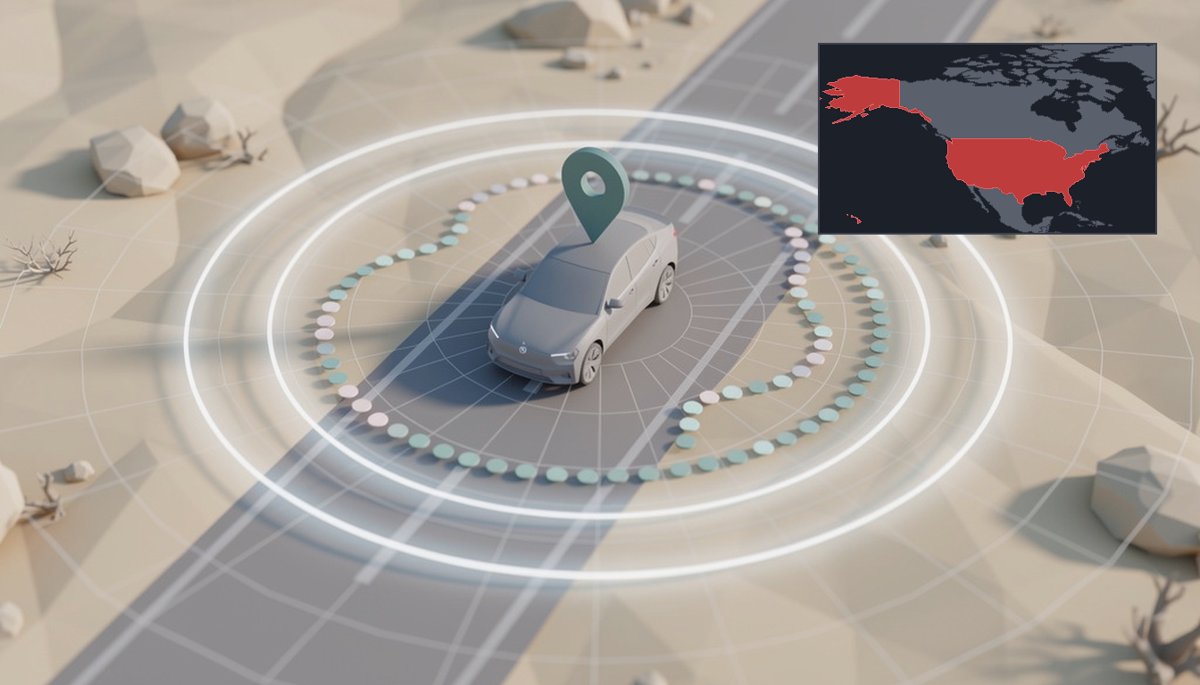
Tesla has expanded its Robotaxi program to Miami, Florida, marking the third state where its autonomous ride-hailing platform now operates. The company announced on Friday, 3 July 2026, that the service would begin offering rides inside a mapped geofence in the Miami metro, roughly a year after the program first launched in Austin.
A small box on the map
Tesla published the Miami service area alongside the announcement, and it covers only a slice of the metro. The zone stretches through West Miami toward Doral and Sweetwater, bounded roughly by State Road 826 (the Palmetto Expressway) to the north and US-41 to the south. It notably leaves out downtown Miami, Miami Beach, the airport and most of Coral Gables.
Starting small is consistent with how Tesla has rolled out every previous city — draw a tight box, then widen it as confidence grows. With Miami live, the Robotaxi network now spans Austin, Dallas, Houston and San Antonio in Texas, plus the Bay Area in California, and now the Florida metro.
Behind schedule, but expanding
The launch is a milestone, but it arrives against a backdrop of missed targets. Tesla's announced first-half 2026 expansion list named Miami, Orlando, Tampa, Dallas, Houston, Phoenix and Las Vegas. Of those, only Dallas and Houston went live within the promised window. Miami is the first of the delayed cities to finally come online, which cuts both ways: it shows the program is still growing, but also how far behind the original timeline it has slipped.
Critics have been quick to point out the contrast between mapping new cities and actually scaling the service where it already exists. More than a year after launch, the Austin operation remains geographically limited, and each new geofence has so far been a cautious expansion rather than a step-change in coverage.
What it means for Europe
For European readers, the practical takeaway is simple: Robotaxi remains a United States-only service, and nothing about the Miami launch changes that. Tesla's driverless ride-hailing depends on regulatory approval that Europe has not granted, and the continent's supervised Full Self-Driving rollout is a separate, slower track governed by EU type-approval rules.
Still, the pace of US expansion is worth watching. Tesla's approach — validating one geofenced zone at a time — is the same playbook it will eventually have to run in Europe if and when regulators open the door. As TeslAnt covered when Tesla put its first production Cybercab on public roads, the hardware and software groundwork for a wider driverless fleet is already being laid; the constraint now is scaling it safely and, in Europe's case, legally.
The bottom line
Miami gives Tesla a third state and a fresh talking point over a holiday weekend, but the launch is modest in scope and overdue against the company's own calendar. Whether Robotaxi becomes a genuinely large-scale service — or stays a collection of small, carefully drawn boxes — is still the open question.