
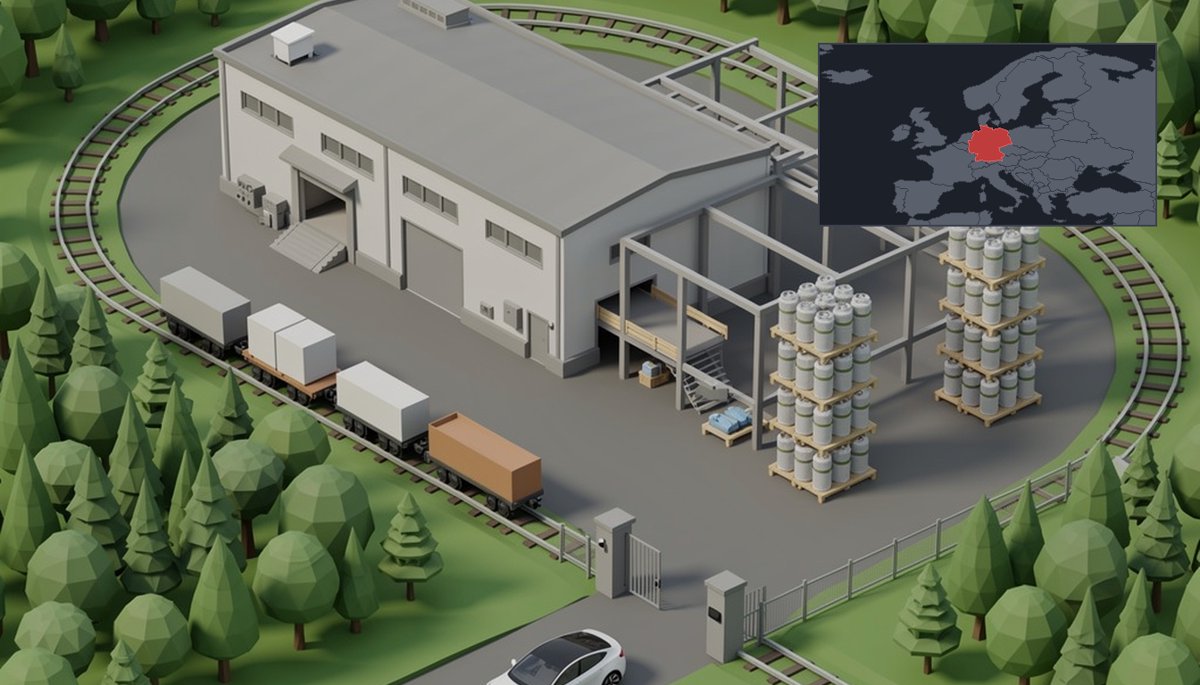
Tesla is planning the largest physical expansion of its only European car factory since the plant opened, centred on a new building and a modernised rail link rather than just another output increase.
A second factory, roughly double the size
According to planning documents, Tesla wants to erect a large new structure directly north of the existing Giga Berlin-Brandenburg site. The new building would be roughly double the footprint of the current factory, giving Tesla the floor space to add entirely new product lines alongside today's Model Y assembly and the on-site 4680 battery-cell production it has been building out.
That cell effort has already been scaled up: Tesla previously raised its Grünheide capacity target to 18 GWh, as TeslAnt covered in the $250 million battery expansion. The new building would give that vertical-integration push the room it needs and is a prerequisite for assembling future models locally rather than importing them.
Rail hub and local infrastructure
The plans go well beyond the factory fence. Tesla's proposal includes a public pavilion in front of the Fangschleuse train station, partial financing of the state road L 386, and a new and modernised rail connection to the Freienbrink freight transport centre (GVZ).
The rail upgrade is the most consequential piece for a plant that ships finished cars across the continent. Moving more vehicles and parts by rail eases pressure on the local road network — a recurring point of friction with the surrounding community — and lowers the cost and carbon footprint of distribution into Tesla's European markets.
| Element | What it adds |
|---|---|
| New building (north of site) | ~2x footprint, space for new product lines + 4680 cells |
| Freienbrink rail link | Modernised freight connection for finished cars and parts |
| Fangschleuse pavilion | Public-facing infrastructure at the local station |
| State road L 386 | Partial financing of road upgrades |
Building on a production rebound
The construction plans sit on top of a concrete ramp already under way. Tesla is lifting output in two steps through 2026, reaching around 7,500 Model Ys per week by October with roughly 1,000 additional hires, as TeslAnt detailed in the latest Giga Berlin expansion.
The timing reflects a recovery in demand after a difficult 2025. Building more cars in Brandenburg shortens delivery times for European buyers and reduces exposure to import tariffs and shipping costs.
For now the new building and rail hub remain plans working through the approval process, and Tesla has a history of revising Giga Berlin targets. But the direction is clear: after years of running below its permitted capacity, Europe's largest car plant is being set up not just to build more cars, but to build different ones.