
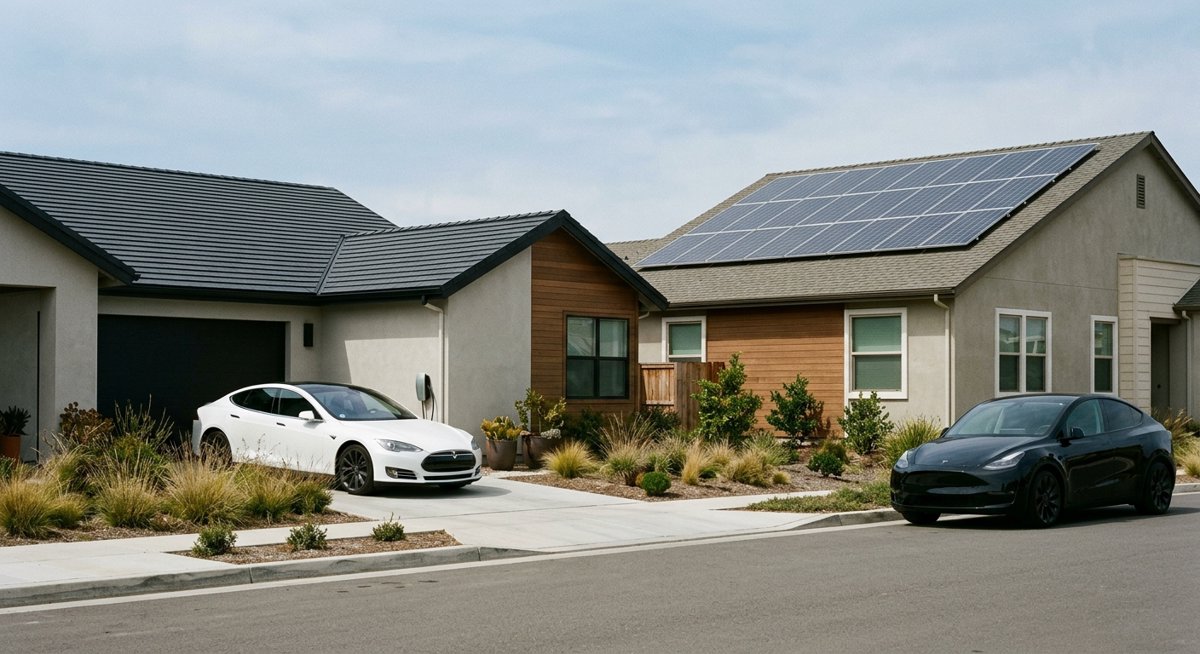
Tesla's Solar Roof was supposed to redefine residential solar. When Elon Musk unveiled the product in October 2016, he framed it as a beautiful, integrated alternative to ugly bolt-on panels, and committed to producing 1,000 new Solar Roofs per week by the end of 2019. Nearly a decade later, Tesla has installed roughly 3,000 Solar Roof systems in total, stopped publishing deployment numbers, and is steering new energy customers toward conventional panels.
Promise Versus Reality
The pitch in 2016 was that the Solar Roof would replace your entire roof with glass tiles, half of which contained active photovoltaic cells indistinguishable from the dummy tiles next to them. Pricing was promised to land below the cost of a regular roof plus the electricity it would generate over its lifetime. The reality has been very different: every cohort of installers reported long delays, complex installs, and quotes far above the original target. Tesla quietly stopped sharing Solar Roof deployment figures from its quarterly disclosures several quarters ago, leaving Electrek's running estimate of roughly 3,000 lifetime installs as the best available benchmark.
| Metric | 2016 Plan | Actual (May 2026) |
|---|---|---|
| Weekly install target | 1,000/week (by end 2019) | unreported, low single digits |
| Lifetime installs | n/a | ~3,000 |
| Geographic availability | global ambition | U.S.-only |
| Pricing claim | below cost of new roof + electricity | typically above conventional solar |
Pivot to Solar Panels
Tesla's residential energy team is now selling solar panels paired with Powerwall as the default whole-home offering. The Solar Roof page on Tesla's own site still exists, but the company's lead-generation funnel routes most homeowners to a panel-plus-Powerwall quote. Tesla also retired the residential Solar Roof installation crews it had built out in 2021 and 2022, shifting most field work to certified third-party installers. The company has not formally announced a Solar Roof discontinuation; it has simply stopped resourcing it.
Europe Implications
For European Tesla owners, the practical impact is limited because Solar Roof was never offered outside the United States. Where Europe has felt Tesla's energy ambitions is on the storage side: Powerwall 3 is now available in several EU markets, and Tesla has continued to expand certified installer networks in Germany, the Netherlands, the UK, France, and the Nordics. The signal from Solar Roof's quiet wind-down is that Tesla Energy's growth plan in Europe will lean on Powerwall plus existing third-party panels, not on a Tesla-branded tile product.
What It Means
The Solar Roof story is the clearest example yet of Tesla Energy reverting to mainstream solar economics. The integrated-tile concept was a marketing milestone, but the unit economics of producing, shipping, and installing a custom glass roof never closed against commodity panels that have continued to fall in price. Tesla still controls a huge slice of the residential storage market, and Powerwall remains the company's strongest energy product. Solar Roof's role is now closer to a halo product on the website than an active line item in Tesla's energy business.