
After years of delays and prototypes, Tesla has finally put numbers on the production Semi. The official specifications, released in February 2026, confirm a truck that aims to compete directly with diesel Class 8 haulers on both performance and economics.
Power and Range
| Specification | Standard Range | Long Range |
|---|---|---|
| Power output | 800 kW (1,072 hp) | 800 kW (1,072 hp) |
| Motors | 3 independent (rear axles) | 3 independent (rear axles) |
| Range | 325 miles (523 km) | 500 miles (805 km) |
| GCVW rating | 82,000 lbs (37,195 kg) | 82,000 lbs (37,195 kg) |
| Efficiency | 1.7 kWh per mile | 1.7 kWh per mile |
Three independent motors on the rear axles deliver a combined 800 kW. The dual-range lineup mirrors what Tesla has done with its passenger vehicles: a shorter-range variant for regional routes and a longer-range option for cross-country hauls.
Charging Infrastructure
The Semi supports MCS 3.2 (Megawatt Charging System) and is compatible with V4 Supercharger technology at up to 1.2 MW. Tesla claims both variants can recover up to 60% of their range in 30 minutes — translating to roughly 300 miles for the Long Range model during a half-hour stop.
For fleet operators, this charging speed means a driver can recover enough range during a mandatory rest break to continue a full shift without depot charging.
Electric Power Take-Off
Both trims include support for electric Power Take-Off (ePTO) systems delivering up to 25 kW. This allows the truck to power refrigeration units, hydraulic lifts, and other auxiliary equipment without a diesel generator — a critical feature for cold-chain logistics and last-mile delivery operations.
European Relevance
The Semi is not coming to Europe immediately. CEO Elon Musk has indicated the truck could reach European markets by 2027, pending regulatory adaptation for EU weight and dimension standards. European truck regulations allow higher gross weights than the US (up to 44 tonnes in many countries), which could theoretically improve the Semi's payload capacity with local homologation.
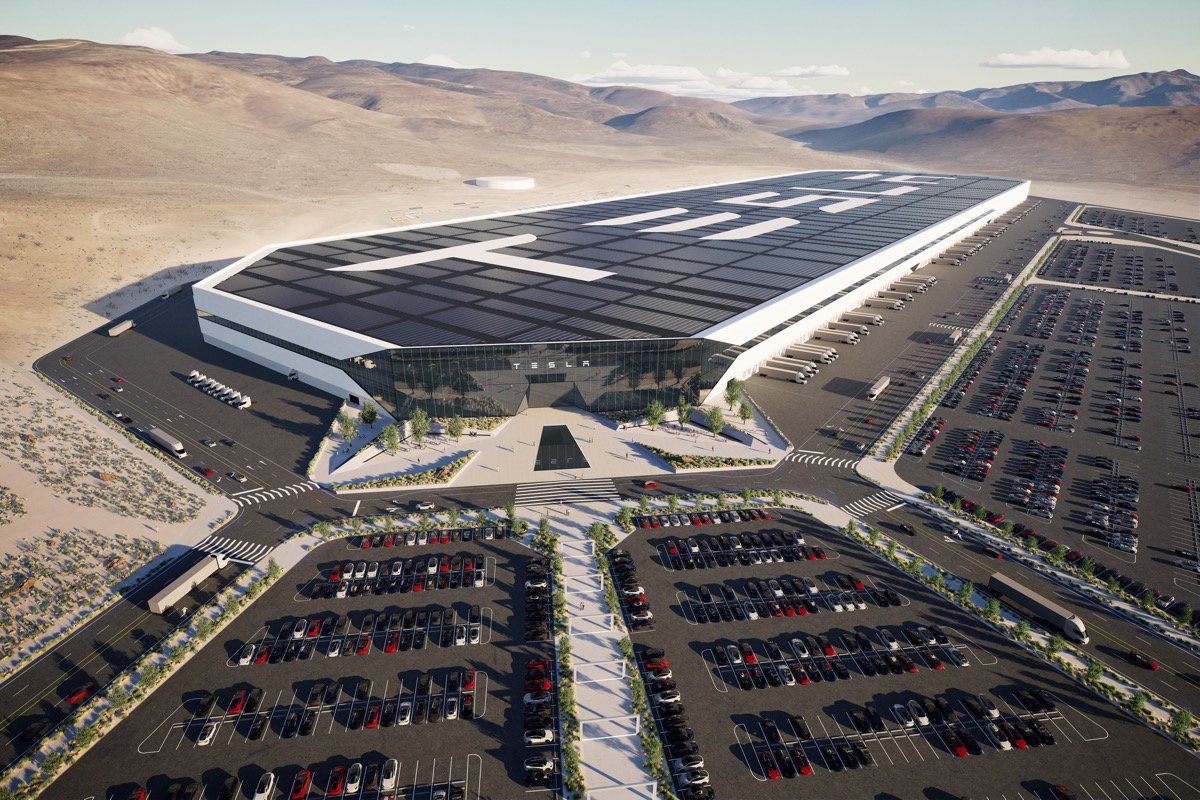
Mass production is set to begin at Gigafactory Nevada in 2026, following multiple delays since the truck's original 2017 announcement. Pricing is expected to stay competitive with Class 8 diesel equivalents.
Update: 2026-05-17
A California Air Resources Board filing — Executive Order A-374-0095, signed on 15 April 2026 and surfaced by Electrek, NotaTeslaApp and Tesla Oracle between 8 and 11 May — has put official numbers on the Semi's battery packs for the first time. The Standard Range carries a 548 kWh usable pack, and the Long Range a 822 kWh pack. Both use NCMA chemistry in Tesla's 4680 cells, with the 4680s manufactured in the same Sparks, Nevada complex as the trucks themselves. The 822 kWh figure is roughly 80 kWh smaller than Elon Musk's 2022 estimate, yet the Long Range trim still hits the 500-mile rating at a full 82,000 lb gross combination weight — confirmation that Tesla has improved efficiency well past 1.7 kWh per mile in real-world calibration.