
What changed this week
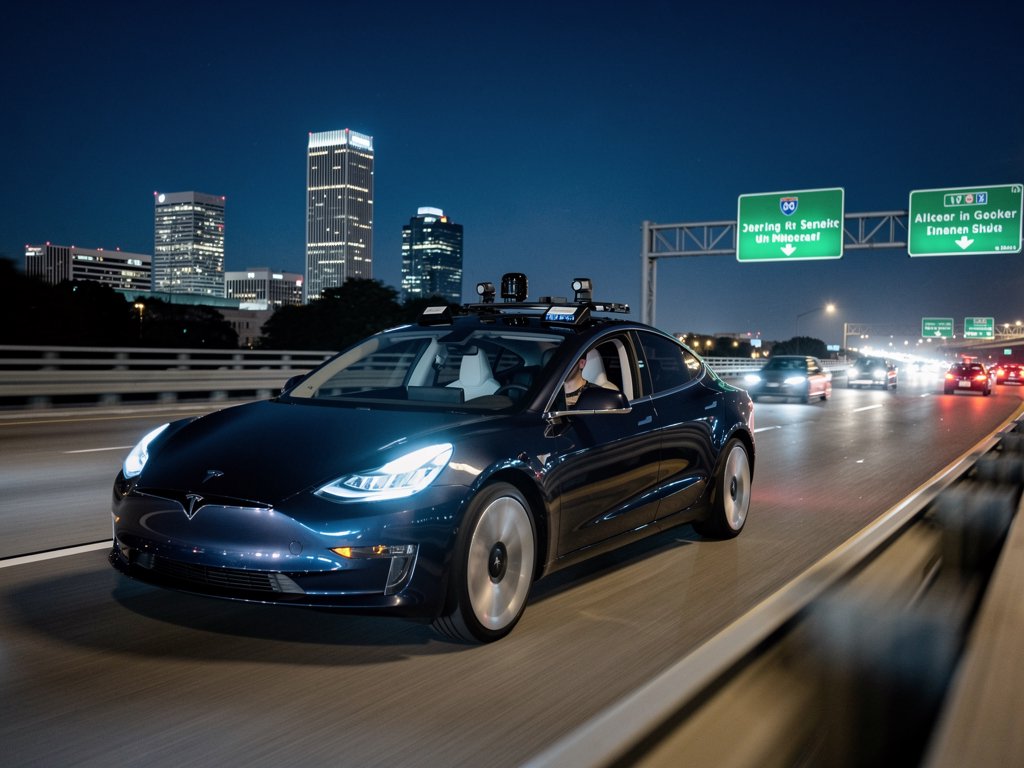
Tesla's unsupervised Robotaxi service in Texas crossed two thresholds in the first days of May 2026. According to Not a Tesla App, the service began offering rides into the evening for the first time on 4 May, ending a daylight-only constraint that had limited unsupervised operation to roughly mid-afternoon since the Austin launch in January. Independent observers tracking the fleet on RtaxiTracker confirmed the change.
In parallel, the fully unsupervised Model Y fleet — Teslas with no safety driver in the cabin and no remote controller — has grown to 29 vehicles split between three Texas cities. The fleet was 25 vehicles a week earlier and it is the first sustained week-on-week growth that Tesla's unsupervised programme has shown.
| City | Unsupervised vehicles (3 May 2026) | Status |
|---|---|---|
| Austin, TX | 20 | Daylight + evening |
| Houston, TX | 5 | Daylight only |
| Dallas, TX | 4 | Daylight only |
| San Francisco Bay Area | 0 unsupervised | Service driver in seat |
Why night operation matters
Night is operationally harder than day for autonomy. Headlight glare, lower contrast, drunk-driver tail behaviour and a much higher rate of pedestrian violations against right-of-way change the distribution of edge cases. Waymo took roughly two years between launching driverless daytime rides in Phoenix and adding sustained nighttime service. Tesla pushing into evenings five months after the first unsupervised Austin rides is a faster cadence — but the limited area and small fleet mean the data-set is still narrow.
The fleet expansion to Houston and Dallas matters less for European readers than the fact that Tesla can support fully unsupervised operations in three cities concurrently. Each city it adds is an independent map, traffic-rule and weather profile for the FSD model.
What this signals for Europe
Tesla reached 10 billion supervised FSD miles on 3 May 2026, the data-volume threshold Elon Musk publicly named in January as the prerequisite for unsupervised consumer FSD. The Austin night-rides operational expansion is a separate signal: Tesla now believes its current model is good enough for night-time city traffic in a constrained operational design domain. That capability is what would have to be transposed onto a European country's regulatory framework before consumer Unsupervised FSD could launch on the continent.
But Europe is several gates away. The Netherlands' RDW approved FSD (Supervised) under UN R-171 in April 2026 for HW4 cars only; an unsupervised approval would require a different regulatory pathway and, almost certainly, type approval per country. Tesla's own Q1 2026 earnings-call timeline puts consumer unsupervised FSD into Q4 2026 at the earliest, and that is for the United States.
For European Tesla owners, the practical near-term effect is signal rather than service: progress on unsupervised operation in Texas is what eventually makes a European unsupervised case credible to regulators. Drive Tesla Canada has collected the operational accomplishments to date, and the next milestones to watch are sustained nighttime operations across Houston and Dallas, and the first European city Tesla applies to for an unsupervised pilot — neither of which is publicly scheduled yet.