
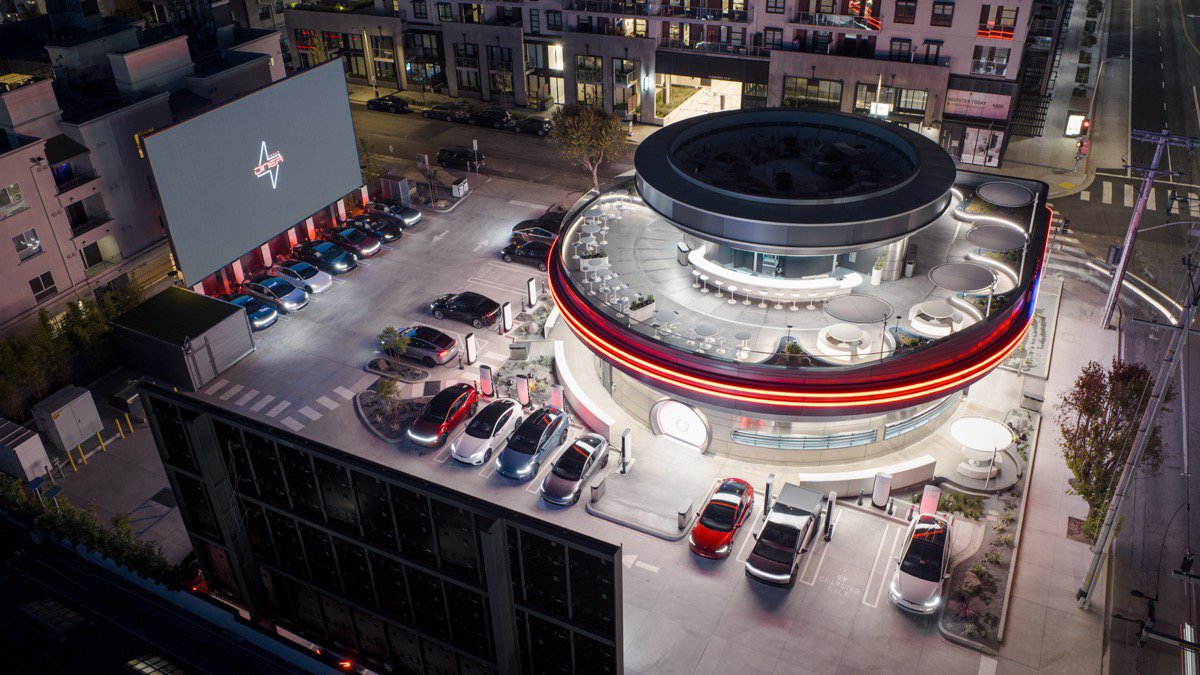
An era in EV charging is over. On 16 March 2026, Gigafactory New York produced its last V3 Supercharger power cabinet, closing a chapter that spanned seven years and more than 15,000 units.
End of the V3 Line
The V3 Supercharger launched in 2019 and became the backbone of Tesla’s global charging network. Each cabinet supported up to four charging stalls, and the platform powered the expansion from a few thousand stalls to a network now exceeding 75,000 Supercharger stalls worldwide.
From this point forward, every new Supercharger installation — whether a greenfield site or an expansion of an existing location — will use V4 hardware exclusively.
What V4 Brings
| Specification | V3 | V4 |
|---|---|---|
| Max cabinet power | 250 kW | 1,200 kW (1.2 MW) |
| Stalls per cabinet | Up to 4 | Up to 8 |
| Max per stall | 250 kW | Up to 500 kW |
| Voltage support | Up to 500V | Up to 1,000V |
| Cable type | Liquid-cooled, fixed | Liquid-cooled, longer |
The V4 architecture represents a step change. Power sharing across eight dispensers means peak charging speeds can be allocated dynamically based on demand, rather than fixed per stall. The 1,000V support future-proofs the network for next-generation vehicle platforms with 800V+ battery architectures.
European Impact
For European Tesla owners, the transition is mostly positive. V4 stations are already being deployed across Europe, with the longer cable length addressing a common complaint about V3 — difficulty reaching charge ports on non-Tesla vehicles using the network via NACS or CCS adapters.
Existing V3 stations will continue to operate and receive maintenance. Tesla has not announced plans to retroactively replace V3 hardware, so the network will be a mix of both generations for years to come.
The Bigger Picture
The V4 transition also supports Tesla’s Semi charging ambitions. The same 1.2 MW power architecture underpins the Megacharger network for commercial trucks, creating manufacturing synergies between passenger and commercial charging infrastructure.
With over 75,000 stalls worldwide and V4 as the sole production platform, Tesla’s Supercharger network enters its next phase — faster, more flexible, and built for a multi-vehicle future.